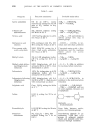
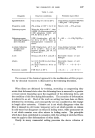
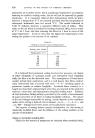
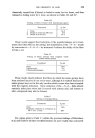
SYNTHESIS O• SOME NEW QUATERNARY DYES 421 THE LECTURER' Simultaneous bleaching and dyeing with these dyes is a perfectly compatible operation. DR. V. B6•.•.ERT ' Can you tell us something about staining of the skin by that sort of dye ? TaE L•.CTUR•.R ' These dyes have indeed a certain affinity for the skin, but it is possible to lower it, as for instance by introducing nonionics into the formulation. DR. J. F. CORBETT' Could you tell us whether there is any significant difference in the dyeing properties between the various yellow dyes des- cribed in your communication ? Was there any particular purpose in your choice of the quaternizing agent ? TaE L•CTURER ' The shade varies with the length of the chain separating the two amino groups, and the presence or absence of a heterocyclic ring does not play any significant part in relation to the shade, e.g. Series I• yellow dyes' (a) Methyl [2-(/•methylmorpholinium) ethylamino-anthraquinone] sul- phate--(n = 2) • max = 455 yellow. (b) Methyl [2-(/•methyldiethylammonium) ethylamino-anthraquinone] sulphate--{n •- 2) A max : 456 yellow. (c) Methyl [2-(/•trimethylammoniurn) propylamino-anthraquinone] sul- phate•(n = 3) ,1 max = 470-472 orange-yellow. Similar observations were made with the violet dyes' (a) Methyl [1-hydroxy 4-(/•methylmorpholinium) ethylamino anthra-- quinone] sulphate--(n = 2) is purple, whereas (b) methyl [1-hydroxy 4-(ymethyl piperidinium) propylamino-anthra-• quinone• sulphate--(n = 3) is violet. On the other hand, the shade is not modified markedly by the choice of quaternizing agent. I wish to mention that our choice of morpholine and piperidine derivatives had been made on the basis of their behaviour on storage, as these substances do not develop unpleasant odours. PRO•. C. S. WHEWV.•.•. ß Could you give any indication of the mechanism by which these dyes are attached to the hair ? Is the positively charged nitrogen atom important, and if this is so, have you prepared any other compounds which are colourless ? Such compounds will obviously be im- portant as softening agents, antistatic agents, a.s.o. THE LECTURER ' It is assumed that the great affinity of these quaternary

422 JOURNAL OF THE SOCIETY OF COSMETIC CHEMISTS dyes for hair is due to the formation of salt bonds with the carboxy groups of keratin. In our laboratory we have prepared various quaternary com- pounds which are colourless, and which are useful both as softening agents and as antistatic agents.
Purchased for the exclusive use of nofirst nolast (unknown)
From: SCC Media Library & Resource Center (library.scconline.org)