J. Sec. Cosmetic Chemists 15 437-446 (1964) ¸ 1964 Society of Cosmetic Chemists of Great Britain iDIFFUSE ALOPECIA IN WOMEN: ITS CLINICAL FORMS AND PROBABLE CAUSES E. LUDWIG, Dr. Med.* Presented at the Symposium on "Hair", at Brighton, Sussex, on 16th April 1964. Three •lifferent lorms el •liffuse •emale alopecia are •lescribe•h Arguments 'are presentetl which •avour the concept o• the itlentity be[ween common -baldness (male pa•ern alopecia), and tlif•se alopecia in women. Both con. ditions are shown to be the result o• antlrogenic stimulation o• genetically l•retlisposed hair •ollicles. The available results o• determinations o• urinary •excretion o• antlrogens are reportetl. For many centuries Aristotle's statement that women, children, and •eunuchs never become bald has been of unchallenged validity. Sabouraud (1) seems to have been the first to report the occurrence of diffuse alopecia in women, which he considered a true seborrheic baldness (calvitie vraie, s6borrh6ique chez la femme). Since then many authors (2,3,4,5,6) have .confirmed Sabouraud's observation and agree that diffuse alopecia is of more frequent occurrence than is generally believed. Several European authors (7,8,9,10,11), and Sulzberger et al (12) in the U.S.A. have even •expressed the view that an actual increase in the incidence of female balding has taken place in recent years. SUBJECTS Among the female patients attending the special clinic for diseases of the scalp and hair at our hospital, from 1961 to 1963, there were 102 patients with obvious diffuse thinning of the hair. However, this number was far exceeded by patients complaining of hair fall, where no reduction in the amount of hair was perceptible. DIFFERENCE BETWEEN ALOPECIA AND EFFLUVIUM It seems advisable to emphasize that we are employing the term alopecia only to designate an actual reduction in the amount of hair, i.e. different degrees of hairlessness ranging from a just perceptible thinning to an un- equivocal lack of hair. Whenever referring to the process of losing hair *Dermatological Clinic, University of Hamburg, Germany. 437

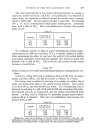
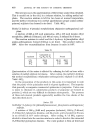
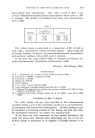
JOURNAL OF THE SOCIETY OF COSMETIC CHEMISTS (hair fall), which may or may not lead to alopecia, we use the term effluvium as proposed by Kligrnan (13), instead of defluvium. The most plausible reason for this distinction is the following observa- tion. Many female patients permanently complain of loss of hair thouglx even after many years no detectable reduction in the amount of hair occurs, yet it is not uncommon to meet patients with an extreme thinning of the hair who never noticed an appreciable loss of hair and who usually pretend not to know "where they have left their hair". CLINICAL TYPES The 102 patients mentioned above represent a carefully selected group insofar as transient thinning of the hair due to various symptomatic effluvia (post-infectious, post parturn, drug induced, post intoxications) were ex- cluded. We also excluded all cases of diffuse alopecia, secondary to well defined local diseases of the scalp, including the diffuse form of alopecia areata as well as alopecias of the pseudopeladic type. In our series of 102 patients the following types of diffuse alopecia could be distinguished: (1) Diffuse sparseness of the hair involving the whole vertex. (2) Diffuse sparseness limited to an orbicular zone around the crown (skull- cap type). (:3) Diffuse sparseness of the hair on the vertex combined with ironto- parietal recessions imitating the feature of common baldness. • • •-': •:• ' .. •g• •. . •.• .•:•" • Figure 1 Diffuse alopecia in a woman, aged 2?. Uniform sparseness of the hair on the vertex (Behrman's female pattern alopecia). The first type (Fig. 1) which is obviously identical to Behrman's "female
Purchased for the exclusive use of nofirst nolast (unknown)
From: SCC Media Library & Resource Center (library.scconline.org)