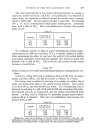
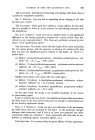
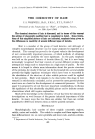
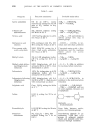
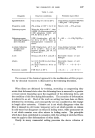
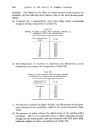
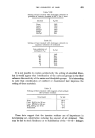
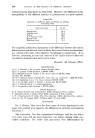
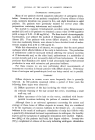
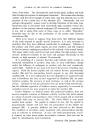
THE CHEMISTRY OF HAIR 429 chemically treated hair (Chinese) is boiled in water for two hours, and then released in boiling water for 1 hour, are shown in Tables III and IV. Table III Setting of fibres treated with hydrolysing agents Treatment 1. None 2. Boiled in water for 48 hours 3. Boiled in 0-1N HC1 % Set 14-5 6'3 14'7 These results suggest that hydrolysis of the peptide linkages as in treat- ment $ has little effect on the setting, but stabilisation of the --S--S-- bonds by conversion to --C--S--C-- by treatment 2 reduces the ability of the fibre to take a set. Table IV Setting of fibres treated with reagents which attack amino groups Treatment None Nitrous acid Difluoronitrobenzene % Set 14'5 --1-1 --1 '3 These results clearly indicate that fibres in which the amino groups have been rendered inactive do not set in water, although it is realised that loss of amino groups may not be the only reaction which occurs when hair is treated with the reagents indicated. Some oxidation of the --S--S-- links almost certainly takes place when hair is treated with nitrous acid, and nitroso or nitro compounds may also be formed. Table V Setting of esterified fibres Treatment None Hydrogen chloride in methanol at 50øC for 1 hour % Set 14'5 26.1 The values given in Table V confirm the previous findings of Blackburn et al, and Unilever (4) that esterified keratins set more readily than untreated

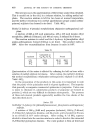
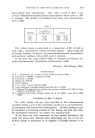
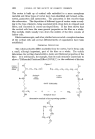
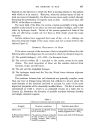
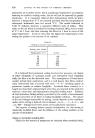
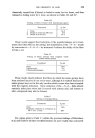
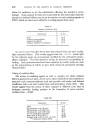
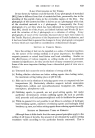
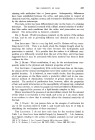
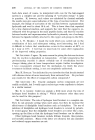
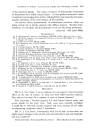
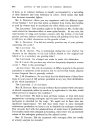
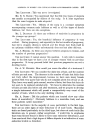
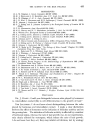
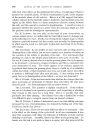
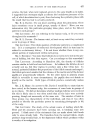
430 JOURNAL OF THE SOCIETY OF COSMETIC CHEMISTS materials. Few details on the effect of various factors on the reaction are available, and the following data indicate some of the more obvious possi- bilities. (a) Treatment for a comparatively short time brings about considerable change in setting characteristics (Table VI). Table VI Setting of fibres treated with hydrogen chloride in methanol at 50 ø C for various times Time of treatment (min) o 5 lO 15 30 60 12o 18o % Set 14.9 27 '6 25'0 24 '9 27'9 28 '8 28.5 28.2 (b) The temperature of treatment is important, the effectiveness of the esterification increasing with temperature (Table VII). Table VII Setting of fibres treated with hydrogen chloride in methanol for 1 hour at various temperatures Temperature of treatment (ø C) Untreated 5 10 15 30 40 50 % Set 14.9 18.5 22.2 18.9 22-5 24-9 28.8 (c) If methanol is replaced by higher alcohols, the effectiveness of the treat- ment decreases as the molecular weight of the alcohol increases (Table VH). (d) The presence of water reduces the effectiveness of the methanol/HCl treatment. This is to be expected, and it is rather surprising that the changes are not much greater, and that treatment with HCI and a 20% methanol solution in water can facilitate set (Table IX).
Purchased for the exclusive use of nofirst nolast (unknown)
From: SCC Media Library & Resource Center (library.scconline.org)