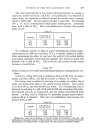
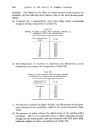
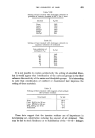
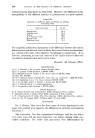
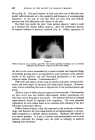
ALOPECIA IN VgOMEN ' ITS CLINICAL FORMS AND PROBABLE CAUSES 439 pattern alopecia", is by far the most common. Ninety out of our 102 patients belong to this type, which occurs in all age groups beyond puberty from 16 to 70 years (average age 40). Its most prominent symptom is the diffuse sparseness of the hair be- .ginning behind the anterior scalp margin and involving the entire middle portion of the scalp. This sparseness is simply due to a reduced number of hairs per unit area, and ranges from a just perceptible thinning to a •lisfiguring denudation of the vertex. The symptoms, which accompany this type of alopecia, in the order of frequency are: (1) Telogen effluvium, i.e. an increased daily loss of club hairs. (2) Oiliness of the scalp, which in many instances is so pronounced that the hair becomes greasy within one to three days after shampooing appearing literally bathed in oil after this period. (3) Discomforting sensations termed "tenderness", "tingling", "itching", "burning", and "awareness of the scalp". (4) Scaling, which is usually slight and which is heavy only in exceptional cases. ($) Hirsutism and disturbances of the menstrual cycle appear to occur with nearly the same frequency as in the general population, while major morphological changes of the scalp, such as atrophy, follicular plugging or reddening do not occur at all. The second type, which I termed "kiippchenf0rmige Alopecie" (skull-cap alopecia) (14), has also been described by Sabouraud (1), and is clearly distinguished from the first form by Binazzi (15). It is rare, and occurs exclusively in postrnenopausal women (average age $4). As already men- tioned, the sparseness of the hair, occasionally of a high degree, is limited to a disciform area on the crown, the diameter of which does not exceed l•igure • Diffuse alopecia in a woman, aged 57. Orbicular thinning of the hair on the crown (skull-cap type).

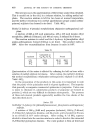
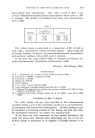
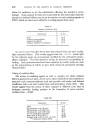
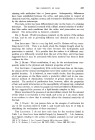
Z•0 JOURNAL OF THE SOCIETY OF COSMETIC CHEMISTS 10 cm (Fig. 2). The small number of such cases (five out of 102) does not permit valid statements as to the regularity and frequency of accompanying: symptoms. It can only be said that there are cases with and without previous hair fall (effluvium) and oiliness of the hair. The third type merits the term "male pattern alopecia" which is used as a synonym for chronic diffuse alopecia. Here the well-known picture of common baldness is perfectly imitated (Fig. $). Diffuse sparseness of Figure Diffuse alopecia in a woman, aged 39, with fronto-parietal recessions as in common baldness (male pattern alopecia in the strict sense). the hair on the vertex surrounded by a broad occipital and temporal fringe of normally growing hair is accompanied by some ascension of the anterior border of the hair-line, and well developed denudations of the fronto- temporal angles (German--"Geheimratsecken"). Effluvium and oiliness of the scalp are always noticeable, menstrual dis- orders and some degree of hirsutism also being rather frequent. However,, many women exhibiting this form of alopecia are in the postrnenopausal age group. All these types of diffuse alopecia appear to be irreversible. Unfortunately we have never seen any definite improvement, neither spontaneous nor following various therapeutic procedures. We therefore feel that all alleged improvements should be regarded with scepticism. The most plausible explanation for such claims seems to be confusion with thinning of the hair following symptomatic effluvia. Diffuse female alopecia, while still neglected in the textbooks of dermat- ology, and therefore far from being known by all dermatologists, is increas- ingly recognized as a definite clinical syndrome. Rothman (16) defined it as a serious problem. It is also a cosmetic and psychosomatic one as such patients, especially the younger ones, are quite as unhappy as patients suffering from hirsutism.
Purchased for the exclusive use of nofirst nolast (unknown)
From: SCC Media Library & Resource Center (library.scconline.org)