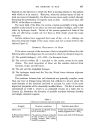
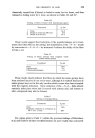
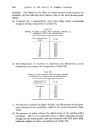
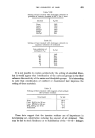
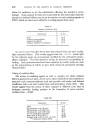
SYNTHESIS OF SOME NEW QUATERNARY DYES 415 were carried out on humans, at the Rothschild Ophthalmological Foundation, Paris, and we are grateful to Dr. Sidi for the results quoted below. The tests were carried out in the usual way, the standard being pphenyl- enediamine (P.P.D.) in 2•o concentration (8). Here are a few results obtained. (a) With methyl[1-hydroxy 4-(/•methyl morpholinium) ethylamine anthra- quinone] sulphate. 24 tests were carried out: 21 gave 0 to P.P.D., and 0 to the dye, 1 ,, q- reaction to P.P.D., negative to the dye, 1 ,, q-q- reaction to P.P.D., negative to the dye, 1 ,, q- q-q- reaction to P.P.D., negative to the dye. (b) With 2-methyl[1-hydroxy-2,4-(ptrimethylammonium) phenylamino- anthraquinonel sulphate. 125 tests were carried out: 92 gave 0 to P.P.D., and 0 to the dye, 1 ,, caustic reaction to P.P.D., negative to the dye, 1 ,, -4- reaction to P.P.D., negative to the dye, 13 ,, q- reactions to P.P.D., negative to the dye, 1 ,, q- reaction to P.P.D., giving q- to the dye, 8 ,, q-q- reactions to P.P.D., negative to the dye, 4 ,, q-q-q- reactions to P.P.D., negative to the dye, 1 ,, q-q-q-+ reactions to P.P.D., negative to the dye, 4 ,, ? reactions to P.P.D., negative to the dye. Another factor to be taken into consideration is the stability of the aqueous solutions of these dyes on storage.. We wish to report that certain dyes of Series II develop unpleasant odours in solution directly related to the period of storage, which makes them practically useless for cosmetic purposes. This applies to the quaternary dyes of this series involving an N,Ndimethyl ethylene diamine, and N,Ndiethyl propylene diamine residue. On the other hand, the dyes in which the quaternary ammonium groups form part of a heterocyclic nucleus do not have this disadvantage. Only preparations of these latter compounds will therefore be described. This disadvantage is not encountered in Series I and III. Now follow detailed methods of operation with respect to the preparation of the compounds mentioned above: Series I Methyl [2-(l•methyl morpholinium) ethylamino-anthraquinonel sulphate. A mixture of 19.4 g (0.08 mol) of 2-chloro anthraquinone, 41.6 g (0.32•

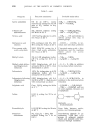
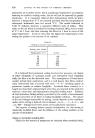
416 JOURNAL OF THE SOCIETY OF COSMETIC CHEMISTS mol) of fiamino ethyl morpholine, and 60 ml pyridine is heated for 7 hours at 135 ø . After cooling of the reaction mixture and centrifuging off the unreacted material, the pyridine is removed in vacuum. The residue obtained is warmed with 500 ml of M/1 HC1, and the insoluble impurities are filtered off. The flitrate obtained after cooling is adjusted to a pH of 7.5 with NaOH. The crude product precipitates, and is isolated by filtration. It is then purified by passing a solution in a benzene-hexane mixture, through an alumina column. Two adsorbed zones are obtained, the lower orange band being the desired product. It is sufficient to cut the aluminia column, and recover the product by warm alcohol extraction of the aluminia. After cooling the alcoholic solution, 2-(/•morpholino-ethyl) amino- anthraquinone is obtained with a yield of about 250/0 . This product is obtained in the form of yellow crystals melting at 190 ø . Table I Calculated as Analysis C20 H20 N• O a Found C% 71-43 71.39 71.30 H% 5.95 6.11 6.04 N% 8.33 8.22 8.27 The tertiary base thus obtained, dissolved in chlorobenzene by heat, is quaternized by the action of methyl sulphate at a temperature of 110-115 ø (contact period about 30 minutes). After cooling, the quaternary thus formed--methyl [2-timethyl morpholinium/ethalyamine anthraquinonel sul- phate-is dried. Yield: 91%. In the same way, the following two dyes were prepared from 2-chloro- anthraquinone, with a yield always below 30•o, despite numerous variations in the methods: (a) Methyl [2-(fitrimethylammonium)propylamino-anthraquinonel sulphate, by condensation with N,Ndimethyl 7 propylene diamine. (b) Methyl [2-(fimethyldiethylammonium) ethylamino-anthraquinone] sul- phate, by condensation with N,Ndiethyl fi ethylene diamine. Methyl [2- (fimethyldiethylammonium) ethylamino- anthraquinone was prepared with very good yields from 2-amino-anthraquinone, in accordance with the process described below. A mixture of 165 g (0-74 mol) of 2-amino-anthraquinone, 485 g (3.54 mol) of N,Ndiethylamino ethyl chloride, 1600 ml of nitrobenzene is heated for 2 hours at 180 ø.
Purchased for the exclusive use of nofirst nolast (unknown)
From: SCC Media Library & Resource Center (library.scconline.org)