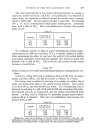
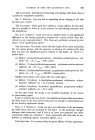
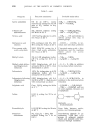
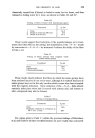
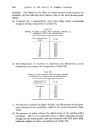
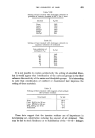
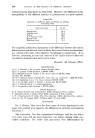
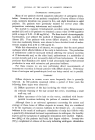
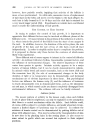
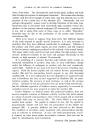
THE CHEMISTRY OF HAIR 431 Table VIII Setting of hair treated with hydrogen chloride in presence of various alcohols at 50 ø C for 1 hour Alcohol % Set None Amyl Butyl Propyl Ethyl Methyl 14'5 12'0 17'2 16'3 18'2 26-1 Table IX Setting of hair treated with hydrogen chloride in aqueous solutions of methanol Concentration of methanol (%) lOO 60 40 20 lO 5 % Set 14-5 26'1 24'5 23 '3 23'0 21-3 16'6 It is not possible to explain satisfactorily the setting of esterified fibres, but it would appear that esterification of the carboxyl groups in the fibre enhances the reactivity of the amino and disulphide groups. It is interesting to note that esterification of oxidized or deaminated hair improves the setting of these materials. Table X Setting of fibres treated with reagents which attack the tyrosine residues Treatment % Set None Conc. I-I2SO • for 30 sec Conc. HNOa for 60 sec 40% HNOa for 18 hr Iodination 14-5 10'1 11'1 7'2 --3.0 These data suggest that the tyrosine residues are of importance in determining set, substitution reducing the amount of set obtained. This may be due to steric hindrance or to stabilisation of the --S•S-- linkages

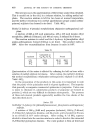
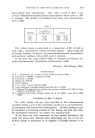
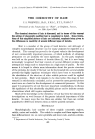
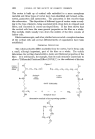
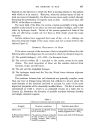
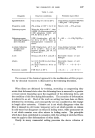
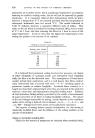
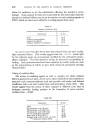
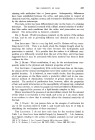
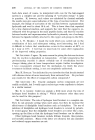
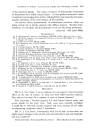
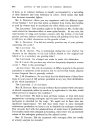
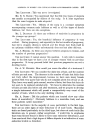
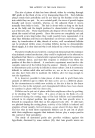
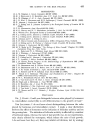
432 JOURNAL OF THE SOCIETY OF COSMETIC CHEMISTS either by oxidation or by the substitution affecting the reactivity of the linkage. Some support for this view is provided by the observation that the nitrated or iodinated fibres can be set in solutions of such reducing agents as THPC which are much more effective as setting agents than water. Table X Setting of reduced hair Treatment % Set None Sodium hydrosulphite Sodium bisulphite Sulphur dioxide in methanol 14.5 20'5 16'5 21 '7 As can be seen from the above data the reduced fibres set more readily than untreated fibres. This would suggest that the --S--S-- bonds split by the reducing agent are not seriously modified by the subsequent atmos- pheric oxidation. The fibre therefore retains its increased susceptibility to setting. Such pretreatments have been exploited for textile purposes, such as the presensitizing of fabrics to give them enhanced permanent pleating characteristics. Setting of oxidized fibres The action of oxidizing agents on hair is complex, for while oxidized fibres in general do not take a set in water, those oxidized by such reagents as peracetic acid, permonosulphuric acid and periodic acid under well defined conditions, take a set more readily than untreated fibres (Table XII). This would suggest that the action of these reagents is different from that of hydrogen peroxide, leading perhaps to the formation of more reactive residues than --SOoH. Table XII Treatment % Set •q-one 2% peracetic acid (5 min) 2% peracetic acid (60 min) 2% peracetic acid (120 min) 10. vol. hydrogen peroxide Iodic acid (4 hr at 40 ø C) Periodic acid (0.5% at R.T. for 7 hr) * Untreated control 5.9% 14'5 6'1 22'5 30'1 1'6 23'5* 24'0*
Purchased for the exclusive use of nofirst nolast (unknown)
From: SCC Media Library & Resource Center (library.scconline.org)