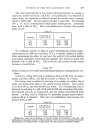
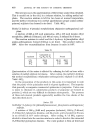
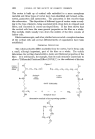
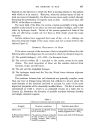
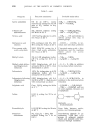
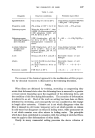
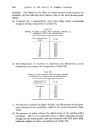
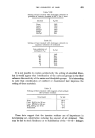
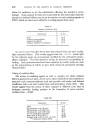
414 JOURNAL OF THE SOCIETY OF COSMETIC CHEMISTS methyl[1-hydroxy 4-(t•methyl morpholinium) ethylamino-anthraquinone] sulphate, and bismethyl [1-hydroxy 2,4-(ptrimethylammonium) phenylamino-anthraqui- none] sulphate. SYNTHESIS So far as Series I is concerned, the products are obtained either from 2-chloro-anthraquinone, by condensation with the corresponding tertiary- primary diamine and subsequent quaternization, or from 2-amino-anthra- quinone by the action of N,Ndiethylamino ethyl chloride, and quaterniza- tion. As regards Series II, the products are obtained from quinizarine by substi- tution of one of the OH groups by a t•amino ethyl morpholine or a 7amino propyl piperidine, followed by quaternization. Finally, with regard to Series III, the compound mentioned is synthesized from purpurine by the action of N,Ndimethyl pphenylene diamine, and subsequent quaternization. APPLICATION TO HAIR DYEING Hair dyeing is effected by the application, at normal temperature and in the usual manner, of an aqueous solution of dyes, in fairly large concentra- tions but generally from 0.05M to 0.2M. The pH of the solutions may vary within fairly wide limits, e.g. between 4 and 9. The tints obtained on white hair are respectively: For Series I • yellow to orange-yellow for Series II -- violet to purple-violet for Series III -- grey. The compounds of Series II were studied regarding resistance to sunlight. Work on the other two Series is in progress. These are based on evaluations similar to those perfected for textiles (6). In such evaluations, degrees of "fastness" or "resistance" are classified, by convention, in a certain order, from 1 to 8. More details are to be found elsewhere (7). It is quite clear that the transposition of this method from textiles to hair involves a certain arbitrary factor and that, in addition, the standard figures cannot have the same absolute significance for hair as for wool. In class II, a degree of fastness between 4 and 5 for a hair dye, can be regarded as excellent. In addition, studies on the physiological behaviour of some of these dyes, when in contact with the skin, have also been carried out. These studies

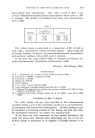
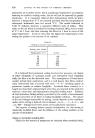
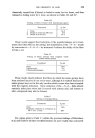
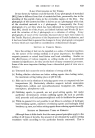
SYNTHESIS OF SOME NEW QUATERNARY DYES 415 were carried out on humans, at the Rothschild Ophthalmological Foundation, Paris, and we are grateful to Dr. Sidi for the results quoted below. The tests were carried out in the usual way, the standard being pphenyl- enediamine (P.P.D.) in 2•o concentration (8). Here are a few results obtained. (a) With methyl[1-hydroxy 4-(/•methyl morpholinium) ethylamine anthra- quinone] sulphate. 24 tests were carried out: 21 gave 0 to P.P.D., and 0 to the dye, 1 ,, q- reaction to P.P.D., negative to the dye, 1 ,, q-q- reaction to P.P.D., negative to the dye, 1 ,, q- q-q- reaction to P.P.D., negative to the dye. (b) With 2-methyl[1-hydroxy-2,4-(ptrimethylammonium) phenylamino- anthraquinonel sulphate. 125 tests were carried out: 92 gave 0 to P.P.D., and 0 to the dye, 1 ,, caustic reaction to P.P.D., negative to the dye, 1 ,, -4- reaction to P.P.D., negative to the dye, 13 ,, q- reactions to P.P.D., negative to the dye, 1 ,, q- reaction to P.P.D., giving q- to the dye, 8 ,, q-q- reactions to P.P.D., negative to the dye, 4 ,, q-q-q- reactions to P.P.D., negative to the dye, 1 ,, q-q-q-+ reactions to P.P.D., negative to the dye, 4 ,, ? reactions to P.P.D., negative to the dye. Another factor to be taken into consideration is the stability of the aqueous solutions of these dyes on storage.. We wish to report that certain dyes of Series II develop unpleasant odours in solution directly related to the period of storage, which makes them practically useless for cosmetic purposes. This applies to the quaternary dyes of this series involving an N,Ndimethyl ethylene diamine, and N,Ndiethyl propylene diamine residue. On the other hand, the dyes in which the quaternary ammonium groups form part of a heterocyclic nucleus do not have this disadvantage. Only preparations of these latter compounds will therefore be described. This disadvantage is not encountered in Series I and III. Now follow detailed methods of operation with respect to the preparation of the compounds mentioned above: Series I Methyl [2-(l•methyl morpholinium) ethylamino-anthraquinonel sulphate. A mixture of 19.4 g (0.08 mol) of 2-chloro anthraquinone, 41.6 g (0.32•
Purchased for the exclusive use of nofirst nolast (unknown)
From: SCC Media Library & Resource Center (library.scconline.org)