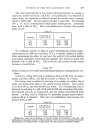
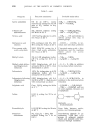
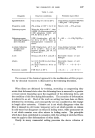
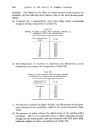
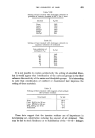
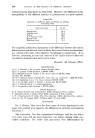
418 JOURNAL OF THE SOCIETY OF COSMETIC CHEMISTS The next process is the quaternization of the tertiary amine thus obtained. This is carried out in the cold, in a toluene solution, by adding methyl sul- phate. The reaction mixture is left for two hours at normal temperature, and the methyl [1-hydroxy 4-(7 methyl piperidinium) propyl amino-anthra- quinone• sulphate thus formed is air dried. Yield: 90%. Methyl [1-hydroxy 4-(timethyl morpholinium) ethylamino-anthraquinone• sul- phate. A mixture of 840 g (3.5 mol) quinizarine, 455 g (3.5 mol) fiamino ethyl morpholine, 2500 ml isobutanol, and 100 ml water, is refluxed for 3 hours. The reaction mixture is cooled and the 1-hydroxy 4-(•morpholine ethyl amino-anthraquinone formed (1024 g) is air dried. This product melts at 160 ø. After two recrystallizations from benzene it melts at 165 ø. Table IV Calculated as Analysis C•o I-I•o N2 O4 Found C% 68.18 68.11 68.11 H % 5'68 5.75 5.64 N% 7'95 7'77 8-00 Quaternization of this amine is effected by refluxing for half an hour with a solution of methyl sulphate in toluene. After cooling, the methyl[1-hydroxy 4(• methyl morpholinium) ethylamino-anthraquinone• sulphate is air dried. Yield: 92%. In the preparation of the products in this series it is important to note that the purity of the quinizarine used is of great significance. The impurity that generally accompanies commercial quinizarine is purpurine. Unless care is taken to eliminate it, substitution products of purpurine are formed in position 2, which are very difficult to eliminate subsequently. The presence of these red-coloured products appreciably modifies the true shades of the dyes described above. Series III hisMethyl [1-hydroxy 2,1-(ptrimethylammonium) phenylamino-anthraquinone] sulphate. A mixture of 264 g (0.83 mol) purpurine (technical), 1018 g (7.48 mol) N,Ndimethyl pphenylene diamine, and 64 g boric acid is heated for 8 hours in an oil-bath at 110 ø under nitrogen. After cooling, 4 l of 30% aqueous alcohol is stirred into the reaction mixture in order to dissolve the unreacted N,Ndimethyl pphenylene diamine. The crude product is then air dried and

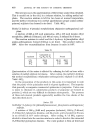
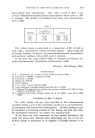
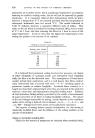
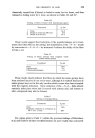
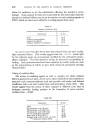
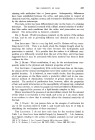
SYNTHESIS OF SOME NEW QUATERNARY DYES 419 recrystallized from chlorobenzene. Thus, with a yield of 80%, 1-oxy 2,4-(pN,Ndimethylaminophenyl)amino-anthraquinone which melts at 245 ø is obtained. The product, recrystallized three times from chlorobenzene, melts at 255 ø . Table V Calculated as Analysis %0 H2• N40a Found C% 73.17 73.65 73-37 Hø/o 5.69 5'85 5-92 N % 11.38 11-56 11-22 This tertiary amine is quaternized at a temperature of 80 ø for half an hour, using a chlorobenzene solution of methyl sulphate. After cooling and air drying, 2-methyl [1-hydroxy 2,4-(ptrimethylammonium) phenylamino- anthraquinone I sulphate, with an 88•o yield is obtained. In the same way, using methyl iodide, we obtained 2-[1-hydroxy 2,4- (ptrimethylammonium) phenylamino-anthraquinonel iodide. (Received: 11th February 1964.) REFERENCES {1) R. L. Goldemberg Am. Perfumer Aromat. 74 48 {November 1050). (2) French Pat. 1,138,055 Supplement 70,067. (3) French Pat. 1,137,020. (4) Belgian Pat. 576,014. (5) Patent pending. (6) J. Soc. Dyers Colourists 69 410 (1053). (7) Code of European Continental Study Group, 2nd Edn. 31 (1058). {8) R. Sidi and R. Longueville Les accidents par produits capillaires 16 (1058) (Edition Medicales Flammarion, Paris). {0) M. Ichikawa Tokyo Kdgyd Daigaku Gakuhd Ser. B 127 (1050) Chem Zentr. 12648 (1962). Introduction by Mrs. A. Bugaut The violet, purple and grey dyes described in this communication constitute merely a part of the experiments carried out in our laboratories, on quaternary salts derived from anthraquinone. All these substances may be considered as interesting material for hair tinting, and with their help, the development laboratory can achieve any required shade. Of the three new series mentioned, we have studied particularly the violet and purple dyes obtained when substituting only one of the two hydroxy groups of quinizarine by an aliphatic N,Ndialkyl diamine or by
Purchased for the exclusive use of nofirst nolast (unknown)
From: SCC Media Library & Resource Center (library.scconline.org)