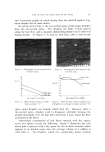
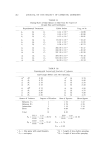
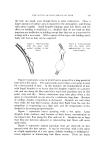
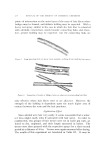
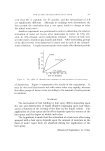
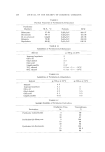
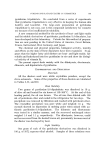
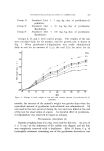
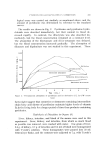
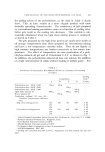
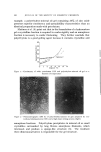
THE ACTION OF HAIl( SPRAYS ON HAll( 315 seen that the A variable, the B variable, and the interactions of AB are significantly different. Although no rankings were determined, the data permit the conclusion that a wet spray tends to change or relax the initial water wave. Another experiment was performed in order to determine the relative relaxation of water-set tresses after immersion in water, in 75% eth- anol, in {, 5% ethanol, and in anhydrous ethanol. Tresses of hair were set with water, wound on peg boards and dried. After unwinding, groups of six dried tresses were immersed in water and in each of the ethanol/' water solutions. Length measurements were made after distinct periods 10½ 8oe • •c • 40 • oeo• o ffWATER 20 40 60 80 IO0 120 TIME IN SECONDS Figure 9. The effect of ethanol/water mixtures on curl retention of wound tresses of immersion. Figure 9 summarizes the results of the experiment. It may be observed that tresses wet with water relax very rapidly, whereas the other groups of tresses relax according to the amount of water present in solution. SUMMARY The mechanism of hair holding by hair spray differs depending upon the size and distribution of liquid droplets impinging upon hair fibers and is a function of the wetting of the fiber by the liquid vehicle. The application of a hair spray and its effect depends upon the wetness of the hair spray and the degree at which curls relax. The hypothesis is made that the relaxation of a hair tress after being sprayed with a hair spray depends upon the amount of moisture in the form of water vapor from air absorbed during the application of the hair spray. (Received September 14, 1fi64)

316 JOURNAL OF THE SOCIETY OF COSMETIC CHEMISTS CHANGE OF ADDRESS (1) Allow 6 weeks to make the change. (2) Send change to Editorial Assistant, 2758 Pine Hill Dr., Birmingham, Michigan 48008. (3) Print name and new ad- dress-including postal zone number. Give old addressmif possible re- turn addressed portion of the envelope in which your last Journal was mailed.
Purchased for the exclusive use of nofirst nolast (unknown)
From: SCC Media Library & Resource Center (library.scconline.org)