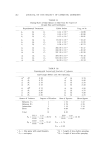
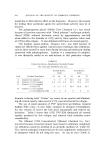
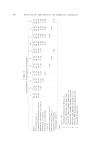
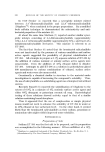
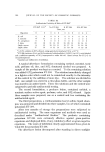
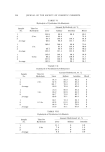
SOLUBLE BROMINATED SALICYLANILIDES 345 A ntibacterial Studies Antibacterial studies of the ET-394 salts (0.5% in 50% ethanol in amber bottles) were conducted over a period of six months to determine whether or not a loss of activity occurred. As shown in Table III, the salts retained their potency during this time. The tests were conducted with six different organisms. Nutrient agar plates were smeared with the organisms, and discs were placed on the smears. The plates were incubated for 72 hours at 37øC. Ethanol (50%) was used as a standard. Stability Studies Aqueous solutions of the salts of the brominated salicylanilides turned brown within two weeks after exposure to room light. Solutions of the salts in 50% ethanol decomposed much more slowly and to a lesser extent. Solutions in amber bottles did not show a color change after one year. It appeared that light was necessary for the degradation. Salt solutions containing a trace of iron as an oxidizing catalyst did not change color in amber bottles. Several antioxidants were used in an attempt to prevent the degrada- tion. To 0.1% solutions of sodium and potassium ET-394 were added 0.1% of sodium bisulfite, sodium nitrite, sodium sulfite, ascorbic acid, and sodium metabisulfite, respectively. In every solution an immediate precipitate appeared. Similarly glycerin and 2-methyl-2,4- pentanediol in concentrations of from 0.05-5.0% yielded yellow solutions with heavy precipitation. Sodium formaldehyde sulfoxylate and tetrasodium ethylenediamine- tetraacetic acid (38%) in concentrations of 0.001-0.1% in combinations with the sodium or potassium salts of ET-394 (0.1%) dissolved in water or 50% ethanol produced varying shades of brown with sedimen- tation. Chemical degradation also occurred even when various ultra- violet light absorbers were added to the solutions. At this point it was realized that the mechanism and kinetics of the degradation of the salts in solution was beyond the scope of this project. Thus, this information will be presented in a separate publication. Practical Use Because of its unusually high solubility, potassium ET-394 was selected for incorporation into an aftershave lotion, a preshave lotion and a shampoo.

346 JOURNAL OF THE SOCIETY OF COSMETIC CHEMISTS TABLE III Antibacterial Activity of Salts o[ ET-394 a ET-394 •' G-11 ø Na ET-394 K ET-394 NH4 ET-39t Time, mo. Organism 0 E. coli 0 A. faecalis 6 c Ps. aeruginosa 0 S. lutea 21 Staph. aureus 8 Staph. albus 17 0 0 3 6 0 3 6 0 3 6 0 0 0 0 0 0 0 0 0 0 11 3 2 3 3 6 3 2 2 3 0 0 0 0 0 0 0 0 0 0 18 11 14 12 15 20 13 13 14 11 12 15 16 11 12 17 15 11 12 13 13 8 11 14 11 19 16 8 13 13 a A 0.5% solution in 50% ethanol, using agar plates incubated 72 hr. at 37øC. 0 ET-394 (mixture of tri- and di-brominated salicylanilides) (0.025%) in 0.5% cetyl alcohol aud a sufficient quantity of 70% isopropanol to make 100 mi. Same solvent for 0.1% G-11 (hexachlorophene). c Numbers are millimeters of inhibition. A typical aftershave formulation containing sorbitol, menthol, boric acid, perfume oil, dye, and 50% denatured alcohol was prepared. A sample of the product was kept as a control. To the remaining solution was added 0.2% potassium ET-394 The solution immediately changed to a lighter color which could not be rematched exactly to the intensity of the control by the addition of more dye. The solution was divided in half one sample was stored in a clear glass bottle, and the other sample was stored in an amber bottle. These two solutions and the control were subjected to periodic antibacterial testing. The second formulation, a preshave lotion, contained sorbitol, a nonionic surface active agent, perfume, color, and 50% ethanol. Again three samples were prepared, one as a control and two containing the antibacterial agent. The third preparation, a triethanolamine lauryl sulfate liquid sham- poo, was prepared and divided into three samples, two of which contained potassium ET-394. After two months of storage the preparations were subjected to antibacterial testing. The same organisms and methods were used as described under "Antibacterial Studies." The products containing potassium ET-394 were extremely effective against gram-positive organisms and displayed little, if any, inhibitory effect on gram-negative organisms. The zones of inhibition closely approximated those given in Table III for potassium ET-394. The aftershave lotion decomposed after standing in direct sunlight
Purchased for the exclusive use of nofirst nolast (unknown)
From: SCC Media Library & Resource Center (library.scconline.org)