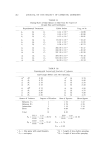
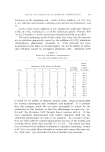
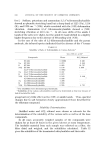
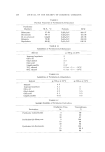
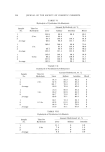
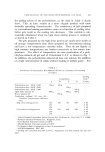
ITSE OF ANTIdRRITANTS IN COSMETIC FORMULATING 323 Aerosol Colognes After the customary fragrance evaluations, a certain perfume com- pound was chosen and combined in the following "concentrate" •or filling in aerosol bottles: 2.3% Perfume Compound 1.5• Propylene Glycol 96. (1% Alcohol SD 39C It should be recognized that this formula includes about 1% diethyl phthalate, the U.S. government-specified denaturant for the SDA #39C ethanol which was used. Rabbit eye tests (see Control, Code "A" in Table I) showed that this particular cologne formula was a rather strong eye irritant (scores re- TABLE I Draize Eye Test Scores--Cologne Series (No wash after instillation into eye) Code 72 Hour 7-Day Total Points Scores (Cumulative) Cornea Total Cornea Total Anti-Irritant Used Only Score Only Score A Control 8 17 34 80 B 2.0% polyprop. glycol P2000 0 4 0 28 C 0.1% azulene 0 5 0 28 D 0.14% Miranol C2M 0 6 0 29 E 0.5% polyprop. glycol P2000 0 8 0 39 F 0.3% PVP-K30 0 9 0 56 G 0.3 % thiodiglycolic acid 5 11 13 44 H 0.3% Miranol 2MCA 7 17 27 92 ported in this and following tables are according to the method of Draize (12), averaged over 4-12 rabbits, with product not washed out after eye instillation). The product evidently had to be modified before marketing: Either the perfume had to be changed or an anti- irritant found to make this cologne safer if it should accidentally be discharged into a consumer's eye. As can be seen in Table I, a number of agents were found to act as anti-irritants for this particular cologne. Not all were commercially

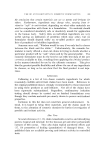
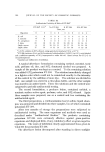
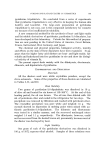
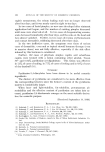
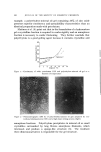
324 JOURNAL OF THE SOCIETY OF COSMETIC CHEMISTS usable due to their adverse effect on the fragrance. However, the reasons for testing these particular agents for anti-irritant activity may be of interest. The polypropylene glycol (P2000, Dow Chemical Co.) was tested because of previous successes with "block polymer" surfactant polyols. Glycol P2000 reduced irritation scores by approximately one-half when added to the formula at 0.5% and by three-quarters when used at 2.0% in this cologne. It also eliminated all traces of corneal opacity. The Azulene (guaia-azulene, Dragoco, Inc.) was tried because of claims for effectiveness against various types of primary skin irritations, such as those caused by razor burn during shaving and underarm chafing connected with antiperspirants. Azulene is a component of camphor. It was distinctly useful as an anti-irritant in this particular cologne TABLE II Draize Eye Scores--Mentholated Alcoholic Product (No wash after instillation into eye) Corneal Scores, Total Scores, hours hours Code Product Description 24 48 72 24 48 72 A Control--no menthol 0 0 0 10.0 6.2 5.0 B Control q- 0.7% menthol 5.4 5.0 2.5 14.7 12.4 6.5 C Control q- 0.7% menthol q- 0.3% PVP 0 1.7 1.7 16.0 16.0 12.7 D Control q- 0.7% menthol q- 0.14% Miranol C2M 0 0 0 0 0 0 formula, reducing total "Draize" eye scores to one-quarter and eliminat- ing all corneal opacity when used at 0.1% concentration in the cologne. The use of small amounts of PVP (polyvinyl pyrollidone, General Aniline Film Corp.) is now fairly common in shampoo formulations, for two reasons it leaves the hair more manageable and reduces eye irritation. Table I shows that 0.3% PVP-K30 eliminated all corneal opacity produced by this cologne and reduced total irritation scores considerably. The Miranol C2M Concentrated (Miranol Chemical Co., Inc.) was tried because it had previously been found to eliminate completely eye irritation caused by menthol in an alcoholic medium (cf. Table II). The current principal commercial use for this amphoteric surfactant is in shampoos which do not sting the eyes. As can be seen (Table I),
Purchased for the exclusive use of nofirst nolast (unknown)
From: SCC Media Library & Resource Center (library.scconline.org)