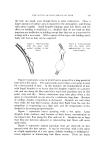
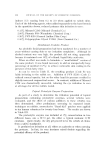
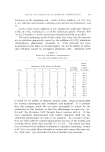
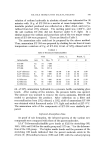
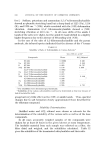
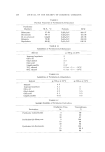
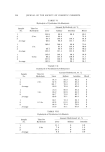
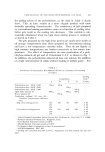
SOLUBLE BROMINATED SALICYLANILIDES 34:3 solution of sodium hydroxide in absolute ethanol was triturated for 30 minutes with 10 g. of ET-394 in a mortar at room temperature. The insoluble product produced was collected on a filter, dried, and recrys- tallized from hot 25% ethanol. The melting point was 300øC, and the salt (sodium ET-394) did not fluoresce under U.V. light. In a similar manner the sodium and potassium salt of the two major compo- nents of ET-394 were prepared. These are listed in Table I. The ammonium salts could not be prepared by the above method. Thus, ammonium ET-394 was prepared by shaking for one hour at room temperature a mixture of 2 g. of ET-394, 50 mi. of 50% ethanol and 50 TABLE I Salts of Brominated Salicylanilides Yield Calcd., % Found, Salicylanilide Salt % M.p. øC C H C H ET-394 Na 73 300 ET-394 K 90 300 ET-394 NH4 55 227-9 3,5,4•-tribromo Na 65 300 3,5,4•-tribromo K 63 300 3,5,4•-tribrorno NH4 71 232-4 3,5-dibromo Na 74 300 3,5-dibromo K 65 300 3,5-dibromo NH• 74 140-2 33 08 31 99 33 43 39 95 38 05 40 21 1.49 32.46 1.45 31.63 2.37 34.10 2.04 39.55 1.95 37.78 3.09 39.66 1.80 2.02 2.39 2.20 2.15 3.01 mi. of 28% ammonium hydroxide in a pressure bottle containing glass beads. After cooling of the mixture, the pressure bottle was opened. The mixture was warmed to remove the excess ammonia, filtered and cooled to precipitate the product. After collection on a filter and recrystallization from 25% ethanol, a 55% yield of ammonium ET-394 was obtained which fluoresced under U.V. light and melted at 227-9øC. The ammonium salts of the components of ET-394 were similarly pre- pared. Infrared Absorption Data As proof of salt formation, the infrared spectra of the various new compounds were compared with those of the parent molecules. 3,5,4CTribromosalicylanilide gave bands at 3525 for stretching OH, 1645, 1590, and 1540 for the amide group and 1175 cm.-• for the deforma- tion of the OH group. The higher amide bands and the presence of the stretching OH bands indicated that the parent molecule exists in the • form (9) [H-bonding between (NH) and (OH) with the carbonyl group

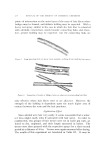
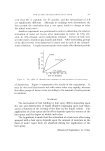
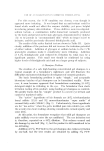
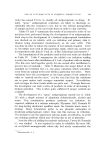
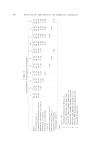
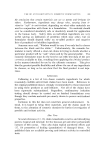
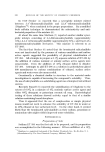
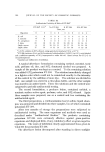
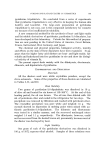
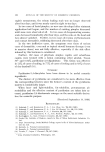
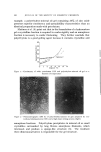
334 JOURNAL OF THE SOCIETY OF COSMETIC CHEMISTS free]. Sodium, potassium and ammonium 3,5,4'-tribromosalicylanilide showed no phenolic stretching band but a sharp band at 1225 (Na), 1210 (K), and 1220 cm.-1 (NHq) which correlated with the (OH) deformation vibration. Ammonium 3,5,4•-tribromosalicylanilide showed a (NH) stretching vibration at 3410 cm. -•. In all cases shifts of the amide I bands of the salts were slight, but the amide II band shifted to a slightly higher frequency due to the absence of H-bonding with (NH). ,In the case of the salts of 3,5-dibromosalicylanilide and the parent molecule, the infrared spectra indicated that the absence of the 4 hbromo TABLE II Solubility of Salts of SMicylanilides in Various Solvents a Gin./100 ml. at 25 ø Compounds Water 50% Ethanol ET-394 0 Na ET-394 0 K ET-394 0 NH• ET-394 0 3,5,4'-Tribro•nosalicylanilide 0 Na 3,5,4 Tribromosalicylanilide 0 K 3,5,4 •-Tribromosalicylanilide 0 NH• 3,5.4 Tribromosalicylanilide 0 3,5-Dibromosalicylanilide 0 Na 3,5- Dibromosalicylanilide 1 K 3,5-Dibromosalicylanilide 3 NH4 3,5-Dibromosalicylanilide 0 ß 00086 O. 050 27O 3. 055 645 10. 737 106 3. 866 o 0042 ....... 347 ....... 972 ....... 145 3. 448 036 ....... 298 ....... 645 ....... 555 4. 731 a The solubilities were determined gravimetrically. * Solubilities of the various salicylanilides could not be determined at this time because of lack of material for study. group had very little effect on the (OH) or amide bands. Thus, spectral changes due to salt formation closely approximated those described for the tribromo compound. Solubility Determinations Distilled water and 50% ethanol were chosen as solvents for the determination of the solubility of the various salts as well as of the base compounds. In all cases accurately weighed samples of the compounds were shaken for at least 24 hours in the given solvent at room temperature. The insoluble material from each sample was collected on a filter, the filter dried and weighed, and the solubilities calculated. Table II gives the solubilities of the brominated salicylanilides and their salts.
Purchased for the exclusive use of nofirst nolast (unknown)
From: SCC Media Library & Resource Center (library.scconline.org)