316 JOURNAL OF THE SOCIETY OF COSMETIC CHEMISTS CHANGE OF ADDRESS (1) Allow 6 weeks to make the change. (2) Send change to Editorial Assistant, 2758 Pine Hill Dr., Birmingham, Michigan 48008. (3) Print name and new ad- dress-including postal zone number. Give old addressmif possible re- turn addressed portion of the envelope in which your last Journal was mailed.

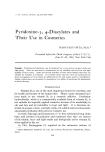
J. Soc. Cosmetic Chemists, 16, 317-340 (1965) Use of Anti-Irritants Formulating in Cosmetic ROBERT L. GOLDEMBERG, B.S.* Presented before the Third Congress of the I.F.S.C.C., .rune 21-26, 196•, New York City Synopsis--An anti-irritant is defined as an agent which, when used in conjunction with skin or eye irritants, reduces their irritation potential sufficiently to be tolerated when applied to the body. Three different mechanisms are postulated for the activity shown by various anti-irritants: Some operate by "complexing" the irritant itself. Others react with the skin, blocking reactive sites so that the irritant cannot react with it. A final group seems nonreactive and apparently protects by merely preventing complete physical contact between irritant and skin. Examples of each mode of action are given. The major portion of the report presents irritation test data showing specific anti-irritant activity, or lack thereof, for a number of agents which were added to various types of cosmetic formulas. In particular, an antiperspirant formula is developed step-by-step, with the ir- ritant effect of each component determined. An appendix lists several dozen agents for which anti-irritant properties have been claimed, together with a summary of the evidence backing such claims. INTRODUCTION It has been known since pre-history that certain natural materials have a soothing effect when applied to irritated skin. Primitive witch doctors often included such ingredients in magic potions which thereby developed mysterious curative powers, especially when applied to the accompaniment of suitable incantations and dances. Many of these same ingredients, plus a number of newer synthetic agents, are used today in cosmetic and dermatologic preparations for their actual or supposed curative powers. It is assumed that they promote the healing of various types of skin irritation. Many formu- * Charles of the Ritz, South Norwalk, Conn. 06854. 317
Purchased for the exclusive use of nofirst nolast (unknown)
From: SCC Media Library & Resource Center (library.scconline.org)