322 JOURNAL OF THE SOCIETV OF COSMETIC CHEMISTS irritant can diffuse throughout the mass. As the local concentration is depleted by reaction with the skin, more irritant continually diffuses to the point of skin contact. Any material which retards diffusion thus reduces skin irritation simply by reducing the total amount of irritant making contact with the skin. Irritant motility can be reduced by thickening or even by complexing in such a way as to reduce solu- bility in the vehicle. Another way of reducing contact between the skin and irritants is the use of emulsions with the irritant present only in the discontinuous phase. For example, use of W//O emulsions as vehicles for water- soluble irritants generally results in the skin being "wet out" first by the oil phase. This oily layer on the skin can then act as a physical barrier against contact with the hydrophilic irritant. (iii) By Blocking he Reaction Si es on the Skin There are various ways of doing this. One is the use of a phe- nomenon which is primarily physical, i.e., adsorption of oils onto keratin (see ii). Many highly nonpolar fatty materials (such as mineral oil) adsorb very strongly onto keratin (10, 11). Small amounts of these oils in shampoos adsorb on the hair and leave a sheen, even though the active ingredients of the shampoo are excellent emulsifiers for just such oils. In antiperspirant emulsions, inclusion of mineral oils and waxes may reduce irritation by oil-insoluble astringent alu- minum salts via this type of selective adsorption. Keratin is also highly reactive chemically. It is amphoterie, react- ing with both acids and bases. The eysteine portion of the softer keratins reacts readily with heavy metals, forming mercaptides. Keratin is also fairly susceptible to oxidation and reduction, and to materials such as phenols or urea which affect its hydrogen bonding. All of these are routes by which irritants may attack the skin chemically, and by which anti-irritants may also react with it in such a way as to block further reaction with irritants. When anti-irritants exhibit very specific protective activity, it is probably due to chemical reaction with the irritant. When the protection is of a broader nature, the probable mechanism is via some sort of reaction with the body keratin. PRACTICAL APPLICATION The foregoing theoretical discussion will now be illustrated with the aid of some practical examples.

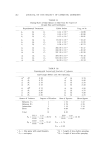
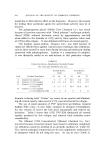
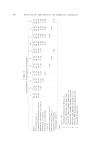
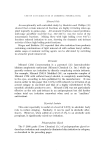
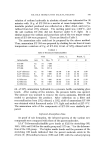
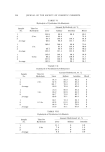
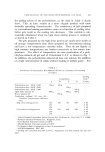
ITSE OF ANTIdRRITANTS IN COSMETIC FORMULATING 323 Aerosol Colognes After the customary fragrance evaluations, a certain perfume com- pound was chosen and combined in the following "concentrate" •or filling in aerosol bottles: 2.3% Perfume Compound 1.5• Propylene Glycol 96. (1% Alcohol SD 39C It should be recognized that this formula includes about 1% diethyl phthalate, the U.S. government-specified denaturant for the SDA #39C ethanol which was used. Rabbit eye tests (see Control, Code "A" in Table I) showed that this particular cologne formula was a rather strong eye irritant (scores re- TABLE I Draize Eye Test Scores--Cologne Series (No wash after instillation into eye) Code 72 Hour 7-Day Total Points Scores (Cumulative) Cornea Total Cornea Total Anti-Irritant Used Only Score Only Score A Control 8 17 34 80 B 2.0% polyprop. glycol P2000 0 4 0 28 C 0.1% azulene 0 5 0 28 D 0.14% Miranol C2M 0 6 0 29 E 0.5% polyprop. glycol P2000 0 8 0 39 F 0.3% PVP-K30 0 9 0 56 G 0.3 % thiodiglycolic acid 5 11 13 44 H 0.3% Miranol 2MCA 7 17 27 92 ported in this and following tables are according to the method of Draize (12), averaged over 4-12 rabbits, with product not washed out after eye instillation). The product evidently had to be modified before marketing: Either the perfume had to be changed or an anti- irritant found to make this cologne safer if it should accidentally be discharged into a consumer's eye. As can be seen in Table I, a number of agents were found to act as anti-irritants for this particular cologne. Not all were commercially
Purchased for the exclusive use of nofirst nolast (unknown)
From: SCC Media Library & Resource Center (library.scconline.org)