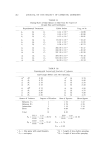
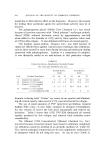
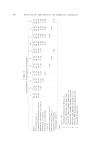
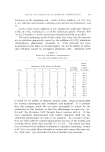
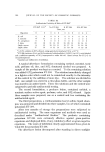
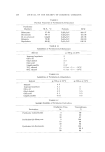
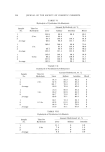
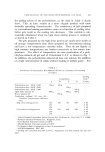
326 JOURNAL OF THE SOCIETY OF COSMETIC CHEMISTS indexes (12) varying from 0.5 to 2.0 when applied to rabbit skins. Each of the following agents, when added separately to the base formula in the quantities shown, reduced primary skin irritation to zero: 0.15% Miranol C2M (Miranol Chemical Co.) 2.00% Pluronic F68 (Wyandotte Chemical Corp.) 0.30% PVP-K30 (General Aniline Film Corp.) 0.50% Polypropylene Glycol P-2000 (Dow Chemical Co.) •lentholated Alcoholic Product An alcoholic facial preparation had been marketed for a number of years without causing skin or eye irritation complaints. Although its alcohol content was very high, the product did not sting, apparently because it contained over 10% of a bland, liquid fatty acid ester. When an effort was made to formulate a "mentholated" version of the same product, it was found necessary to add an unexpectedly large percentage of menthol (0.7ø•0) to achieve noticeable skin cooling in the presence of this fatty ester. As can be seen in Table II, the resulting product (Code B) was fairly irritating to the rabbit eye. Addition of PVP (K30) (Code C) reduced corneal opacity, but on the other hand its presence resulted in slightly increased conjunctival scores. In contrast, addition of Miranol C2M was dramatically successful, reducing the eye irritation to zero at all stages for all the rabbits tested. Topical ProteolyZic Enzyme Preparation As part of a study to determine the irritation potential of topical preparations containing proteolytic enzymes, several vehicles were evaluated, and the effect of various additives to these vehicles was then determined. After preliminary screening by repeated insult techniques on rabbits, nonocclusive "Band-Aid" patches were applied to ten human volunteers for twenty-four hours. The results are shown in Table III. The proteolytic enzyme was included at 2% concentration in two different bases, one a W/O gel, the other a typical nonionic O/W emulsion. Quite clearly, the oily gel proved to be the vehicle of choice from a safety standpoint. It produced no irritation at all, either as a placebo or when carrying the protease. In fact, its very inertness raised doubts regarding the potential efficacy of the product.

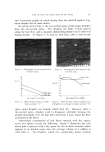
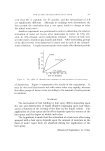
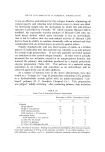
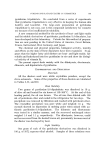
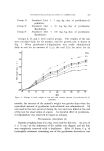
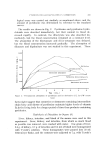
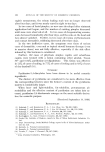
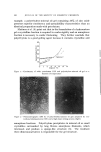
USE OF ANTI-IRRITANTS IN COSMETIC FOI4MULATING 327 For this reason, the ()/W emulsion was chosen, even though it appeared more irritating. It was hoped that an anti-irritant could be found which would not affect the enzyme stability, yet prove helpful in reducing primary skin irritation. Three additives-were investigated' sodium lactate, a combination buffer-humectant normally produced by the body and present on the skin glycogen, demonstrated by ()pdyke (13) to be present in "accommodated skin" which no longer reacts to irritants and the previously discussed thiodig'lycolic acid. The results of this rather limited test are shown in Table III. Quite clearly, addition of the protease did not increase the irritation potential of either vehicle. Addition of glycogen or sodium lactate to the O/W proteolytic emulsion made it considerably more irritating. Addition of 0.3% thiodiglycolic acid reduced its irritation by what may be a significant amount. This small test should be confirmed by using higher levels of thiodiglycolic acid and on a larger group of subjects. A Shampoo Problem The creation of a safe high-foaming concentrated gel shmnpoo is a typical example of a formulator's nightmare and will illustrate the difficulties encountered during the development of cosmetic products. The basic formulating problem is quite "simple," and acceptable laboratory batches of gel shampoos can be formulated readily. How- ever, it soon becomes apparent that formulations containing detergent might be irritating to the eye. The formulator then starts irritation testing of his product, using leading gel shampoos as controls. He quickly learns that his "simple" product is a severe eye irritant and cannot be marketed safely. The "active" ingredients of his formula are 20% triethanolamine lauryl sulfate (TLS) and 5• monoethanolamine "super amide" of coconut fatty acids (MEAC) (Fig. 1). Unfortunately, these ingredients are far "too active" when the gel is instilled pure into rabbit eyes, with the seventy-two-hour readings showing considerable corneal opacity and some iritis. At this point, the formulator recognizes that solid gel shampoos are quite unlikely ever to enter the eye undiluted. The eye irritation test is, therefore, repeated on a 50% dilution. This reduces corneal and iris damage by one-half (Fig. 1), but the product is still considered to be too irritating. Addition of 1% PVP-K30 to the gel shampoo also reduces irritation by one-half, but the best results are obtained by adding 1% PVP-
Purchased for the exclusive use of nofirst nolast (unknown)
From: SCC Media Library & Resource Center (library.scconline.org)