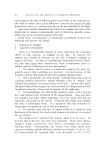
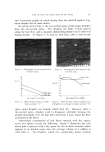
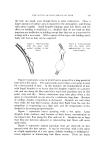
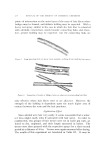
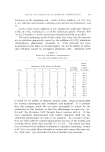
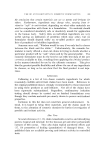
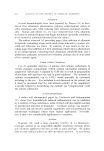
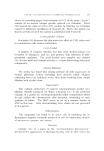
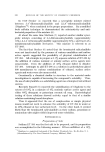
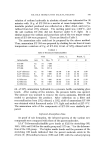
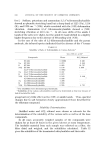
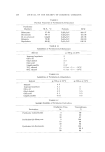
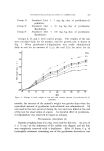
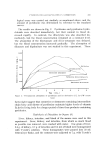
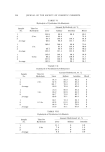
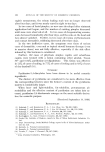
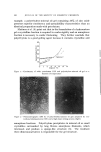
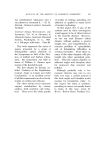
362 JOURNAL OF THE SOCIETV OF COSMETIC CHEMISTS example, a polyethylene-mineral oil gel containing 30% of zinc oxide possesses superior consistency and spreadability characteristics than an identical preparation made with petrolatum. Mutimer et al. (6) point out that in the formulation of a hydrocarbon gel a crystalline fraction is required to confer rigidity and an amorphous fraction is necessary to confer thickening. They further conclude that polyethylene is a good gelling agent because it contains crystalline and 6OO 500 o_q400 . .[ 300 "=" 200 .... ....................... •.. -I0 0 I0 20 30 40 Tempe•olu•e (=C) Figure /.--Consistency of white petrolatum USP and polyethylene-mineral oil gel as a function of temperature ::•:"' ::• "' ..i'• •-•:' ........ ' ........... •':•: ..•.... :-:• :• ... '•.• ß •' -.:- ... • .... •. '•.• ].•"., -. .• •a ..%.•- ?..?• - :.,. •. •'} . : .•-[ ..'..: ..• . . '½"•:•¾%::'• ..• ........... • ......... Figure •.•Photomicrographs (•60 X) of polyethylene-mineral oil gels prepared by con- ventional mixing process (left) and a high-sh•r mixing process (right) amorphous fractions. Polyethylene precipitates in mineral oil as small crystallites surrounded by long fibrous amorphous filaments, which intermesh and produce a sponge-like structure (6). The resultant three-dimensional lattice is responsible for the gel structure.

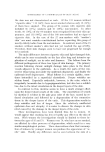
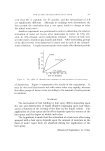
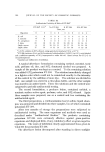
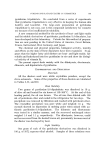
PREPARATION OF POLYETHYLENE-MINERAL OIL GELS 863 Photomicrographs of composition A (Table I) prepared by the con- ventional and by the high-shear processes are shown in Fig. 2. It is evident that the high shear process yields a finer dispersion of the wax than the conventional process. This results in a sponge-like structure with smaller pore size which probably is responsible for the greater rigidity of the gel prepared by the high shear process. SUMMARY A process for the preparation of polyethylene wax-mineral oil gels using commercially available high shear equipment has been described. The properties of several gels prepared by the high shear method have been compared to gels prepared by the use of conventional mixing equip- ment. This procedure is more adaptable for the preparation of cosmetic and dermatological formulations than previously described methods. ACKNOWLEDGMENT The authors gratefully acknowledge the assistance of Mr. James A. Tassoff and Mr. James H. Skillman in the preparation of photomicro- graphs and õraphs. (Received August 1, 1964) REFERENCES (1) E. R. Squibb & Sons, Plastibase © Bulletin. (2) Foster, S., Wurster, D. E., Higuchi, T., and Busse, L. W., J. Am. ?harm. Assoc., Sci. Ed.• 40, 123 (1951) (3) U.S. Pat. 2,627,938, Feb. 10, 1953. (4) U.S. Pat. 2,628,187, Feb. 10, 1953. (5) Mutimer, M. N., Riffkin, C., Hill, J. A., Glickman, M. E., and Cyr, G. N., J. Am. ?harm. Assoc., Sci. Ed., 45,212 (1956). (6) Mutimer, M. N., Riffkin, C., Hill, J. A., and Cyr, G. N., Ibid., 45, 101 (1956).
Purchased for the exclusive use of nofirst nolast (unknown)
From: SCC Media Library & Resource Center (library.scconline.org)