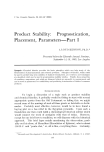
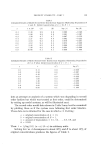
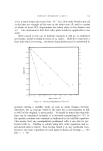
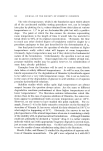
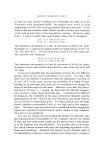
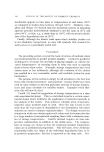
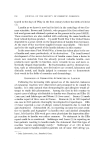
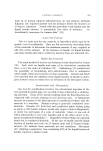
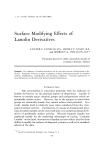
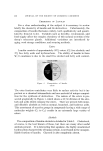
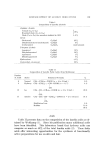
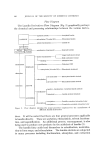
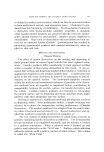
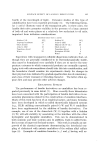
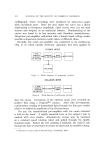
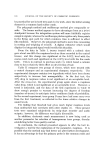
172 JOURNAL OF THE SOCIETY OF COSMETIC CHEMISFS •- .. ,•.._ :. ...... -*• "-:•'.•:,, ? .:, •'• :•. ß ¾•. ......,.:•:.:. :.:. :: '• •' • • "• ::'., . .'7 .. ß ',:. • •.•, .... . . ....... i m'""•' •' t: •.:.•::' •,:::•2':. z:•.,. .... ......... :&'A.:.--' Figure 1. Co•nb, microphone. and pre-amplifier comb which measures frequencies generated by tooth-hair interface friction was developed, with the following objectives' a. The-method should quantitatively compare product effects on hair raspiness. b. The results should be in a form suitable for the application of sta- tistics. c. The method should be practical enough in test conditions to pro- vide a routine evaluation of hair products. d. The method should provide an additional parameter for tress quality control. MATERIALS AND METHODS A crystal contact microphone* which is specifically designed to pick up frequencies by contact and at the same time remains oblivious to ex- traneous noise was chosen for the study. An Ace Waveserra hard rubber comb (#1033)1 was affixed to the contact microphone (Fig. l) by two small bolts. A third bolt, which had been placed through the comb * HaTnlin, Inc., Lake Mills, Wis. t Ace Comb Co., Butler, N. J.

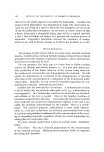
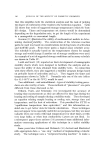
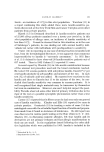
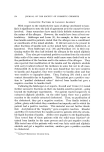
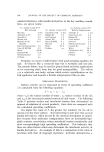
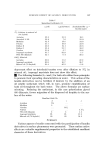
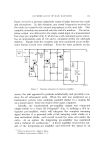
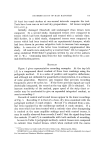
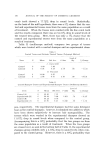
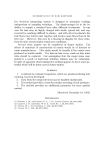
DETERMINATION OF HAIR RASPINESS 173 frame, served as a pressure adjustable contact bridge between the comb and microphone. In this situation, any sound frequencies received by the comb are carried to the contact microphone via the steel bolt. This complete assembly was mounted onto the end of a minibox. The micro- phone output was delivered to the single-ended input of a transistorized four stage pre-amplifier (Fig. 2) which has a self-contained power source, has an approximate gain of 100 and is contained within the aforesaid minibox. Signals from the complete unit were monitored on an oscillo- scope during several tress combings. From the noise patterns on the •.•v I I I T 5•u m,n. I I _L •2v / e ect. I I q.. ,rmn. / •___• t•,l, I / e•ec• / •1' 68• J I -' I Mallory .680a I00 K T• C •)Out Figure 2. Diagram schematic of comb pre-amplifier screen, the unit appeared to perform satisfactorily and provided a nu- cleus for all subsequent work. When the unit was monitored on a loudspeaker system, tress combings sounded similar to a rasping file on a sound board hence the choice of the name, raspiness. Initially, the transistorized pre-amplifier output was connected (single-ended) to a Grass 5B Polygraph* (Fig. 3) utilizing a 5P3 in- tegrator pre-amplifier, which will integrate the complete incoming signal whether it is procured with a fast sweeping comb stroke or a slow methodical stroke each record reveals the same area under the curve. As an option, the integrating pre-amplifier was monitored with a DuMont 411 oscilloscope. t A driver amplifier received the out- put of the integrating pre-amplifier and delivered the signal to an * Grass instrument Co., Quincy, Mass. i DuMont Laboratories, Clifton, N.J.
Purchased for the exclusive use of nofirst nolast (unknown)
From: SCC Media Library & Resource Center (library.scconline.org)