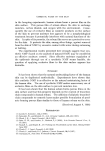
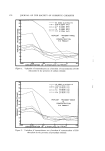
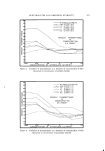
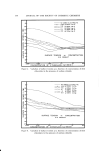
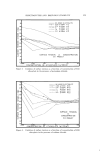
152 JOURNAL OF THE SOCIETY OF COSMETIC CHEMISTS Adjacent areas on the same subject were extracted. Glass cylinders, open at both ends (4 cm diameter), were attached to the skin with rubber bands. Five cc of ether was poured into each cylinder and kept in contact with the skin for 2 minutes. The ether was then removed, and this extraction was repeated five times. After the ether extraction, the same area was extracted with distilled water. Five cc of water was placed in each cylinder and left in contact with the skin for 2 minutes. 5•gar amino acid compounds Lactic Tyc, I Lgs. Arg. $•, .GI.y. aCidca+. K + •,a AW • i•,.
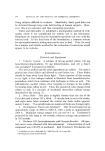
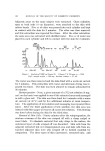
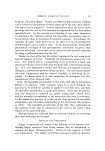
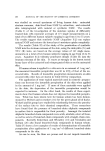
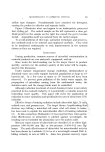
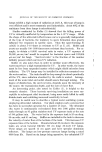
Gtu. rh•on. Va,. •o. Leu. iLeu 600' • I I I I I I •0 •20 o.sct Figure 1. Analysis of NMF on Dowex 50. Column 7 X 700 mm p = 1200 H20 sample weight = 320 mg fraction volume = 5.7 mi. The water was then removed and the skin dried with a warm air current for 2 minutes. This extraction with water and alternate drying was re- peated ten times. The skin was then allowed to remain untouched for 30 minutes. Reimpregnation--Next, a given amount of a 5% test solution (6 mg/ cm 2, on dry basis) was applied to one of the extracted areas and massaged in with a glass rod. The skin was then dried for 5 minutes with a warm air current (at 39 øC) and for five additional minutes at room tempera- ture. The application of test solution and massaging was repeated three times. After the third application of test solution, the skin area was blotted with filter paper to remove all excess test solution. This blotting was done before drying the skin for the third time. Removal of Skin Cells--Ninety minutes after the reimpregnation, the stratum corneum of the skin was scraped off with a sharp scalpel or razor blade. To eliminate material that only clings to the surface, the outermost layer of cells scraped off was discarded. Skin cells from the adjacent extracted but not reimpregnated area and skin cells from un- touched adjacent skin •'ere also scraped off to furnish material for comparison. The three types of skin (untreated extracted only and

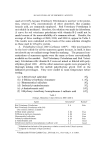
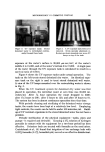
COSMETIC FILMS ON THE SKIN 153 reimpregnated and extracted) were collected in weighing bottles and dried in a vacuum desiccator over P2Oa to constant weight. Determination of Moisture Uptake--The ability of the three types of skin scales to absorb moisture was determined by placing scrapings in a moisture chamber at 90% R.H. for 48 hours. The difference between the initial and final weight represents the moisture absorption. Penetration---The question of penetration of Aqualizer E-J remains still unanswered. In other words, when Aqualizer E-J is applied to the skin does it only cling to the surface, or does it penetrate the stratum corneum? To answer this question, a microscopic method was devel- oped which permits determination of the presence of Aqualizer E-J and of natural NMF by two different staining reactions. These staining reactions are called Reaction N and Reaction R. Reaction N is a nin- hydrin reaction and is performed as follows: With the aid of a needle some cell material is placed on a dry microscope slide. The stratum corneum cells are covered with a drop of ninhydrin reagent and immediately covered with a cover glass. The slide is heated for 30 seconds at 60øC and immediately observed under the microscope for blue to violet coloration of the cells. The reagent is prepared by dissolving 0.3 g of ninhydrin in 100 ml of butanol and adding 3 ml of glacial acetic acid. Reaction R is a TTC (triphenyltetrazolium chloride) reaction and is performed as follows: A small amount of cell material is placed on a dry •nicroscopic slide, and two drops of the reagent are added. A cover glass is placed on top, and the slide is exposed to a tempera- ture of 55-60øC for 3 minutes. The red coloration of the cells is observed under a micro- scope. The reagent is prepared by mixing one part of a 0.5% solution of TTC in distilled water with two parts of a 0.5 N NaOH solution. To this mixture one part of a 1 2 sodium lauryl sulfate solution in water is added. The solution is cloudy at first but clears on shaking. A very small p•ecipitate settles out the supernatant clear solution is used. For these tests, the skin was treated in the same way as described above. The cell layers of the stratum corneum of the epidermis were scraped off, layer by layer, with a sharp scalpel. Each layer of cells was examined separately under the microscope for the presence of Aqualizer E-J or NMF to determine the penetration of Aqualizer E-J. For the evalua- tion of staining reactions the following scores were used: No reaction ............................................. 0 Slight reaction ........................................... 1 Definite reaction ......................................... 2 Strong reaction .......................................... 3 Very strong reaction ...................................... 4 The stronger the reaction the more Aqualizer E-J or NMF is present.
Purchased for the exclusive use of nofirst nolast (unknown)
From: SCC Media Library & Resource Center (library.scconline.org)