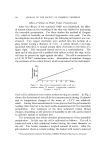
150 JOURNAL OF THE SOCIETY OF COSMETIC CHEMISTS the NMF from the stratum corneum and leaves the skin in a dry, scaly condition (8). One of the tasks of cosmetic preparations is to keep the skin in a nor- mal water-balance condition. Moistuddzers have been tried for this purpose, but, as has been shown by several authors, the hygroscopic mateddais used in cosmetics (like glycerine, glycol, or certain sugar alcohols) are not able to fulfill this task (9-12). On the other hand, attempts have been made, based on the analysis of NMF published in the literature, to reproduce parts of the NMF. Apparently these attempts have not been satisfactory because it has been recommended repeatedly to use occlusive films on the skin to keep the moisture in the skin and to regulate the moisture requirements of the epidermis in this way (13-15). The skin exhibits the physiological phenomenon of the so-called insensible perspiration which is the invisible water vapor loss from the skin into the environment. In addition, a gas exchange through the skin takes place. Carbon dioxide is constantly rdeased through the skin, and to a certain extent oxygen is absorbed. The oxygen uptake is part of the skin cell's metabolism. These combined functions, namely insensible perspiration, the carbon dioxide output, and the oxygen uptake are called "skin-breathing." These functions will automatically be suppressed by the application of an ocdusive film on the skin surface. Therefore, this procedure of regulating the moisture content of the epidermis inter- feres with normal physiological functions of the skin, which certainly should not be the function of cosmetic treatments. In this connection, the question whether the sebum, which is the natural protective wax film on the skin surface, is an occlusive film or not is of utmost interest. As will be shown below, the sebum film is not ocdusive but, on the contrary, is porous. Similar results have been found in the case of certain surface waxes and fats of animals. Con- sequently, it seems that the function of sebum is not prevention of moisture loss. As a consequence, it seems that moisturizing of the epidermis has to be done differently, possibly in the way the skin does it. At the same time it appears necessary to formulate cosmetic prepara- tions which leave porous films on the skin surface. The porosity of these films should be similar to that of human sebum. This research group, which has worked on the NMF problem for many years, has repeated the analysis of the NMF of human skin. Based on this latest analysis, an NMF has successfully been synthesized. The efficacy of this synthetic NMF has been studied with respect to the moisture regulation of the skin. In cooperative research by Weitzel

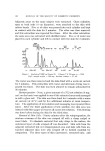
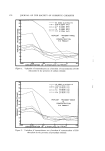
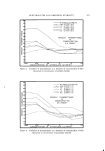
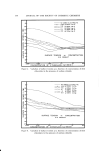
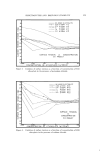
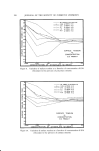
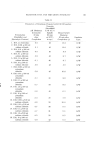
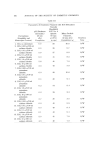
COSMETIC FILMS ON THE SKIN (16, 17), the principle in sebum which makes it porous was found to be the presence of branched-chain aliphatic compounds. The development of synthetic branched-chain compounds similar to those found in sebum was undertaken. Formulations of cosmetic bases incorporating these compounds were applied to skin, and the porosity of these films on the skin was checked. EXPERIMENTAL Collection and Analysis of Natural JVMF The NMF of the stratum corneum was extracted from the skin of 35 healthy human subjects, ranging in age from 14 to 65 years of age. Areas on the forearms and the backs of these subjects were used. Open-end cylinders with diameters from 3-5 cm were pressed on the skin with gentle pressure. The cylinders were filled with ether and left in contact with the skin with occasional shaking for 5 minutes. The ether was removed, and after the skin was dry, ethanol was added to the cylinders and left in contact with the skin for 5 minutes, with occasional shaking. After the alcohol was removed and the skin was dry, distilled water was added to the cylinders and left in contact with the skin for 15 minutes with occasional shaking. The water extracts were removed from the skin, pooled, and immediately evaporated under high vacuum at room temperature. The residue was dissolved in water and chroma- tographed on a Dowex 50 column. A total of 200 fractions was col leeted. Each fraction consisted of 5.7 ml. For the first 50 fractions 0.3/V HC1, for the next 50 fractions 0.5/V HC1, for the next 50 fractions 1.0 _N HC1, and for the last 50 fractions 2.0 _N HC1 were used. The con- tent of each fraction was quantitatively determined and its chemical composition determined with paper chromatograms. Figure 1 shows the results of this analysis. This analysis served as the basis for the preparation of a synthetic NMF. In the following experiments this synthetic NMF was used.* E•cacy of Synthetic rs. JVatural JVMF The efficacy of synthetic NMF (trade name, Aqualizer E-J) has been determined in 171 single tests on living human skin. Extraction of Skin--The sebum and natural moisturizing factor were extracted from the inner forearm or back of healthy human subjects. * The use of this product as a moisturizing material in cosmetic preparations is covered by U.S. Patent 3,231,472, English Patent 1,004,774, and French Patent 1,329,616.
Purchased for the exclusive use of nofirst nolast (unknown)
From: SCC Media Library & Resource Center (library.scconline.org)