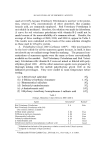
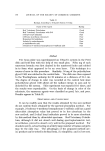
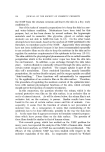
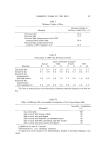
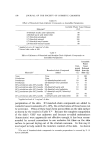
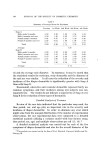
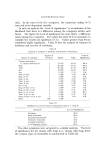
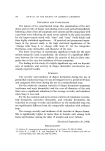
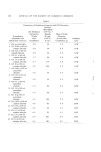
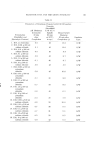
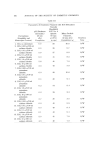
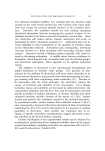
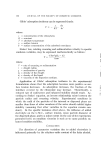
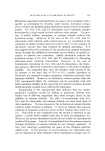
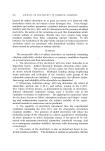
156 JOURNAL OF THE SOCIETY OF COSMETIC CHEMISTS was studied on several specimens of living human skin: untreated stratum corneum skin freed from NMF by extraction and extracted skin reimpregnated with natural or synthetic NMF. The results (Table I) of the investigation of the moisture uptake of differently treated skin cells represent averages of 171 single measurements on a total of ten different human subjects ranging in age from 13 to 75 years. The results suggest that synthetic NMF (Aqualizer E-J) can replace natural NMF and restores the horny layer's moisture uptake completely. The results (Table II) of the study of the penetration of synthetic NMF into the stratum corneum of the skin, using the ninhydrin (N) and TTC (R) tests, are based on the average values of 147 single meas- urements on a total of ten human subjects ranging in age from 13 to 75 years. Aqualizer E-J evidently penetrates deeply (Table II) into the stratum corneum of the skin. It reacts as strongly in the lowest tested horny layer of the extracted and reimpregnated skin as on the untreated skin. If human sebum is applied to a skin area in an amount of 1 mg/cm 2, the measured insensible perspiration was 90 to 95% of that of the un- covered skin. Results of insensible prespiration measurements on skin covered with other fats are shown in Table III for comparison. The application of some typical materials used in cosmetic prepara- tions can decrease the insensible perspiration of the skin when applied in tile amount of 1 mg/cm 2. If more of these materials were applied to the skin, the depression of the insensible perspiration would be expected to increase. On the other hand, the results of these experi- ments show that human sebum does not depress the insensible perspira- tion. What has been shown here for human sebum has been demon- strated by Weitzel and co-workers (16) for the preen gland oil of ducks. Weitzel and his group have studied the relationship between the porosity of the surface fats to their chemical composition. These researchers have found that the presence of branched-chain aliphatic compounds in surface fats is responsible for their porosity. Amongst the isolated aliphatic branched-chain compounds were acids, alcohols, esters of these, as well as esters of branched-chain compounds with straight-chain com- ponents. Recently Reinertson and Wheatley (19) and Nicolaides and Kellum (20) also found branched-chain compounds in human sebum. Table IV shows a few examples of results of determinations of insensible perspiration after application of 1 mg/cm • of different branched-chain compounds to the skin. As can be seen, the films are porous and do not impede insensible

COSMETIC FILMS ON THE SKIN Table I Moisture Uptake of Skin 157 Moisture Uptake in Material 48 Hours at 90% R.H. (%) Untreated skin Extracted skin reimpregnated with NMF extracted from human skin Extracted skin reimpregnated with synthetic NMF (Aqualizer E-J) 49.5 19._2 26.0 44.5 Table II Penetration of NMF into Stratum Corneum Layer of Stratum Corneum a Second Third Fourth Fifth Reaction N R N R N R N R Untreated skin 1.5 0.7 2.4 1.3 2.7 1.3 2.7 2.1 Extracted skin 0.1 0.8 0.3 0.6 0.2 0.7 0.3 0.7 Extracted skin reimpregnated with skin extract 1.0 1.3 1.0 1.0 1.5 0.5 1.8 0.8 Extracted skin reimpregnated with Aqualizer E-J 2.5 1.8 2.8 2.2 2.8 2.2 3.0 2.5 a The first or outermost layer was discarded to eliminate material clinging to the skin sur- lace. Table III Effect of Different Oils on Insensible Perspiration of the Living Human Skin Insensible Perspiration Materialsa (%) Uncovered skin Skin covered with human sebum Skin covered with petrolatum Skin covered with Eucerin b (an absorption base) Skin covered with 50% petrolatum and 50% lanolin Skin covered with preen gland oil of ducks c lOO 95 37 61 60 97 a Applied at the rate of 1 mg/cm 2. b Beiersdorf & Co., A.G., Hamburg, Germany. c Isolated from preen glands in the Biochemischen Institut, Universit/it Tfibingen, Ger- many.
Purchased for the exclusive use of nofirst nolast (unknown)
From: SCC Media Library & Resource Center (library.scconline.org)