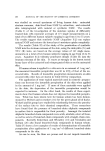
194 JOURNAL OF THE SOCIETY OF COSMETIC CHEMISTS lamps exhibit a high output of radiation at 2537 A, this type of lamp is very efficient and is most commonly used industrially about 90% of the emittance from these lamps is microbiocidal. Studies conducted by Koller (5) showed that the killing power of UV is virtually unaffected by temperature in the 5-37øC range. While the shape of the ultraviolet effectiveness curve is generally independent of the type of bacteria, the tendency to spore formation does greatly influence the responses in specific cases. Thus the spore-forming B. subtills is about 5-10 times as resistant to UV as E. coli. Molds and yeasts are usually 100-1000 times more resistant than bacteria. For ex- ample, to obtain a 0.0001 survival ratio in water, a UV exposure of 24,000 uw-sec/cm • would be required for bacterial spores and 192,000 uw-sec/cm • for fungi. "Survival ratio" is the fraction of the number initially present which survives UV radiation. Koller (5) also notes that, in order to sterilize water effectively, the water must have a high transmission for UV. In other words, the water must be free from suspended matter which might shield microbes from radiation. The UV lamps may be installed in reflectors mounted over the water surface. The tank should be deep enough to absorb practically all the UV, since radiation absorbed by the walls is wasted. Arrange- ment of the water inlet and outlet should assure thorough mixing. The degree of disinfection, the survival ratio, depends upon the intensity of the source, the transmission depth, and the rate of water flow. An interesting point, also noted by Koller (5), is helpful to the cosmetic chemist: Those bacteria surviving irradiation are more sus- ceptible to subsequent cidal treatment, being more easily killed by mild disinfectants and exhibiting increased sensitivity to heat. It may be useful now to describe a typical water sanitizing system employing ultraviolet radiation. Our plant employs such a process that has been in successful operation for a number of years. The deionized city water is continuously recirculated from two 5000 gallon storage tanks through an 85 gallon stainless steel UV exposure tank at the rate of 180 gallons/min. The water bed in the exposure tank is 25 cm deep, 90 cm wide, and 91 cm long. Baffles are installed in the tank to decrease the velocity of water flow at the bottom of the tank. This increases UV exposure time at the bottom. Mounted about 30 cm above the exposure tanks are seven General Electric (90 cm long) 30-watt UV lamps. These mlaps are spaced 13 cm apart and have specular aluminum reflectors. The lamps are low-pressure mercury lamps having a rated 4000 hour life. Based on six lamps being operative, the calculated UV

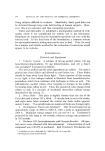
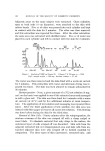
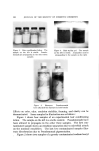
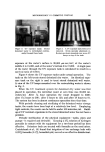
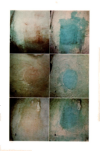
MICROBIOLOGY IN COSMETIC TESTING 195 '• :•..•z . • •',.•'" • :&': :{ •- :': ' ...... """'i: •- ' .... :.: ....... ,. :. •,• . , .... .. ..•½:.. • •5:. ß .•. •, .•a '. ß :.½•- •?:::' • .• ' Figure 4. UV exposure tanks. Stored ddonized water is redralated continu- ously through these knks .• : ß ß .. Figure 5. A UV exposure tank with cover removed. Seven specular aluminum re- fleetors are shown mounted over seven UV lamps on top of the tank exposure at the water's surface is 26,000 t•w-sec/cm " at the water's middle it is 18,000, and at the water's bottom it is 17,000. A single pass of the water through the UV exposure tank is calculated to result in a survival ratio of 0.0016. Figure 4 shows the UV exposure tanks under actual operation. The tank on the left treats stored deionized city water. An identical expo- sure tank on the right is used to treat stored deionized well water. A view of the UV lamps mounted over the recirculating water is shown in Fig. 5. When the UV treatment system for deionized city water was first placed in operation, the microbial count at zero time was 38,000 mi- crobes/mi. After •/• hour operation the count dropped to 3300 after 1•/• hours to 390 after 2 hours to 120, and after 18 hours to 81. The system has been in almost continuous operation since that time. With periodic cleaning and sterilizing of the deionized water storage tanks, the counts have been kept at a relatively low level. Employing tight controls, the counts can be held to under 100 microbes/mi. Build- up of UV resistant organisms in the stored deionized water has not been a problem. Periodic sterilization of the physical equipment--tanks, pipes and pumps--is required and desirable. Keeping a 2% solution of hydrogen peroxide in contact with the equipment for a two-hour period has been effective. Deionizer beds are treated with formalin as the need arises. Cruickshank et al., (6) found that irrigation of ion exchange beds with 0.25% formalin (0.1% formaldehyde) served as an effective disinfectant.
Purchased for the exclusive use of nofirst nolast (unknown)
From: SCC Media Library & Resource Center (library.scconline.org)