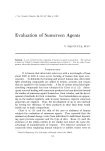
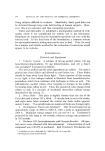
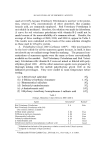
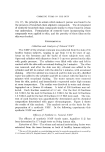
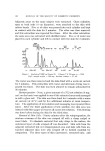
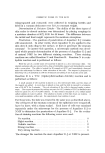
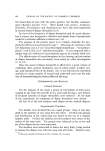
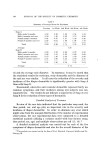
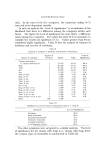
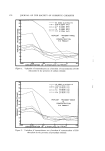
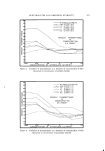
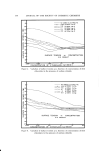
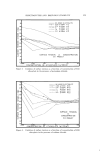
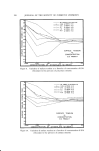
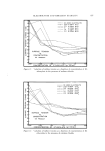
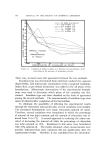
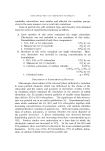
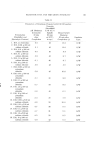
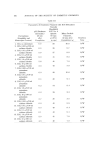
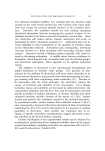
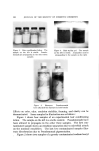
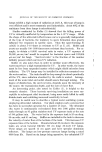
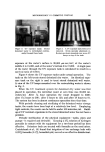
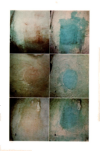
192 JOURNAL OF THE SOCIEFY OF COSMETIC CHEMISTS ß "• .... - •-•4• • '• 2 '"•-• ..... • '• .... • ....... •. •.•,- :, • •:: •4.. -2 • •-:.•'• :• "•...•.. ' . • :: .:..•34•.- - - • :E •..r......- :r-...--. ............. ß .......--•. •x • ..•.• •.•...• : ............. ::- ::- Figure 1. Hair conditioning lotion. The sample on the left is sterile. Pseudo- monads are propagating in the other three samples Figure $. Hair styling gel. The sample on the left is sterile. Aspergillus mold is propagating in the sample on the right Figure 2. Shampoo. Pseudomonads have attacked the shampoo in both bottles Effects on color, odor, emulsion stability, foaming, and clarity can be demonstrated. Some samples for illustration are as follows: Figure 1 shows four samples of an experimental hair conditioning lotion. The sample on the left is a sterile control. Pseudomonads have been allowed to propagate in the other three samples. The first con- taminated sample shows an emulsion separation due to microbial attack on the nonionic emulsifiers. The last two contaminated samples illus- trate discoloration due to Pseudomonad pigmentation. • Figure 2 shows two samples of a grossly contaminated sodium lauryl

MICROBIOLOGY IN COSMETIC TESTING 193 sulfate type' shampoo. Pseudomonads have attacked the detergent, causing the product to discolor and separate badly. Figure 3 illustrates what can happen to an inadequately preserved hair styling gel. The control sample on the left represents a clear gel. Mold growth in the sample on the right has caused the gel to become turbid. Aspergillus mold was isolated from the turbid sample. To avoid problems of this type, sanitation techniques and preserva- tive methods need to be selected and employed carefully. They need to be monitored continuously to seek improvements in the systems chosen as they are required. SANITATION During production, common sources of microbial contamination in cosmetic products are raw materials, equipment, and air. Since water for batch-making can be the major threat to product sterility, control over the sanitary quality of this water will be empha- sized in this discussion. Under summer temperature storage conditions, demineralized or deionized water can easily support bacterial populations as large as 10 '• bacteria/mi. In a few cases as many as 10 6 baeteria/ml have been observed. To prevent gross pollution of the batch water supply, the propagation of microflora coming from the undeionized water, the deionizer units, and the storage tanks must be controlled. Although radiation treatment of stored deionized water is not widely practiced in the cosmetic industry, it is potentially a valuable means for controlling water quality. This paper will stress the application of radiation to water sanitation and specifically the uses of ultraviolet (UV) radiation. Effective forms of ionizing radiation include ultraviolet light, cathode rays, and gamma rays. The target theory, hypothesizing electron rays hitting a microbial cell cause vital cell atoms to ionize,'" ! has been used to explain the microbiocidal effect of ionizing radiations (2). In this connection, Hollaender (3) has reported that, when germi- cidal effectiveness of ultraviolet is plotted against wavelength, the resulting curve resembled the absorption curve for nucleic acids. Mercury vapor sources of ultraviolet are classified (3) as either high- pressure (400-60,000 mm Hg) or low-pressure (0.004-0.02 mm Hg) lamps. The peak effectiveness of ultraviolet for microbiocidal activity has been shown by Luckiesh (4) to be at a wavelength around 2600 A, falling virtually to zero at 3200 A. Since low pressure mercury vapor
Purchased for the exclusive use of nofirst nolast (unknown)
From: SCC Media Library & Resource Center (library.scconline.org)