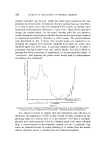
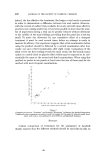
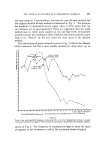
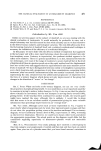
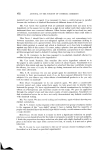
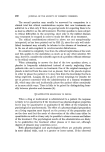
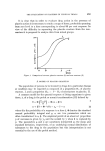
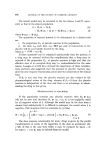
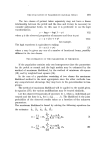
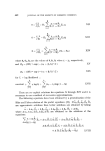
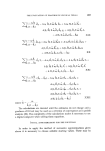
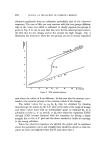
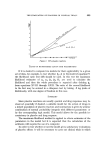
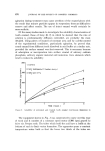
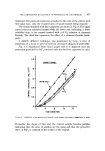
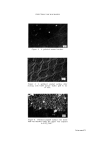
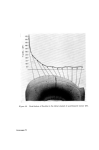
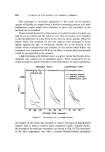
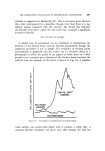
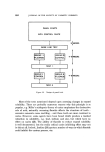
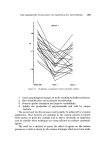
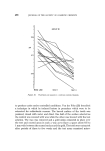
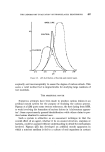
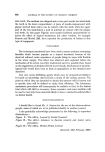
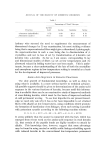
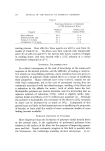
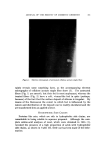
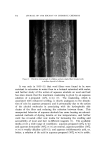
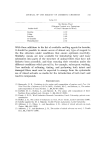
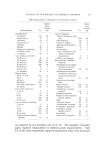
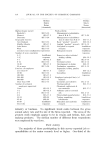
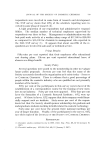
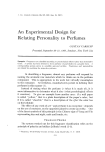
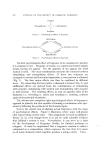
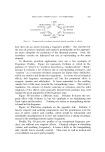
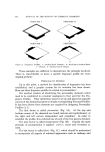
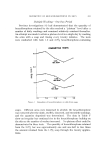
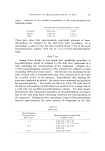
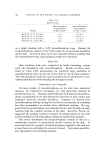
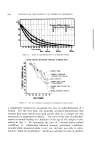
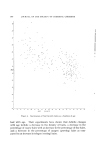
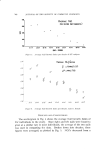
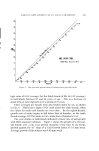
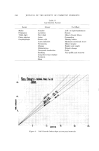
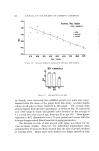
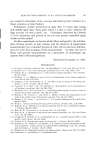
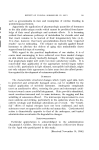
546 o.qo, 0.•0 G70. •' GGO. O.qO JOURNAL OF THE SOCIETY OF COSMETIC CHEMISTS - 1500 5•IBJECT5 ß o -H RSE- YERR5 Figure 10. Average decline in nail growth with age, 1500 subjects L0 Rc-n Figure 11. Nail growth in ten dogs by decade, were converted into milliliter growth per week and, super- imposed onto the slope of the graph from this study, revealed similar values at all ages to those reported in this paper. The average slope of these figures from all three experiment, as shown in Fig. 10, represents over 1500 subjects whose nail growth rates decrease on the average of 4.5/•/week for every year of age, from age 20 to age 100. These figures represent a 40% diminution over a 70-year period and concur with the average changes which Shock found in his aging parameters. The decrease in rate of nail growth with aging was linear for the cross-sectional studies. However, the individual longitudinal study performed for 20 years by Bean showed that the rate of growth declined at varying rates. Many more such studies over longer periods of time

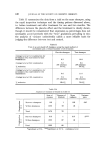
KERATIN REPLACEMENT AS AN AGING PARAMETER 547 are needed to determine if the average individual growth declines in a linear, stepwise, or other fashion. Preliminary studies performed on dogs (Fig. 11) show that young and middle aged dogs' claws grow about 1.3 mm a week, whereas old dogs average 0.8 mm a week (18). Techniques described by Godwin (15) for measuring nail growth in the rat may permit controlled aging studies on this animal. Further experiments on factors which affect nail growth, the relation- ship of linear growth to nail volume, and the linearity of longitudinal measurements over extended periods of time will reveal more informa- tion as to the true meaning of this measurement. To date, the use of linear nail growth measurements as a parameter of physiologic age appears both 'valid and significant. (Received November 14, 1966) (1) (2) (3) (4) (5) (6) (7) (8) (9) (lO) (11) (12) (•3) (14) (15) (16) (17) (18) REFERENCES du Nouy, P. leComte, Biological Time, The Macmillan Co., New York, 1937, pp. 51-101. Strehler, B. S., Time, Cells, and Aging, Academic Press, New York, 19f•2, p. 96. Epstein, W. L., and Maibach, H. I., Cell renewal in human epidermis, Arch. Dermatol., 92,462 (1965). Katzberg, A. A., Influence of age on rate of desquamation of the human epidermis, Anat. Record, 112,418 (1952). Thuringcr, J. M., and Katzbcrg, A. A., The effect of age on mitosis in the human epi- dermis, J. Invest. Dermatol., 33, 35 (1959). Van Scott, E. J., Ekel, J. M., and Auerbach, R., Determinants of rate and kinetics of cell division in scalp hair, Ibid., 41,269 (1963). Weinstein, G. D., and Van Scott, E. J., Autoradiographic analysis of turnover times of normal and psoriatic epidermis, Ibid., 45,257 (1965). Barman, J. M., Pecoraro, V., and Astore, I., Method, technic and computations in the study of the trophic state of the human scalp hair, Ibid., 42,421 (1964). Barman, J. M., Astore, I., and Pecoraro, V., The normal trichogram of the adult, Ibid., 44, 233 (1965). Rook, A., Normal and abnormal hair growth in old age, Gerontol. Clin., 7, 8 (1965). Babcock, M. J., Methods for measuring fingernail growth rates in nutritional studies, J. Nutrition, 55,323 (1955). Bean, W. B., Nail growth, Arch. Internal Med., 11,476 (1963). Bean, W. B., A discourse on nail growth and unusual fingernails, Am. Clin. and Climat. Assoc., 74, 152 (1963). Geoghegan, B., Robcrts, D. F., and Sampford, M. R., A possible climatic effect on nail growth, Appl. Physiol., 13, 135 (1958). Godwin, K. O., Experimental study of nail growth, J. Nutrition, 69, 121 (1959). Hamilton, J. B., Terada, H., and Mestler, G. E., Studies of growth throughout the life- span in japanese: growth and size of nails and their relationship to age, sex, heredity, and other factors, J. Gerontol., 10, 401 (1955). Hillman, R. W., Fingernail growth in the human subject, Human Biol., 27,274 (1955). Orentreich, N., and Ettinger, S., Unpublished data.
Purchased for the exclusive use of nofirst nolast (unknown)
From: SCC Media Library & Resource Center (library.scconline.org)