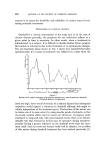
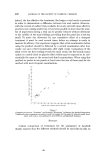
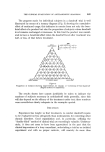
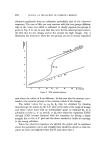
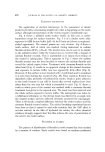
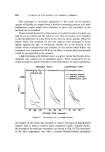
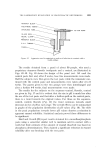
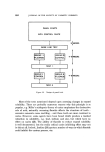
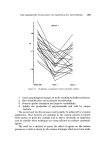
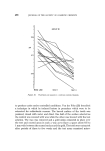
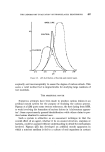
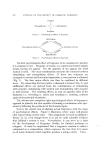
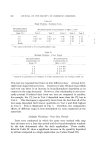
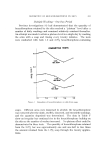
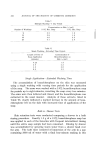
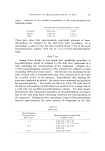
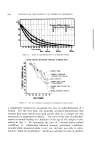
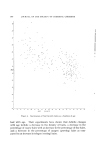
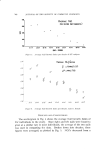
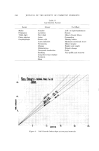
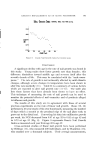
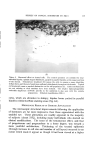
440 JOURNAL OF THE SOCIETY OF COSMETIC CHEMISTS concern is to assess the feasibility and reliability of various ways of eval- uating potential treatments. PRINCIPLES OF CLINICAL TESTING Dandruff is a chronic abnormality of the scalp and, as in the case of chronic diseases generally, the prognosis for any individual sufferer at a given point in time is uncertain. In other words, when a treatment is administered to a subject, it is difficult to decide whether future progress (favourable or adverse) is due to the treatment or to spontaneous changes. The pre-treatment phase shown in Fig. I shows how dandruff fluctuates spontaneously if a course of treatment was initiated at a time when the 35' (PLACEBO) Figure 1 Results of 17 weeks' treatment with placebo shampoo on a case of moderate dandruff (Detailed method of inspection). level was high, there would obviously be a distinct hazard that subsequent inspection would register a reduction in dandruff although this might be wholly independent of the treatment given. Fluctuation of this nature can be taken care of to some extent by using sizeable panels of subjects, so that the purely random effects tend to cancel out. However, if progress under treatment is compared only with pre-treatment levels, there is an indeter- rainable risk that extraneous factors may be operative during treatment, possibly having a greater influence on the dandruff levels than the treat- ment itself. Such an irrelevant feature could well be climatic, for an effect of this nature during dandruff treatment has been noticed previously (1).

THE CLINICAL EVALUATION OF ANTIDANDRUFF SHAMPOOS 441 To overcome this difficulty, it is essential to compare the progress of a treated panel with an untreated panel running concurrently. Dandruff investigations would be simplified considerably if objective measurements were practical. A technique has, in fact, been published whereby scale samples are taken by means of a miniature vacuum cleaner and subsequently weighed (4). Since this technique may involve the dis- turbance of scale attached to the scalp which may influence the disorder itself and in the absence of alternatives not showing a similar disadvantage, a subjective method of evaluation is to be preferred. Clinical trials in which subjective assessments are made always embody the risk of significant observer error and bias. Comparison between treat- ment and no-treatment panels tends to rule out error and bias due to the subjects themselves, especially if they are allocated to the different panels by a suitable method of randomization but it is still vital that the observer should not be able to identify whether a subject is receiving treatment or not at the time of inspection. For various reasons it is preferable that this knowledge should also not be available to the actual subject and so the "double blind" technique should be adopted. This involves the employment of a placebo, identical in all discernible respects to the treatment but lacking the active constituents one half of the subjects receive the treatment and the remainder have the placebo and serve as controls. Whilst it is usually possible to ensure a close resemblance between a placebo and treatment ("control" and "test") shampoo, some ingenuity of the formulator is sometimes needed to achieve this. To make sure that the identity of test and control materials is unknown to both subjects and observers, whilst also ensuring that the observers do not know or try to guess the allocation of subjects to the various panels, it is desirable to apply several different code-letters both to the test and control products and to allocate them to the subjects by means of a randomi- zation chart. This also helps to prevent subjects comparing notes with one another and possibly influencing their cooperation. Elimination of bias may also be assisted by stratifying the subjects according to various criteria possibly affecting the dandruff condition, e.g. ensuring •hat various degrees of initial severity are equally distributed between the panels. Age and sex might well be treated similarly, though the factor next in importance to initial severity is probably the question of prior usage of a medicated shampoo. "Cross-over" technique would theoretically help greatly to strengthen the validity of a clinical trial that is, one panel would start with the control
Purchased for the exclusive use of nofirst nolast (unknown)
From: SCC Media Library & Resource Center (library.scconline.org)