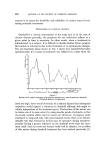
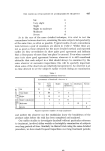
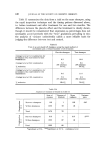
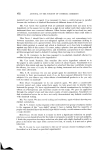
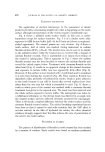
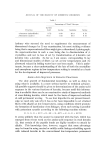
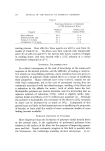
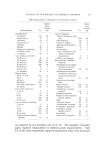
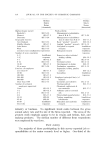
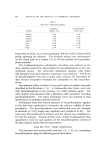
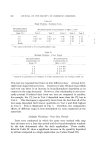
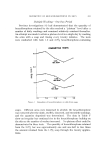
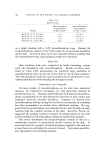
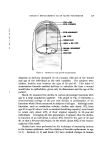
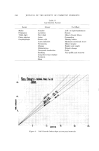
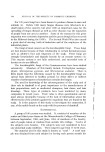
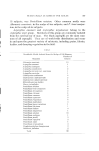
528 JOURNAL OF THE SOCIETY OF COSMETIC CHEMISTS Table I Recovery of Hexachlorophene Quantity Concentration Vehicle applied (mg) found (rag) Alcohol Alcohol Alcohol Alcohol Soap Soap Soap 0 50 0 50 0 50 0 50 0 5o 0 50 1 00 52 53 45 46 56 57 04 from wrist to elbow, in a vessel containing 1000 ml of 95% ethanol while gently agitating the solution. The alcoholic extract was concentrated on the steam bath to a volume (10 to 100 ml) suitable for hexachloro- phene analysis. The 4-aminoantipyrine colorimetric procedure was selected as the most suitable method for determining the hexachlorophene in the con- centrated extract. The ultraviolet absorption method, with which this laboratory has had extensive experience, was ruled out. The levels of hexachlorophene were low in many cases, and the UV absorption by skin extracts frequently swamped the absorption by the hexachloro- phene. An ammonia buffer solution (6) was used in place of sodium carbonate described in the literature (7, 8). 4-Aminoantipyrine forms a red color with hexachlorophene in the presence of a mild oxidizing agent. The color density was measured with a Beckman DK2 automatic recording spectrophotometer. The entire absorption curve was scanned so that interferences or turbidity could be observed. Preliminary tests with known amounts of hexachlorophene applied to the skin were conducted to determine the relative validity of these procedures. The hexachlorophene was distributed over the forearms as alcoholic or 5.0% liquid soap solutions and permitted to dry. The arms were then immersed in alcohol, and the extract was condensed to 10.0 ml for analysis. Results of these tests (Table I) demonstrate that quantitative recovery and analyses of the hexachlorophene content of the skin could be made with these procedures. Soap Bar Tests--Single Applications The forearms were washed with soap bars (1•/• X 2j/• in.) containing hexachlorophene using the following general procedure'

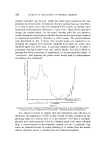
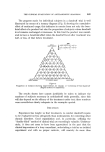
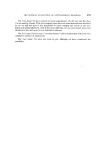
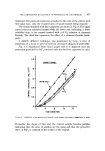
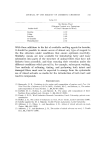
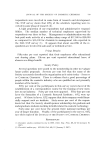
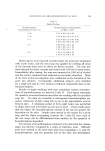
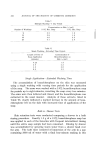
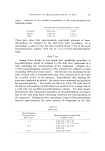
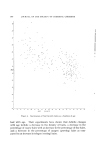
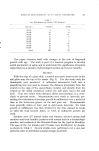
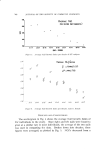
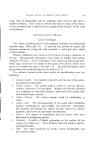
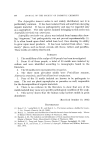
DEPOSITION OF HEXACHLOROPHENE ON SKIN 529 Hexachlorophene Concentration ill Soap (%) 0.25 0.50 I 0 2 0 50 Table II Single Washing Hexachlorophene Concentration on Skin (T/cm 2) 0.15, 0.29, 0.31, 0.32 0.42, 0.42, 0.45, 0.47, 0.47 0.52, 0.65, 0.74, 0.81, 0.82 0.82, 0.84, 0.90, 0.92, 1.02 0.90, 0.95, 1.02, 1.05 1.09,1 19,1.19,1.29 1.34, 1 35, 1.42, 1.47 1.94, 2 74, 3.39, 3.55 3.55,3 71,4.03,4.35 Plastic gloves were fastened on both hands, the arms were moistened with warm water, and the test soap was applied by rubbing all areas of the forearm from wrist to elbow for fifteen seconds. The arm was then lathered for thirty seconds and rinsed with 1500 ml of warm water. Immediately after rinsing, the arm was immersed in 1000 ml of alcohol and the extract condensed and analyzed as previously described. Most of the tests in this investigation were conducted on the forearms of the same two subjects. Occasionally, additional subjects were included for a single test and in every instance produced comparable data to the stand ard subjects. Results of single washings with bars containing various concentra- tions of hexachlorophene are listed in Table II. Each figure represents the quantity recovered from an arm after one washing with the specified soap bar. The data are recorded as micrograms hexachlorophene per square centimeter of skin, using 620 sq cm as the approximate area of forearm skin. A minimum period of forty-eight hours was permitted to elapse after each test before an arm was re-used. These results show that the higher the hexachlorophene content of the bar the greater the deposition on the skin. Despite some spread in the results for a given soap and the slight overlapping between the 1 and 2% bars, each of the test soaps can be differentiated from another by the quantity of hexachlorophene deposited. The amount of hexachlorophene retained by the skin from the various soaps was directly compared in a series of repetitive tests. Different arms were washed at the same time with bars containing 1, 2, and 5% hexachlorophene, and the quantity left on the skin was determined.
Purchased for the exclusive use of nofirst nolast (unknown)
From: SCC Media Library & Resource Center (library.scconline.org)