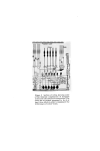
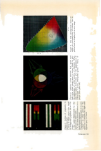
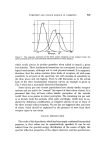
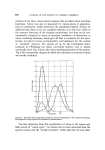
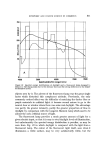
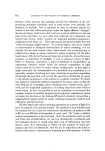
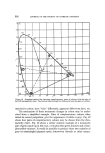
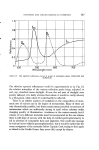
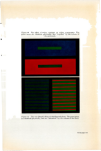
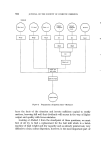
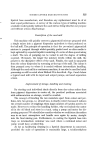
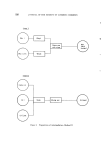
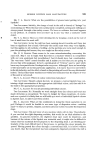
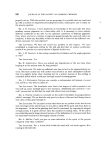
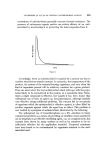
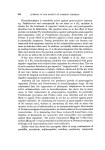
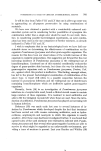
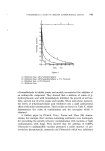
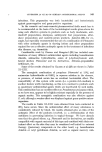
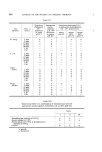
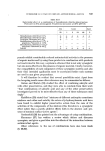
516 JOURNAL OF THE SOCIETY OF COSMETIC CHEMISTS 520 'sos [ 0-9 0-8 0-7 0.6 0,5 0.4 0.3 0.2 0,1 0 0.1 0.2 0.3 0-4 0.5 0.6 0.7 0.8 Figure 1• Graphical method for choosing complementary pairs of colours with the help of the CIE chrornaticity chart. The broken lines through the white point join the pairs of colours. matched in colour dyes "take" differently, pigments differ from dyes, etc. The mechanism of these metameric changes in colour may be under- stood from a simplified example. Pairs of complementary colours, when mixed in correct proportion, give the appearance of white or grey. Fig. 1oe shows how pairs of complementary colours may be chosen from the chro- maticity chart. Fig. 18 shows a rather extreme example of a metameric pair of greys made up in this way, a red-plus-blue-green mixture and a blue- plus-yellow mixture. It would be possible to produce these two varieties of grey by intermingled pigment spots, interwoven threads or other means.

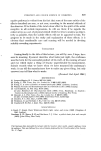
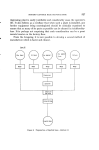
EYESWEET AND COLOUR SCIENCE IN COSMETICS 517 1.0 IBG / \ i i \ I I \ I \ \ ! \ 0.8 0.6 0.4 0.2 400 500 600 700 W•v½[½ngth (nm) Figure 13 The spectral reflectance curves of a pair of metameric greys, I(BG)-I(R) and •(B) 4Z(¾). The effective spectral reflectances would be approximately as in Fig. 13, the relative intensities of the various reflection peaks being adjusted to suit, say, standard mean daylight. If now the red part of daylight were greatly reduced, it is fairly obvious that colour A would be vastly altered, to a blue-green, while colour B would hardly be affected. There is an infinite number of variations in the composition of meta~ merle sets of colours and in the degree of metamerism. Many of these are only theoretically possible, but there remain many practical occurrences of metamerism which are sufficiently strong to spoil colour schemes under changing quality of illumination. Avoidance is the easiest remedy, but if colours of very different materials must be incorporated in the one scheme there is still hope of success with the help of careful spectrophotometry to aid in selection of compatible dyes and pigments. One could also manage by trial and error without spectrophotometry, but it would be rather like the ocean navigators of the centuries before Captain Cook trying to find again an island in the Pacific Ocean: they never did, except by chance.
Purchased for the exclusive use of nofirst nolast (unknown)
From: SCC Media Library & Resource Center (library.scconline.org)