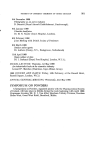
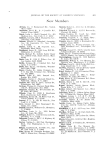
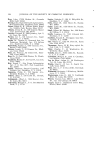
MODERN LIPSTICK BASE MANUFACTURE 529 MR. T. A. BROCK: What are the possibilities of ground sand getting into your lipsticks? THE LECTURER: Initially, the charge of sand in the mill is cleared of "finings" by recirculating oil. When this has been satisfactorily completed, subsequent millings are always passed through a fine safety screen. We have no evidence that sand appears in our product. It certainly does not show up in any way that a consumer could detect. MR. T. A. BROCK: Have you tried checking this by keeping a watch on the rate of loss of sand from the sand mill? TIlE LECTURER: So far the mill has been running about 6 months and there has been no significant loss of sand. Obviously the media must wear away very slightly, but this applies to all methods of milling. As the particles are worn small enough to pass the grinding shell screen, they are caught on the safety screen. MR. R. G. BARNES: There seems to be some misunderstanding concerning the sand mill. May I say to begin with that this is a machine which is in competition with our own equipment but nevertheless I feel it should have fair consideration. The very term "sand" sounds horrible and it makes you feel that you are going to do your lips with sandpaper. In fact a special grade of "Ottowa" sand is used which has a very close particle size. Its shape is also very even. Although I have no knowledge of the sand mill's use in this particular application, I do know that it is used widely in the ink industry, and the effect of sand on the printing roll would be very detrimental indeed. The fact that these machines are widely used indicates that the degree of wear of the sand is very small. MR. G. A. ALLMAN: Where do colour corrections take place? TH• L•CTURER: Should a shade deviate, we prepare a normal lipstick base con- taining a high concentration of the appropriate individual colour, and then add it to the bulk in the appropriate proportion. MR. G. A. ALLMAN: SO you are processing individual colours. TIlE L•CTURER: NO. Normally we work straight from dry colours and treat any shade deviation as exceptional. We have to budget for these exceptions, of course, and over a period it is likely that we will build up a stock of individual lipstick colours in lipstick base, to add if and when needed. MR. A. JEACOCK: What are the constraints in doing the whole operation in one pot? Perhaps it would be feasible to use some type of dispersion mixer•mitting sand--so that you premix, disperse, and then add your molten wax after the dispersion stage. TIlE LECTURER: I'do not know of any machine which will do this. Theoretically, if you can find the rikht dispersing machine, this would be an ideal solution to the problem. In practice, however, the slightest dead spot could be disastrous, and because of the nature of the lipstick raw materials used, it might also be difficult to ensure that the materials flowed properly to the dispersing head. I am thinking par- ticularly of the most difficult part of the process, i.e. getting the colour properly dis- persed. Having passed the colour through a conventional mill, it is known without any doubt, that the end product has been adequately dispersed provided the mill is

530 JOURNAL OF THE SOCIETY OF COSMETIC CHEMISTS properly set up. With tl•e method you are proposing, it is possible that one could end up with a mixture of dispersed and undispersed colour, unless great care is taken by the process operator. MR. J. M. TRmGnE: I have absolutely no knowledge of the sand mill, but when grinding various pigments on a three-roller mill, it is necessary to have entirely different conditions on the mill, for the optimum conditions of different pigments. Now, where you have a mixture of pigments going through the sand mill under one condition, is there any flexibility within the sand mill to allow for the different con- ditions necessary for each pigment? T•E LECTURER: We have not found any problem in this respect. We have established a compromise setting for the mill and find that we achieve satisfactory results if we process our various shades of lipstick in this way. MR. J. M. TRm•nE: IS the setting constant for all shades and the single pigments as well? THE LECTURER: Yes. MR. R. SOMERV•nnE: Have you noticed any degradation of the wax base when keeping it in the molten state for long periods? THE LECTURER: We make up sufficient wax base to last us for approximately one week. The tests carried out with molten wax stored in an inert atmosphere indicate that it is slightly better when standing hot for a period, because of the settling of unwanted debris which would pass through normal screening gauzes. MR. J. C. MCCARTHY: Did you ever consider a carborundum mill instead of a sand tnill, and i[ so, why did you reject it? T•E LECTURnR: The drawbacks were that a fair degree of skill is needed to set this mill up, and a multiple pass is also necessary. Admittedly one could use a "cas- cade" process but we felt that the sand mill offered more advantages. MR. A. FOSTER: Could you comment on the rather formidable cleaning problems which I envisage? We see that the only proof you have of the sand mill being clean is that clean oil has gone through it. THE LECTURER: We are quite certain that there are no pockets at the feed in and feed out stages of the mill because we are able to strip off the parts and clean them in the degreaser. As far as the grinding shell itself is concerned, by exposing its integral sieving screens, it is quite obvious when the machine is running clean. If the mill is run whilst the sand is being cleaned, because of the turbulence it is inconceivable that the sand itself would not be thoroughly cleared of colour. MR. A. McGEE: Could you give us some indication of the speed of the process compared with other methods? ThE LECTURER: For a 4 min dwell within the sand mill, one needs approx. 6 hr running in the ball mill.
Purchased for the exclusive use of nofirst nolast (unknown)
From: SCC Media Library & Resource Center (library.scconline.org)