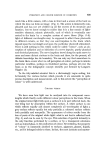
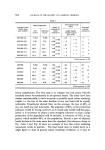
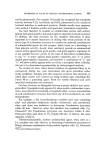
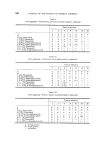
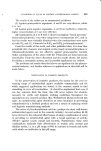
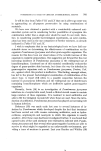
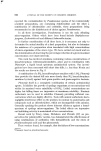
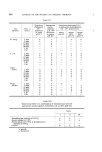
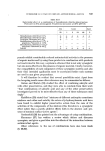
SYNERGISM IN VITRO OF CERTAIN ANTIMICROBIAL AGENTS The results of the tables can be summarised as follows: (1) Against gram-positive organisms, A and B are very effective, whilst C is not. {2) Against gram-negative organisms, A and B are ineffective, whilst the higher concentrations of C are very effective. (3) Combinations of A or B with C showed synergistic "broad spectrum" bactericidal properties, even when using lower concentrations of C, and in fact the results were virtually identical when the combinations were made up with 2% and 1% Phenoxetol or 0.5% and 0.3% p-chlorophenoxetol. From the results of this work, and other published data, it is clear that germicidal skin cleansers and surgical scrubs based on hexachlorophane or tribromosalicylanilide are not effective against gram-negative bacteria whilst combinations of the above with the Phenoxetols are broad spectrum bactericides. From the above discussion and the results shown, the reason for finding a synergistic system, and its possible application are evident. The problems and results described above are significant in the pharma- ceutical industry, and further reference to applications in this field will be made below. APPLICATION TO COSMETIC PRODUCTS In the preservation of cosmetic products, the reason for the ever in- creasing range of antimicrobial agents available commercially and for which suggested applications are stated, is the constant search to find something to cover all eventualities. It should be emphasised that even if one day someone finds the ideal, this will never replace the absolute necessity for sterile and hygienic working conditions throughout the manufacture of a cosmetic product. Mrs. Wedderburn (5) has reviewed this topic. An antimicrobial agent should be an extra insurance in preventing contamination in a finished product and not a means of replacing sterile and hygienic manufacturing methods. The esters of p-hydroxybenzoic acid are perhaps the most well-known antimicrobial agents used in the cosmetic industry. Several authors (6-12) have referred to the enhanced effectiveness of using a combination of esters in providing an antimicrobial agent with a broad spectrum of activity effective against yeasts, mould and bacteria. Furthermore, these ester combinations maintain their effectiveness in weakly acid, neutral and alkaline media, i.e. in a pH range of 6-9, in contrast to benzoic and sorbic acids which are ineffective in this pH range.

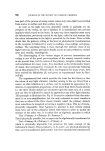
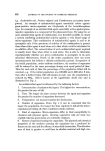
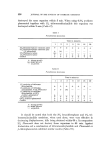
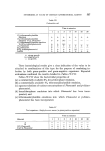
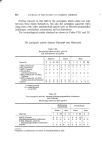
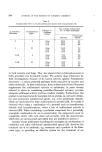
54O JOURNAL OF THE SOCIETY OF COSMETIC CHEMISTS Further interest in this field is the synergism which exists not only between these esters themselves, but also the synergism apparent when using them with other antimicrobial agents such as dibromo-propamidine isethionate, merthiolate, phenoxetol, and its derivatives. The bacteriological results obtained are shown in Tables VIII and IX. The synergistic activity between Nipastat* and Phenoxetol Table VIII Bactericidal effect at 22øC, pH 6.9 B.6 Pseudornonas pyocyanea minutes hours days Material 3 5 10 30 1 3 5 1 5 7 21 28 0.25•oPhenoxetol + + + + + + q- + + + + -- 2.0 •o Phenoxetol 0.09•o Nipastat q- q- q- q- q- q- 0.2 •o methyl p-hydroxybenzoate q- q- q- q- q- q- q- q- q- q- q- q- 0.25 •o Phenoxetol q,0.09 •o Nipastat 0.25 •o Phenoxetol q-0.15 •o methylp-hydroxybenzoate q- q- q- q- q- q- q- Control + + + + + + + + + + + + q- strong growth (+) slight growth -- no growth Table IX The synergistic activity between dibromopropamidine isethionate and Nipastat Bactericidal effect at 22øC-pH 6.9 Material 0.08 •o Nipastat dibromopropamidine isethionate 0.05 •o Nipastat +0.01 •o dibromopropamidine isethionate Control Micrococcus Epidermidis hours days 3 24 2 5 . -- __ __ + + + + -- __ + + + + Pseudornonas hours days 1 $ 24 2 5 + + (+) + + + + + + q- q- q- q- *Nipastat: a combination of esters of p-hydroxybenzoic acid
Purchased for the exclusive use of nofirst nolast (unknown)
From: SCC Media Library & Resource Center (library.scconline.org)