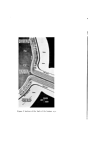
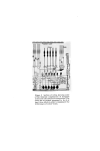
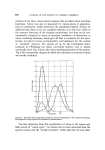
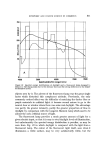
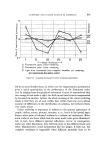
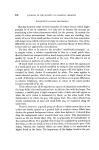
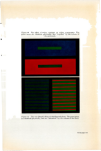
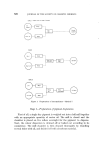
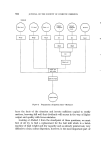
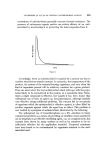
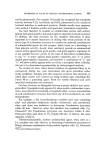
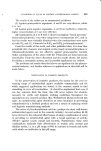
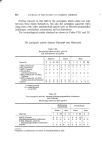
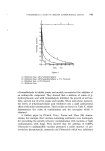
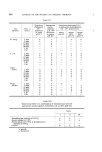
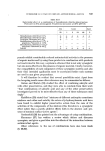
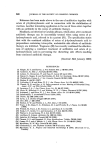
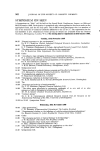
SYNERGISM IN VITRO OF CERTAIN ANTIMICROBIAL AGENTS 543 D 0 --e ' ß • I0 2O 30 • 40 •' 50 • •o • ,o 8O 25 o I000 5 I0 15 20 35 40 Time, min Figure 2 A--Emulsion base +3 •o hexachlorophane B--Emulsion base +3 % hexachlorophane + 1 •o Phenonip C--Emulsion base q-1 •o Phenonip D--Emulsion base of formaldehyde to inhibit yeasts and moulds necessitated the addition of an antimycotic compound. They showed that a mixture of esters of p- hydroxybenzoic acid with formaldehyde inhibited the growth of all bac- teria, and six out of seven yeasts and moulds. When used alone, however, the esters of p-hydroxybenzoic acid exhibited only a mild antibacterial effect at the same concentrations. Their results are shown in Table X, which demonstrates the value of combinations and the synergism which is obtained. A further paper by Pivnick, Tracy, Tosoni and Glass (18) demon- strates, for example, that vaccines containing antibiotics were inadequate for preventing the growth of heavy contamination with bacteria or light contamination with fungi. They showed that the addition of 0.375% Phenoxetol to poliomyelitis vaccines presented a stable mixture of pre- servatives (streptomycin, neomycin and Phenoxetol) which was inhibitory

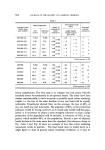
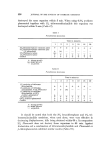
544 JOURNAL OF THE SOCIETY OF COSMETIC CHEMISTS Table X Antimicrobial effect of p-hydroxybenzoates mixed with formaldehyde (18) No. of tubes with growth Dilution of No. of tubes challenged % p-hydroxy- Formaldehyde challenge benzoates [ppm culture Yeasts and Bacteria moulds _ 0 8 None 13/13 7/7 10-3 13/13 5/7 lO-6 13/13 s/7 0 53 None 10/13 7/7 10-3 4/13 4/7 10-6 0/13 3/7 0.165 8 None 7/13 3/7 10-3 5/13a 0/7 10-6 3/lab 0/7 0.165 54 None 0/13 1/7 10-3 0/13 0/7 10-6 0/13 0/7 to both bacteria and fungi. They also showed that p-chlorophenoxetol at 0.2% provided very favourable results. The authors chose Phenoxetol for their investigations because of its known activity against Pseudomonas pyocyanea-- a serious potential pathogen which may grow in vaccines and other medicinals. In their conclusions, these authors stated that Phenoxetol supplements the antibacterial activity of antibiotics, (a point already referred to above in considering penicillin-Phenoxetol systems) provides adequate antifungal activity and has excellent stability. Furthermore, this product is not inactivated by materials rich in protein, in contrast to bithio- nol and quaternary antibacterial agents, e.g. cetyl pyridinium chloride, which are inactivated by fatty acids present in protein (19). No benefit is obtained when using a combination of a material such as benzalkonium chloride with hexachlorophane, where a loss of antibacterial activity is observed (20). When considering a particular component for a potentially synergistic combination for use in preservation, the components must be compatible, firsfly with each other and secondly, with the material into which they are incorporated and which they are intended to preserve. Another recent publication describing the synergism of combinations of antibiotics and other well-known antimicrobial agents (21) describes the combined use of an antibiotic, e.g. neomycin and a product of the Phen- oxetol type, in providing an effective system for the treatment of ear
Purchased for the exclusive use of nofirst nolast (unknown)
From: SCC Media Library & Resource Center (library.scconline.org)