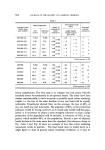
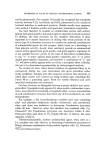
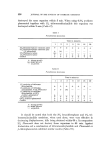
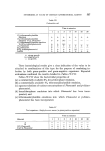
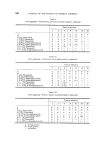
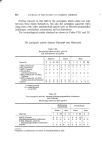
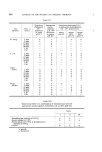
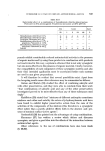
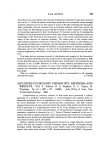
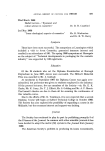
SYNERGISM IN VITRO OF CERTAIN ANTIMICROBIAL AGENTS 547 Table XIII Bactericidal effect of a combination of benzalkonium chloride plus propylene Phenoxetol in 20 % serum against Pseudomonas pyocyanea at 22øC (pH 6.5) Benzalkonium chloride at 0.1% Benzalkonium chloride at 0.2 • Propylene Phenoxetol at 1.0 • Benzalkonium chloride at 0.1 • q- propylene Phenoxetol at 1.0 • Benzalkonium chloride at 0.1% q- propylene Phenoxetol at 0.5 % Control i 20 hours days 1 3 24 48 3 + + + + + + + + q- pounds exhibit considerably reduced antimicrobial activity in the presence of organic matter and by using these products in combination with products not inactivated in this way, a system is obtained that is not only' synergistic but also more effective in the presence of organic material. Clearly, however, the compatibility of each component of these synergistic systems and also their final intended application must be ascertained before such systems are used in any given preparations. It will therefore be evident that several possibilities exist. Apart from the foregoing results some other references may be summarised as follows: Osman and Mariah (24) studied the effect of combining salicylic acid with other preservatives, and they were able to conclude from their work "that combinations of salicylic acid and any of the other preservatives investigated proved to be more effective than any of these substances used singly". Myddleton {25) stated that "mixtures of different antiseptics sometimes reinforce each other and notably the esters of p-hydroxybenzoic acid have been found to exhibit higher preservative action than the sum of the activities of the components of the mixture {this therefore is a synergistic effect rather than a purely additive effect) both in the absence and pre- sence of nonionic surface-active agents". Gershenfeld {26) has pointed out the advantages of using combinations. Maccacaro (27) has written a review which defines and discusses synergism, and gives a good idea into the effects of the interaction between antimicrobial agents. Other references to the use of combinations have also been made (6, 28-30).

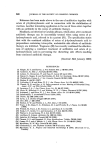
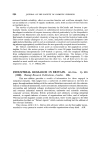
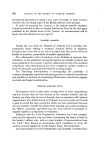
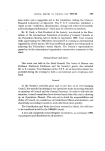
548 JOURNAL OF THE SOCIETY OF COSMETIC CHEMISTS Reference has been made above to the use of antibiotics together with esters of p-hydroxybenzoic acid in connection with the stabilisation of vaccines. Another interesting application is the use of these esters together with an antibiotic in the course of antibiotic therapy. Mon. iliasis, an infection by Candida albicans, which arises after continued antibiotic therapy can be successfully treated when using esters of p- hydroxybenzoic acid, referred to in a patent (131). The specification states that with the combined addition of esters of p-hydroxybenzoic acid to preparations containing tetracyclin, undesirable side effects of antibiotic therapy are inhibited. Wegmann (132) has recently confirmed the effective- ness of applying a combined treatment of antibiotics and esters of p- hydroxybenzoic acid in preventing the disturbing side effects resulting from continued antibiotic therapy. (Received: 24th January 1968) (18) (19) (20) (21) {22) (23) (24) (25) (26) (27) REFERENCES (1) Knight, H. T. and Harvey, J. New Zealand Med. J. 68 653 (1964). (2) Anderson, K. Meal. J. Australia 22 463 (1962). (3) Lubsen, N., Boissevain, W. and Fass, H. Lancet (29 April 1961). (4) Kaiser, E., Megay, K. and Pantlitschko, M. Boll. Ist. Sieroterap. Milan, 29 237 (1950). (5) Wedderburn, Doreen L. J. Soc. Cosmetic Chemists 16 395 (1965). (6) Boehm, E. ibid 8 1 (1957). (7) Littlejohn, O. M. and Husa, W. F. J. Am. Pharm. Assoc. Sci. Ed. 44 305 {1955). {8) Warner, M. E. and Gee, A. H. Paper presented at Ann. Meeting of Parenteral Drug Assoc., N.Y., on 27th October 1955. (9) Lawrence, C. A. J. Am. Pharm. Assoc. S•i. Ed. 44 457 (1965). (10) Klein, M., Millwood, E.G. and Walther, W. W. J. Pharm. Pharmacol. 6 725 (1954). (11) Schimmel, J. and Husa, W. J. J. Am. Pharm. Assoc. Sci. Ed. 4õ 204 {1956). (12) Sabalitschka, T. Arzneimittel Forsvh. õ 259 (1955). (la) Pharm. Ztg 108 {1963) 1745 (14) Savin, J. A. Chemist Druggist 187 291 (1967). (15) Brit. Meal. g. 12õ (1967). (16) Burdon, D. W. and Whitby, J. L. Brit. Meal. J. 153 (1967). {17) Tracy, J. M., Glass, D.G., Nicholson, M. J. and Pivnick, H. J. Pharm. Svi. õ8 659 (1964). Pivnick, H., Tracy, J. M., Tosoni, A. L. and Glass, D.G. ibid. 899. Koda, C. F., Grubb, T. C. and Alexander, J. F. ibid. õ4 478 (1965). Waiter, G. R. and Gump, W. S. ibid. õl 707 (1962). yon Moos, R. Schweiz. Apotheker Ztg. 102 194 (1964). Janistyn, H. Parfuem. Kosmetik 40 136 (1959). Clausen, O. G. and Raugstad, K. Norg. Apotekerforen. Tiddskr. 78 365 (1965). Osman, H. G. and el' Maria, h, A. ]. Am. Pharm. Assoc. Sci. Ed. 49 231 {1960). Myddleton, W, W. Mfg. Chemist 81 256 (1960). Gershenfeld, L. Am. Perfumer Cosmetics 78 55 (October 1963). Maccacaro, G. A. Progress and industrial microbiology 8 (1961) (Heywood & Co., London).
Purchased for the exclusive use of nofirst nolast (unknown)
From: SCC Media Library & Resource Center (library.scconline.org)