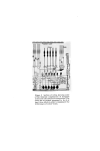
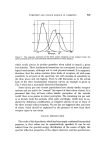
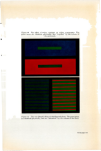
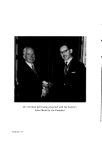
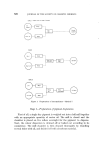
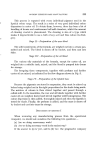
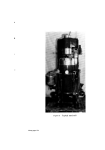
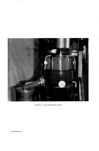
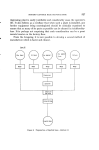
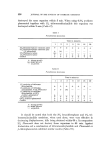
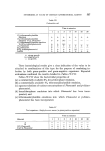
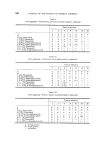
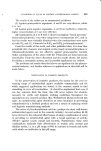
MODERN LIPSTICK BASE MANUFACTURE 525 lipstick base manufacture, and therefore any replacement must be of at least equal performance. A survey of the various types of milling machine available would quickly indicate the sand mill as being ideal for our purpose and without serious disadvantage. Description of the sand mill This machine will quickly convert a pigment/oil mixture prepared with a simple mixer into a pigment dispersion equivalent to that produced on the ball mill. The principle of operation is that the pre-mixed pigment/oil mixture is pumped through whilst specially graded sand or other media is kept agitated by a special impellor consisting of a series of discs spaced along a shaft. The rate of pumping can be varied to suit the degree of milling required. Obviously, the longer the mixture dwells within the mill, the greater is the disruptive effect of the sand. Finally, the sand is separated from the colour dispersion by screening at the top of the mill. The colour is then pumped away to where it is needed without intermediate handling. Although the sand mill is a continuous machine, it can also be used for batch processing as will be noted when Method II is described. Figs. $ and 4 show a typical sand mill with its input and output pumps, and sand separation screen. Improvement of storage, handling and cleaning By starting each individual shade directly from dry colour rather than from pigment dispersions in castor oil, the practical problems associated with sedimentation on storage, would be avoided. The concept of blending the raw materials apart from colour and per- fume, into two groups, i.e. oil and wax, is clearly correct because it reduces the overall number of weighings when large numbers of batches need to be made. However to reduce the handling further, why not include the castor oil in the oil blend and store in a tank, using a pump and meter for dis- pensing purposes? We should also consider whether we could store the molten wax in an inert atmosphere and handle once again by meter, straight into the final mixing pan. Furthermore, in casting the lipstick base into trays an intermediate container was used where a combined mixer and pump would have avoided this. As far as facilitating cleaning in a lipstick department is concerned, provided the scale of operations is reasonably large, a trichlorethylene

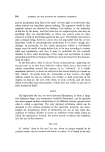
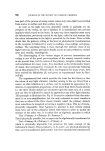
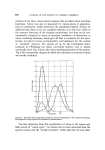
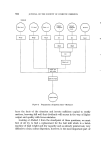
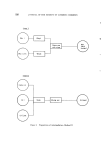
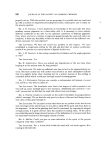
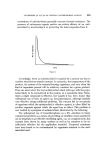
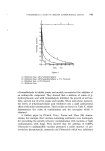
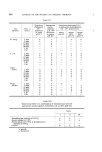
526 JOURNAL OF THE SOCIETY OF COSMETIC CHEMISTS S__la_g e I Wox• Weigh Wox. 2, e• Weigh Sleom pon wiih mixer Slage lZ Meier I Mixing pan Figure 5 Preparation of intermediates--Method II
Purchased for the exclusive use of nofirst nolast (unknown)
From: SCC Media Library & Resource Center (library.scconline.org)