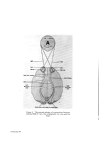
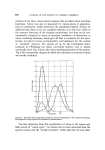
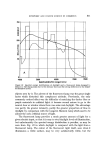
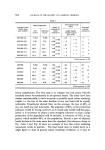
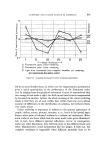
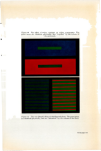
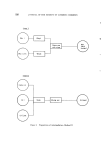
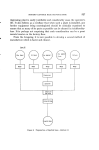
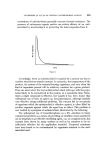
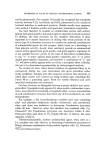
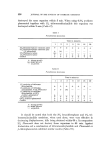
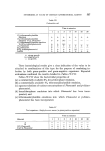
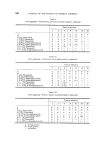
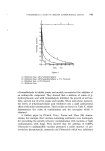
SYNERGiSM IN VITRO OF CERTAIN ANTIMICROBIAL AGENTS 533 centrations of carbohydrates generally increase thermal resistance. The presence of extraneous organic matter can reduce efficacy of an anti- microbial by inactivating it or protecting the micro-organism from it. Time Figure I Accordingly, when an antimicrobial is required for a system one has to consider what factors remain constant. In cosmetics, the temperature of the product, the nature of the material-bearing organisms, and very often the kind of organisms present will be relatively constant for a given product. Thus one must select the best antimicrobial which will cope with the popu- lation likely to be encountered in the system, in a reasonable time. Some- times a single compound is effective, but usually it has been found that widespread use of such an agent e.g. hexachlorophane, although initially very effective, brings additional problems. The vacuum left by one species of organisms which the antimicrobial is effective against, is often filled by another organism against which the agent has no effect. This problem is now tackled by synergism of antimicrobials, illustrated by the following: The widespread use of hexachlorophane as a 3% emulsion in many commercial products as a means of providing an emulsion cream system for use in hospitals as an effective sterilising agent, e.g. as a surgical scrub, has recently been shown by many workers as well as by ourselves to be in- sufficiently effective for the application intended. Unopened containers have been found to be contaminated by organisms resistant to the anti- microbial used.

534 JOURNAL OF THE SOCIETY OF COSMETIC CHEMISTS Hexachlorophane is essentially active against gram-positive bacteria, e.g. Staphylococci and consequently its use alone as a 3% emulsion in creams for the treatment of surgeons' hands in pre- and post-operative situations has its limitations. The question arises as to the effect of these systems containing 3% hexachlorophane against pathogenic gram-negative micro-organisms, such as Pseudomonas pyocyanea, Escherichia coli and Proteus. A scrub which is not effective against a broad range of organisms is potentially dangerous. During production the scrub can become con- taminated with organisms, resistant to the antimicrobial present, which can cause an infection when used. In addition, an initially sterile scrub can pick up resistant strains during use. It is therefore important that the antimicro- bials used should have the greatest possible spectrum of activity and thus the in vivo as well as the in vitro effect of the scrub is important. It has been observed, for example by Knight et al (1), that a con- tainer of a 3% hexachlorophane emulsion was contaminated with gram- negative organisms and retained these organisms for several days. The use of such a product therefore in pre-operative "surgical scrubs" as a cleanser for the mucous membranes of infants, children, adults and for the dry wash of new born babies or as a surgical lubricant in gynaecology, should be rejected for hospital use if laboratory tests show the presence of such gram- negative organisms in unopened containers. Anderson (2) has observed the persistent growth of gram-negative organisms (Proteus and Pseudomonas) in hexachlorophane soaps. He has emphasised that the suppression of pathogenic Staphylococci by several active antimicrobials, such as hexachlorophane, has given rise in many cases, to their replacement by gram-negative organisms. In particular, Pseudomonas pyocyanea and Proteus cause cross infection and are more likely to appear if the antimicrobial in use has no activity against gram- negative microbes. In considering the increase of gram-negative infection of the urinary tract, workers in Amsterdam (3) were able to relate this increase to the use of chlorhexidine as an antimicrobial agent. Most strains of Proteus investigated were insensitive to chlorhexidine at the recommended concentration. It is interesting that these workers (3) found that a com- bination of kanamycin (or neomycin) with tetracycline was synergistic against these organisms. The action of kanamycin (501•g ml-1) with tetra- cycline (20 I•g ml- 1) was bactericidal on all the strains of Proteus investigated, although such concentrations alone were ineffective. Earlier work has shown the synergistic effect of using combinations of penicillin, tyrothricin, sulphonamides, acridines, quaternary compounds
Purchased for the exclusive use of nofirst nolast (unknown)
From: SCC Media Library & Resource Center (library.scconline.org)