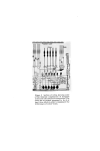
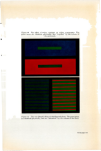
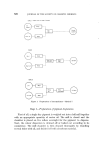
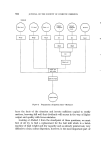
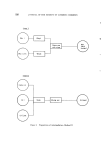
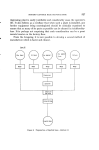
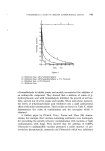
MODERN LIPSTICK BASE MANUFACTURE 527 degreasing plant is easily justifiable and considerably eases the operator's life. It also follows as a corollary that when such a plant is installed, any further equipment being contemplated should be critically examined to ensure that as many of its parts as possible can be cleaned in trichlorethy- lene. It is perhaps not surprising that such consideration can be a great morale booster on the factory floor. From the foregoing, it is now possible to develop a second method of manufacture which is faster and cleaner. Styage ]]Z J •'• I I •e'e• I I we'• I I •'• I I •e'• I I Premix pan I Sand mill Steam pan with mixer J Pump into troysJ Figure 6 Preparation of lipstick base--Method II

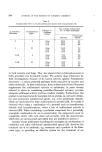
528 JOURNAL OF THE SOCIETY OF COSMETIC CHEMISTS METHOD II This time, as shown by the flow diagrams in Fig. 5, only two basic intermediates are prepared initially. Stage I--Preparation of the wax blend The procedure is as for Method I, except that the blend is stored molten as suggested above. Stage II--Preparation of the Oil Blend This is made by metering the various components into a storage tank fitted with a suitable mixer. When required, the oil is metered to where it is needed rather than being weighed out. The wax and oil blends together with dry pigments and perfume are mixed, as shown by the flow diagram in Fig. 6. Stage IIJ--Preparation of lipstick base A proportion of the oil blend is metered straight into the premix pan attached to the sand mill. The dry pigments are weighed out and stirred in. The slurry is passed through the sand mill straight into the steam pan, fitted with a combined mixer and pump. Any residual colour is flushed from the premix pan and sand mill with the balance of the oil needed. Simultaneously, the wax blend is metered into the steam pan. After mixing thoroughly the base is tested for shade and the perfume is added. It is then pumped into storage trays, using the mixer as a pump. As a matter of interest, because the wax blend is molten and the colour dispersion comes away from the mill at about 60 ø , very little further heat is required in this process. (Received: 14th July 1967.) DISCUSSION MR. K. MARSHALL: Have any attempts been made during the work described, to assess the amount of the grinding media which has undergone reduction to a size where it is possibly present in the product? T•E LECTURER: We normally use a Hegman gauge for testing and our grind runs off this. This indicates that we are not getting gross contamination of sand in the product.
Purchased for the exclusive use of nofirst nolast (unknown)
From: SCC Media Library & Resource Center (library.scconline.org)