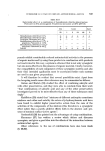
J. Soc. Cosmetic Chemists 19 531-549 (1968) ¸ 19o8 Socieo, of Cosmetic Chemists of Great Britain Synergism in vitro microbial agents of certain anti- E. E. BOEHM* A lecture delivered before the Society on 4th January 1968. Synopsis•The need for broad-spectrum antimicrobial systems, active against both gram- positive and gram-negative micro-organisms, which function not only as preservative systems but also exert a rapid bactericidal and fungicidal effect is discussed. The desired antiseptic effect can result from the synergism obtained when using different combinations of anti- microbial agents. The existence of antimicrobial compounds has been recognized for many years and chemically they represent a very heterogenous group of compounds. By definition, an antimicrobial agent is one that interferes with the growth and activity of microbes it can be microbicidal (any agent that kills microbes) or microbiostatic ( a condition in which the growth of the organism is prevented), or both, depending on the contact time. Although an antimicrobial which is microbiostatic is considered sufficient for the preservation of some cosmetics this is a dangerous state of affairs. A change in storage conditions can lead to a change of state where microbial growth becomes possible and therefore it is always best to use a microbicidal. The specific nature of activity of any antimicrobial agent, i.e. whether it is essentially active against bacteria, moulds or yeasts or whether it has a more broad-spectrum of activity and is active against bacteria, moulds and yeasts has initially to be considered. One has then to distinguish between antimicrobial agents which are essentially active against gram-positive organisms e.g. Staphylococci, Streptococci and gram-negative organisms, •Nipa Laboratories Ltd., Pontypridd, Glare. $31

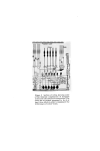
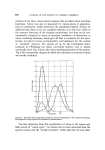
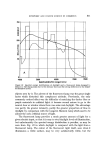
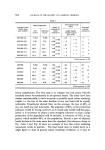
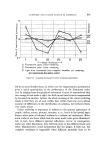
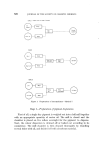
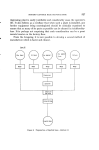
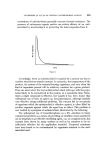
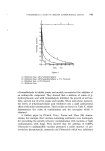
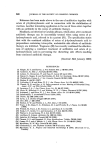
532 JOURNAL OF THE SOCIETY OF COSMETIC CHEMISTS e.g. Escherichia coli, Proteus vulgaris and Pseudomonas pyocyanea (aeru- ginosa). An example of antimicrobial agents essentially active against gram-positive micro-organisms are bis-phenols of the hexachlorophane type. An example of an antimicrobial agent essentially active against gram- negative organisms is a compound of the phenoxetol type. By using two or more antimicrobial agents in combination, it is therefore possible to obtain a system exhibiting antimicrobial activity against a very broad range of micro-organisms. This combination of antimicrobial agents is said to be synergistic only if the spectrum of activity of the combination is greater than when either agent is used alone or to that which could be attributed to an additive effect. The concentration of each antimicrobial agent required is usually lower than when either is used alone. One is able to determine experimentally whether any given combination is synergistic in its anti- microbial effectiveness. Death of the entire population does not occur instantaneously but follows a definite predictable pattern. Irrespective of the initial population, under uniform conditions, the number of organisms will be reduced by the same percentage during each equal period of time. Thus for each unit of time the percentage of the population killed will be constant, e.g. if the initial population was 100,000 and 1,000 after 5 min, then after a further 5 min, 100 will remain in each case the populations is reduced by 90%. This is known as the logarithmic death rate and is illustrated by Fig. 1. An antimicrobial agent is influenced by the following factors: 1. Concentration of antimicrobial agent. The higher the concentration, the greater the rate of kill. 2. Time. The longer the time contact between the agent and organism the greater the number of organisms destroyed. :3. Temperature. An increase hastens the destruction. 4. Number of organisms. From Fig. I it can be concluded that the larger the population, the longer the time required to kill all the micro- organisms providing all other conditions remain uniform. 5. Kind of organisms. Micro-organisms differ in their susceptibility to chemical and physical agents. Growing vegetative cells are most sus- ceptible whereas spore forms are extremely resistant. 6. Nature of material bearing the organisms. The physical and chemical properties of the medium carrying the organisms has a profound in- fluence on the rate and the efficacy of microbial destruction. The effective- ness of heat is greater in acid than in alkaline material and high con-
Purchased for the exclusive use of nofirst nolast (unknown)
From: SCC Media Library & Resource Center (library.scconline.org)