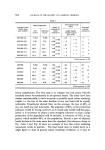
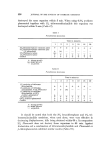
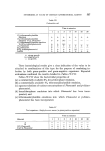
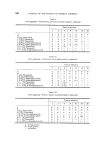
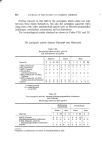
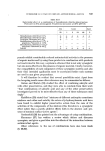
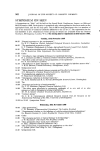
SYNERGISM IN VITRO OF CERTAIN ANTIMICROBIAL AGENTS 545 infections. This preparation was both bactericidal and bacteriostatic against gram-negative and gram-positive organisms. In the cosmetic and semi-cosmetic/pharmaceutical fields much has to be recommended on the basis of the bacteriological results given above for using such effective systems in products such as body deodorants, anti- dandruff preparations, shampoos, antimycotic foot preparations, after- shave preparations and cosmetic-serum products. Janistyn (22), for ex- ample, has especially recommended the use of a combination of Phenoxetol with other antiseptic agents in shaving lotions and other preparations required for use as effective antiseptic agents in the treatment of infectious skin diseases, e.g. dermatitis. Considerable work by Clausen and Raugstad (23) has included com- binations of many different antimicrobial agents including benzalkonium chloride, aminacrine hydrochloride, esters of p-hydroxybenzoic acid, benzyl alcohol, Phenoxetol and its derivatives, dibromo-propamidine isethionate, etc. Some of the results obtained by Clausen et al (23) are shown in Tables XI-XIII. The synergistic combination of propylene Phenoxetol at 1.0% and aminacrine hydrochloride at 0.05% in aqueous solution in the absence, or presence, of normal serum has an excellent bactericidal effect. The compatibility of this system with serum (i.e. a protein rich medium) is another feature worth mentioning, as this is in contrast to products such as quaternary antimicrobial agents which are inactivated by such media. This combination has an excellent effect on Pseudomonas pyocyanea which, as we have seen, appears to be highly resistant especially in the presence of organic matter. This synergistic combination was also effective against E. coli, although a weaker effect was displayed against gram-positive micro- organisms. The results in Tables XI-XIII were obtained from tests conducted in 20% horse serum. Since the antimicrobial effect of many substances is considerably reduced by blood, the results obtained give an idea of the antiseptic effect of the products involved, i.e. a determination of their usefulness in preventing infection in topical therapy. We have already seen that the glycol ethers, e.g. Phenoxetol and its derivatives, are readily compatible with organic material of this type and combined with their non- irritant effect on the skin they may be considered well suited to external therapy. Quaternary compounds on the other hand, e.g. benzalkonium chloride or cetyl pyridinium chloride, as well as organic mercury corn-

546 JOURNAL OF THE SOCIETY OF COSMETIC CHEMISTS Table XI Test bacteria Ps. aerug E. coh $taph. $trept. faecalis Time of action 1 min 5 rain 10 rain 15 rain $0 rain 1 hr 2 hr 1 rain 5 rain 10 rain 15 rain 80 rain lhr 2 hr Propylene Phenoxetol 10-2 1 5 lO 15 30 1 2 min min min min rain hr hr 1 min 5 min 10 rain 15 rain $0 rain 1 hr 2 hr dissolved in water pH 4.7 q- q- + + + __ -- -- -- + + + + + + + Aminacrine hydro- chloride 1/2. 10 -3 dissolved in water pH 6.0 Propylene phenoxetol 10 -2 q- aminacrine hydrochloride 1/2 . 10 -3 dissolved in + + + + + + + + + + + + + + + + + + + water serum pH 5.9 20 •o pH 7.6 -- + -- __ __ __ __ __ -- __ + + -- + -- __ __ __ -- __ -- -- + + + + + + + + -- + -- __ + -- + -- + -- + -- + __ -- serum $0% pH 7.9 q- + + + __ -- -- -- + + + + + + -- + + + + + -- Table XlI Bactericidal effect of a combination of benzalkonium chloride and benzyl alcohol against Escherichia colt, at 22øC (pH 4.7) Benzalkonium chloride at 0.01 •o Benzyl alcohol at 0.5 •o Benzyl alcohol at 0.5 •o q- benzalkonium chloride at 0.01 •o Control hours q- q- 24 growth no growth
Purchased for the exclusive use of nofirst nolast (unknown)
From: SCC Media Library & Resource Center (library.scconline.org)