504 JOURNAL OF THE SOCIETY OF COSMETIC CHEMISTS and its mechanism help him in his task? At first sight it would seem that colour science can contribute almost nothing. The argument would be that cosmetic colours are dictated by fashion, that fashion is the imitation of the few by the many, and that these few are original spirits who may do anything they are unpredictable, so where can science come in, since science is a body of knowledge gained in the past? The fashion innovator is only a human being, however, and so it is not impossible that his, or her, behaviour could be psychologically predictable if we knew enough psy- chology. In particular, he has colour perception within a well-defined range: even his world of make-believe has to be seen according to certain rules and regulations, and thus it may be profitable for the cosmetic chemist to have some knowledge of the range and mechanism of colour perception and of the techniques which have been developed for the measure- ment of colour. In the first place, what is colour? Every normal person, neglecting the ten per cent or so who have defective colour vision, has a keen sense of colour: everything around him appears to be "coloured". It is vitally important, however, to make an analysis of the factors which go to make up this "colour". It results from the interaction of four factors--the light without which we can see nothing, the surface or bulk properties of the objects we look at, the eyes with which we look at them, and the brain which is the final seat of perception. Colour does not reside in any one of these factors by itself. LIGHT The light from the sun, our most universal illuminant, or from a tung- sten filament lamp, our commonest artificial illuminant, can be analysed into what appear on first consideration to be different colours, spread out in what is called a spectrum. The only physical attributes which can be attached to the various locations in the spectrum, however, are wave- lengths (or frequencies) which in themselves are not in any sense des- criptions of colours. Neither is colour an attribute of the white screen on which the spectrum is formed: the screen merely re-directs the radiation into the eye of the observer. THE EYE Is "colour" then in the eye? An eye, when no longer wanted by its natural owner, can be excised and taken to pieces. It is found to be very

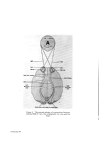
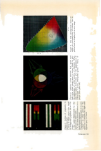
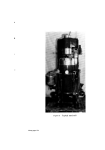
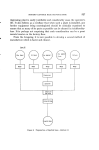
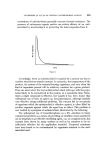
Figure 1 Section of human eye. Facing page 504
Purchased for the exclusive use of nofirst nolast (unknown)
From: SCC Media Library & Resource Center (library.scconline.org)