J. Soc. Cosmetic Chemists 20:3-15 (1969) ¸ 1969 Society of Cosmetic Chemists of Great Brttain Drop testing of plastic containers E. K. CLARKE* Presented at the symposium on "Technical developments in cos- metics packaging", organised by the Society of Cosmetic Chemists of Great Britain, at Harrogate, Yorks., on 27th March 1968. Synopsis--This paper discusses some ways of conducting drop tests, and comments on a few results obtain ed. INTRODUCTION Until recently almost all plastic containers for toiletries and cos- metics were made from various grades of polyethylene. These containers were virtually unbreakable. In the eyes of the customer therefore, "plastic bottles" has come to mean "unbreakable bottles". Recently, however, there has been considerable use of polystyrene jars and talc containers. Increasing numbers of PVC bottles are also appearing. Compared with polyethylene, all these containers are relatively fragile. Although such containers are usually stronger than glass, breakage may upset the customer because it is unexpected. It is not suggested that the containers need to be unbreakable, but that they are made reasonably robust so that breakage is not common. The degree of strength needed to minimise customer complaints can only be established by marketing containers of known strength. It is the determina- tion of this strength with which this paper is concerned. Drop testing filled containers has been a favoured technique with many *Beecham Products (U.K.), M•idenhe•d, Berks. $

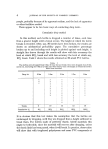
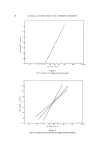
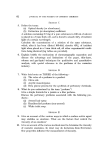
JOURNAL OF THE SOCIETY OF COSMETIC CHEMISTS people, probably because of its apparent realism, and the lack of apparatus or other facilities needed. There appear to be two basic ways of conducting drop tests:- Cumulative drop method In this method, each bottle is dropped a number of times, each time from a greater height until a break occurs. The height at which the bottle breaks is recorded. After, say, 50 bottles have been broken, the results are shown on arithmetical probability paper. The cumulative percentage broken up to and including each height is plotted against each height. A straight line drawn through the results will show with fair acccuracy the level at which 50% break and with less accuracy the level at which say, 10% break. Table I shows the results obtained on 50 small PVC bottles. Table I The bottles were dropped from 0.Sin. If they did not break they were dropped from 0.6m, and so on, increasing by 0.Sin at a time until they failed. Only the height at which the bottles failed was recorded. Drop hr. 0.3111 0.6m 0.9m 1.2m 1 x x x x x x x x x x x x x x x x x x x x x x x Totals 3 10 14 13 10 Cumulative % 6% 26% 54% 80% 100% It is obvious that this test makes the assumption that the bottles are undamaged by dropping, until they are dropped from a height sufficient to break them. For bottles made of perfectly elastic, brittle materials this might be believable, since the matehal will recover after dropping, unless the elastic limit has been passed, when it will break. In practice, observation will show that with toughened polystyrene and some PVC compounds at
Purchased for the exclusive use of nofirst nolast (unknown)
From: SCC Media Library & Resource Center (library.scconline.org)