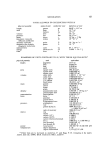
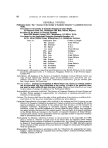
INFLUENCE OF THE WEIGHTS AND MEASURES ACT ON PACKAGING 33 aerosol packs and all soaps, except liquid soap, specifying that the total fill shall be given in terms of weight only. Liquid soap shall be specified in terms of a capacity measurement only. All other cosmetic and toiletry products may be declared in terms of either weight or volume (6). Within the terms of the Act, any authorised officer may, within his own area and at all reasonable times, inspect and test instruments, and weights and measures "used for trade", and also check any prepacked goods within the provisions of the Act and he may enter premises for these purposes. These premises do, of course, include manufacturing units, warehouses, and retail outlets but not vehicles on a highway (7). He must also investigate any complaints laid before his office. There is no laid down frequency for visits and inspections by local officers, but an annual visit is regarded as a desirable minimum. It is believed, however, that this is only being achieved in about 40ø//0 of the premises liable for inspection, but this figure will vary considerably from area to area and in the case of manufacturing establish- ments visits more frequently than once a year are normal. Exemptions There are a number of reasons exempting goods from coming within the terms of the Act. For instance the term "use for trade" does not apply where: - (a) the determination or statement is a determination or statement of the quantity of goods required for despatch to a destination outside Great Britain and any designated country and (b) the transaction is not a sale by retail and (c) no transfer or rendering of money or money's worth is involved other than the passing of the title to the goods and the consideration thereof. This section also exempts the labelling of goods intended only for sale to H.M. forces, or a visiting force, or for use only as stores in a ship or aircraft on a voyage or flight to an eventual destination outside the United Kingdom and the Isle of Man (8). It is fairly obvious here that it is in order not to mark with a contents declaration goods intended for export only. It would also appear to be reasonably safe not to mark free samples, especially if they are labelled with some suitable wording as "Free sample - Not for retail sale". But what if they should be sold? And what of toiletry packs sold at a low price for use in salons which are invariably marked "Not for retail sale", but which can be purchased in most street markets? The safe way here would

34 JOURNAL OF THE SOCIETY OF COSMETIC CHEMISTS appear to be to mark these articles with a contents declaration, but is this then a suggestion by the manufacturer that they may be sold retail? There are also exempt from the Act many small size articles and within our field the following are examples: Perfumes and toilet waters in a quantity not exceeding 12g or 20c.c. Toilet preparations for use on the hair or scalp of human beings in a quantity not exceeding 20g or 20c.c. Toilet preparations for external use on any other part of the human body and dentifrices in a quantity not exceeding 12g or 12c.c. Liquid soap in a quantity of less than 5fl.oz. Soap in any other form in a quantity of less than loz. Aerosol products where the entire contents are less than loz (6). DEFENCES AGAINST THE ACT There are a number of defences quoted in the Act and among these are the following:- It is a defence to prove that the offence was due to a mistake or accident or some other cause beyond control and that all reasonable precautions and due diligence to avoid the commission of the offence had been taken. Another defence is to prove that a deficiency in quantity arose after the container was made up and marked and this deficiency was wholly attribut- able to factors for which reasonable allowance was made in stating the quantity of the goods. If a deficiency of quantity can be proved to have occurred between the sale and the discovery of the deficiency, and to be due to subjection to treatment which could cause the reduction in quantity and that this treat- ment occurred with the consent of the buyer, then this is a defence. It is an offence under the Act to have an excess of quantity in a marked container, but a defence to prove that the excess was due to taking reason- able measures in order to avoid the commission of an offence in respect of a deficiency. If an offence has been committed with regard to an excess or deficiency of quantity and there are other articles of the same kind at the place where the article was tested then a reasonable number of those other articles shall also be tested and the court shall have regard to the average quantity in all the articles tested. If, however, the proceedings are with respect to a single article, then the court shall disregard any inconsiderable deficiency
Purchased for the exclusive use of nofirst nolast (unknown)
From: SCC Media Library & Resource Center (library.scconline.org)