INFLUENCE OF THE WEIGHTS AND MEASURES ACT ON PACKAGING Jrl mean size container filled to the standard level or the quantity dispensed by a filling machine at its mean setting when working with perfect effic- iency. The variation in the size of the container is quoted in terms of capacity variation by the container supplier, and it is essential that this variation is quoted at the standard filling level. This variation is only important when containers are filled to a level, either by vacuum or pressure. The variation in the accuracy of the filling machine, whether this be in the level of fill, or volumetric quantity dispensed, can sometimes be obtained from the machine supplier. It is, however, best obtained in practice as it may vary slightly with product or the speed of filling. If a plastic container is filled by vacuum, any collapse at the time of filling resulting in a subsequent drop in level when the vacuum is removed, must be taken into account. If the product is filled in two stages, as with aerosols, the variation at each stage must be determined. Any processing loss must be determined or estimated. If a pack is of the dispensing type and it is normal practice to test it after filling, e.g. spray testing of aerosols, plastic squeeze packs or manually operated perfume dispensers, or operation of cream or emulsion dispensers, then the quantity dispensed must be estimated. Any liquid product, subject to aeration, which may de-aerate after filling will decrease its volume and this must be allowed for if the declaration and control are in terms of volume. If, however, both the declaration and control are in terms of weight, this factor can be ignored. A similar calculation will apply to a product filled at an elevated temperature if a volume is the unit of declaration and control. It is impossible to say what loss on storage should be allowed. One cannot over allow, otherwise the declared figure may be too low, but one equally cannot under allow or there may be many packs on the market below the declaration. It is necessary to determine or estimate the anticipa- ted loss of weight or volume from a standard pack, filled and sealed in the standard manner with a correct closure whatever form this may take. The period and condition of this storage loss depend upon the movement of stock, conditions of storage and methods of distribution, but it is safer to estimate for well in excess of the average age at the time of sale under normal storage conditions. I believe that many manufacturers consider two years at 20øC to be a suitable criterion for calculating this loss. It is possible to ignore the higher losses found in packs exported to tropical climates as these packs are exempt, but if this is done then no declaration of contents

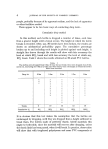
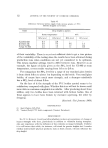
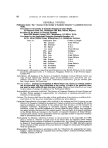
42 JOURNAL OF THE SOCIETY OF COSMETIC CHEMISTS should be affixed to the pack as an incorrect one may contravene some local overseas requirement. The efficiency of the control at all stages must be taken into account. It is no use allowing the glass manufacturer's capacity tolerance unless the components themselves are measured and controlled within the toler- ance. The same applies to variations in filling machine quantities. It is also necessary to control the process to ensure that variations in tempera- ture, aeration, etc., used for the calculations are not exceeded. Probably the most important factor to control is the efficiency of the pack closure. One must ensure that all aerosol containers are sealed and not leaking at any point, tubes are adequately crimped, wad materials are satisfactory and the caps applied with an adequate torque, plastic packs are welded satisfactorily, a.s.o. Another important control factor is the specific gravity of the product if the declared contents and the control method use different units of quantitity measurement, e.g. g to cm 3, oz. to fl.oz., etc. In taking into account all these factors, statistical methods of control are quite acceptable provided they are •vell designed to suit the existing circumstances. What must be borne in mind is that the allowances made, and the control exercised, should be such that one may claim that any packs which are under weight are a genuine mistake or error. It is, however, one's duty to prove this and to show that all reasonable precautions and control had been exercised. At the same time one cannot declare an unduly low figure as overfilling is also an offence and one which requires the offender to prove that the excess filling was necessary to prevent a possibil- ity of underfilling. In other words, one has to be able to justify all the allowances made in the calculation. To this end, methods of control with confidence limits of 99.7% are probably acceptable, although certainly not giving any guarantee of freedom from committing an offence. Methods of calculating the declared fill Rigid plastic bottle, vacuum filled Table IV Factor i Variation Standard fill Container variation in capacity at filling level Accuracy of filling machine Processing losses (de-aeration) Loss on storage (2 yr at 20øC) , _+ lcm3 +•- • +0.4 cm3 1% = 0.9 cm 3 3% = 2.7 cm3 Minimum fill (Standard minus variation) 90 cm3 89 cm 3 88.6 cm 3 87.7 cm3 85 cm 3
Purchased for the exclusive use of nofirst nolast (unknown)
From: SCC Media Library & Resource Center (library.scconline.org)