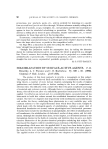
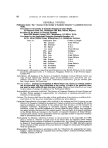
34 JOURNAL OF THE SOCIETY OF COSMETIC CHEMISTS appear to be to mark these articles with a contents declaration, but is this then a suggestion by the manufacturer that they may be sold retail? There are also exempt from the Act many small size articles and within our field the following are examples: Perfumes and toilet waters in a quantity not exceeding 12g or 20c.c. Toilet preparations for use on the hair or scalp of human beings in a quantity not exceeding 20g or 20c.c. Toilet preparations for external use on any other part of the human body and dentifrices in a quantity not exceeding 12g or 12c.c. Liquid soap in a quantity of less than 5fl.oz. Soap in any other form in a quantity of less than loz. Aerosol products where the entire contents are less than loz (6). DEFENCES AGAINST THE ACT There are a number of defences quoted in the Act and among these are the following:- It is a defence to prove that the offence was due to a mistake or accident or some other cause beyond control and that all reasonable precautions and due diligence to avoid the commission of the offence had been taken. Another defence is to prove that a deficiency in quantity arose after the container was made up and marked and this deficiency was wholly attribut- able to factors for which reasonable allowance was made in stating the quantity of the goods. If a deficiency of quantity can be proved to have occurred between the sale and the discovery of the deficiency, and to be due to subjection to treatment which could cause the reduction in quantity and that this treat- ment occurred with the consent of the buyer, then this is a defence. It is an offence under the Act to have an excess of quantity in a marked container, but a defence to prove that the excess was due to taking reason- able measures in order to avoid the commission of an offence in respect of a deficiency. If an offence has been committed with regard to an excess or deficiency of quantity and there are other articles of the same kind at the place where the article was tested then a reasonable number of those other articles shall also be tested and the court shall have regard to the average quantity in all the articles tested. If, however, the proceedings are with respect to a single article, then the court shall disregard any inconsiderable deficiency

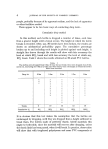
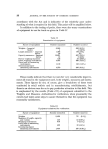
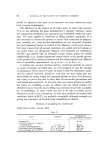
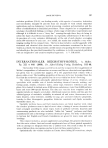
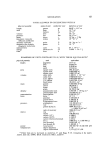
INFLUENCE OF THE WEIGHTS AND MEASURES ACT ON PACKAGING or excess and shall have regard generally to all the circumstances of the case (9). I have quoted only an extremely tiny part of the complete Act and its accompanying Statutory Instruments. Anyone involved with complying with the Act should certainly be in possession of the complete document. OPERATION OF THE ACT As mentioned previously, it is believed that only approximately 40}/0 of all premises covered by the Act are examined each year, but most manufacturing establishments are visited and their apparatus and produc- tion tested between 2 and 4 times per year. There is no real and detailed evidence on the findings of these visits, but one can draw some conclusions from the reports of Weights and Measures Authorities to the Board of Trade. One such report covering 11,485 fixed premises known to be liable to inspection, showed that 4,602 of these were visited. In addition, a further 1,128 mobile premises were visited (10). It is interesting to note that the number of fixed premises known increased from 9,038 in the previous year, an indication of the seeking out of premises that took place during the year. A break-down of the findings of all prepacked samples tested is shown in Table I. Table I Testing of commodities. Classification Number Number Number otherwise examined deficient incorrect ..... Meat, fish, poultry 4,295 290 (6.8%) 194 (4.5%) Bread 6,101 224 (3.7%) 10 (0.16%) Milk 647 22 (3.4%) - Fruit & vegetables 2,132 64 (3.0%) 87 (4.1%) Intoxicating liquor 124 20 (16%) 41 (33%) Other foods 32,737 918 (2.8%) 1,556 (4.7%) Solid fuel 2,877 29 (1.0%) - Sand and ballast 28 2 (7.1%) 3 (10.7%) Other commodities 5,744 254 (4.4%) 1,059 (18.4%) It is unfortunate that toiletry and cosmetic articles are classed in with other commodities, but Table I does show that deficiencies found in this category are of the same order as for most other goods. It is very striking, however, to note the very high figure in this category of other faults (18.4%). This presumably refers to faults in the manner of marking containers in
Purchased for the exclusive use of nofirst nolast (unknown)
From: SCC Media Library & Resource Center (library.scconline.org)