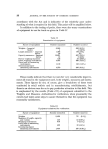
5O JOURNAL OF THE SOCIETY OF COSMETIC CHEMISTS and sets of NPL-calibrated tiles from:- Metrology Centre, The National Physical Laboratory, Teddington, Middlesex, England. The ceramic tile standards cost oe7 per set, the NPL-calibrated tiles, from f70, both prices including postage to any part of the United t(ingdom, otherwise they are f.o.b.

Book reviews BRITISH PHARMACEUTICAL CODEX 1968. Pp. xxxvii d-151•3. (19138). PharmaceuticalPress, London. f•7. The B.P.C. is so firmly established in Britain and many other countries that this review hardly needs to describe its general character. The 1968 edition differs from its predecessors in comparatively small and subtle ways, rather than in any major respect. Such a statement may not be true when the next edition comes along, for responsibility may then have passed to the Medicines Commission, who could possibly take a different view. At present, the General Medical Council publishes the British Pharmacopoeia in close collaboration with the Pharmaceutical Society, which is responsible for the Codex. Continuity in style and lay-out is a worthwhile attribute to an everyday work of reference. The pace of medical progress has dictated the need to revise the B.P. and B.P.C. every five years, but this creates the hazard that successive revision commit- tees might play havoc with the format to which readers have grown accustomed. On the •vhole, however, the 1968 Codex has maintained its overall style unchanged. Some obsolescent drugs and techniques are discarded to make way for the new, but there is a reasonable balance between fashion and conservatism. Nostalgically, we bid farewell to Buchu, Cinchona, Ipomoea and Valerian . . . hesitating just a little to wonder whether the present generation is any better off with modern tranquillizers than with the earlier placebos that were hopefully designated as "nerve tonics". We should also pause to pay our last respects to the initiator of modern chemotherapy - neoarsphenamine - which also joins the scrap- heap. Monographs of pharmacopoeial authority, including those of the B.P.C., have long proved of considerable use outside the strictly pharmaceutical field and many cosmetic chemists will regret the disappearance of specifications for Light Liquid Paraffin, Shellac and Hard Soap. The more obvious additional monographs that may be useful in the cosmetic field are those for Fractionated Coconut Oil, Dioctyl Sodium Sulphosuccinate, Hypromellose (hydroxy propylmethylcellulose), Polysorbate 20, 60 and 80, Sorbitan monolaurate, - oleate and - stearate. Potassium Sorbate and Sorbic Acid now gain a place and achieve "respectability" as preservatives for nonionic emulsions. There have been some doubts concerning the irritancy of sorbic acid as a preservative for topical applications but the Codex Revision Committee appears to be satisfied that there is no foundation for these fears. At this point, attention might be drawn to the fact that the B.P.C. specifies "action and uses" as well as "undesirable effects" in its monographs, unlike the British Pharmacopoeia the statements given are neces- sarily concise but nevertheless authoritative in terms of present-day knowledge. The Formulary section is not of great interest to the cosmetic formulator directly, though there may well be some helpful analogies to be derived. There are, however, 51
Purchased for the exclusive use of nofirst nolast (unknown)
From: SCC Media Library & Resource Center (library.scconline.org)