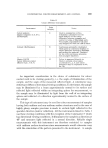
240 JOURNAL OF THE SOCIETY OF COSMETIC CHEMISTS OCCLUSIVITY OF TOPICAL VEHICLES The following preparations were assessed for occlusive potential by quantitively measuring their ability to suppress transepidermal water loss. All are used in clinical dermatological practice. 1. Ung. emulsificans B.P. 2. Anhydrous lanolin. 3. Ung. alc. lanae. 4. Soft white paraffin. 5. Soft white paraffin q- 5% propylene glycol. 6. Compound zinc paste N.F. 7. Polyethylene glycol 1500. Transepidermal water loss (TEWL) was measured in adult hospital patients on clinically normal flexor forearm skin which had been rendered anhidrotic by the previous application of poldine methosulphate (1). TEWL was measured by resistance hygrometry using methods previously described (2). After the TEWL and stratum corneum surface temperature had been measured and shown to be constant under resting laboratory conditions, the vehicle under test was applied liberally in a therapeutic manner, left for 15 min and then scraped off the stretched surface with the flat side of a wooden spatula in a standardised manner so as to leave a film on the surface. Water loss and surface temperature measurements were then repeated over the treated area. Similar experiments were performed on diseased forearm skin which was erythrodermic (eczematous) and where TEWL was greatly increased. Table I. Occlusivity of vehicles ranked in terms of degree of suppression of transepidermal water diffusion. No. of Complete Partial No Vehicle experiments suppression suppression suppression Soft white paraffin 14 9 5 0 Soft white paraffin q- 5 •o propylene glycol 5 3 1 1 Ung. emulsificans BP 9 0 4 5 Compound zinc paste 7 0 5 2 Anhydrous lanolin 4 0 0 4 Ung. ale. lanae 11 0 0 11 Polyethylene glycol 1500 3 0 0 3 In Table I the results of the applications on TEWL are expressed as "complete suppression" (defined as reduction of the normal TEWL to less than 0.06 mg cm-2 h-1 and the abnormal TEWL to less than 25% of its

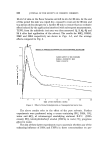
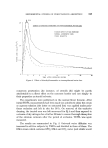
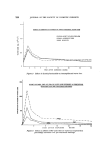
EXPERIMENTAL STUDIES ON PERCUTANEOUS ABSORPTION 241 pre-treatment value) "partial suppression" (reduction of normal or abnormal TEWL to less than 50% of the pre-treatment value) and no significant suppression (less than 50% reduction). The results are summarised in Table I. They show that in the order of thickness likely to be achieved therapeutically, a layer of hydrophobic soft white paraffin is highly occlusive. Compound zinc paste and ung. emulsi- ricans are weakly occlusive. Preparations containing lanolin had no signifi- cant occlusive effect. If TEWL is obstructed, stratum corneum hydration is increased. This temporarily leads to increased water loss when the layer is removed, e.g. by wiping with alcohol, the rate of loss rapidly returning to the pre-treat- ment level. The latter could be achieved in all cases if the vehicle layer was removed within 2 h of application. The occlusion effect demonstrated was not a 'latent period effect'. If the layer was not removed, suppression of TEWL was demonstrable up to 16 h after application. DIRECT PHYSICO-CHEMICAL EFFECTS ON STRATUM CORNEUM The possible influence of a number of agents which have been proposed as pharmaceutical vehicles, mainly as solvents, has been assessed by noting the effect of their application on TEWL. In the absence of sweating and fluctuating corneous hydration the latter constitutes one parameter by which stratum corneum barrier function can be assessed. The following substances were studied. 1. Dimethylsulphoxide (DMSO). 2. Dimethylformamide (DMF). 3. Dimethylacetamide (DMA). 4. Tetrahydrofurfuryl alcohol (THFA). 5. Propylene glycol. The ability of DMSO to facilitate percutaneous absorption of a variety of substances is well established but the duration and degree of reversi- bility of the action have not been established. The following experiments were designed to assess the degree and duration of barrier suppression induced by DMSO and two other similar solvents, DMF and DMA. DMA has previously been incorporated as a solvent in experimental bases for topical steroids (3). TEWL was measured on anhidrotic skin as before. For the experiments with pure DMSO, DMF and DMA 2 ml of solvent were then applied to
Purchased for the exclusive use of nofirst nolast (unknown)
From: SCC Media Library & Resource Center (library.scconline.org)