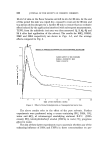
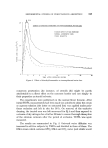
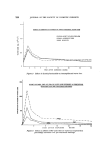
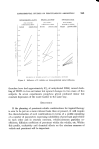
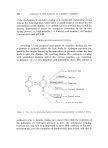
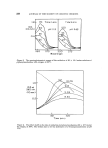
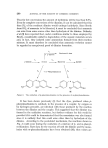
242 JOURNAL OF THE SOCIETY OF COSMETIC CHEMISTS 16 cm2 of skin on the flexor forearm and left in situ for 30 min. At the end of this period the skin was wiped dry, exposed to room air for 30 min and to a stream of dry nitrogen for a further 30 min to ensure that no occlusive effect induced by the application interfered with subsequent measurements. TEWL from the anhidrotic test area was then measured la x, 3, 4ax, 6ax and 24 h after first application of the solvent. The results for 100% DMSO, DMF and DMA respectively are shown in Figs. 1-3, and the average effects compared in Fig. 4. 1.8 1.5 1.0 EFFECT OF DIMETHYLSULPHOXIDE ON TRANS-EPIDERMAL WATER LOSS FLEXOR ASPECT OF MID-FOREARM NORMAL ANHIDROTIC SKIN THREE SUBJECTS 2 4 6 8 12 16 20 TIME AFTER EXPOSURE ( HOURS ) Figure 1 Effect of dimethylsulphoxide on transepidermal water loss. The above results refer to the effect of the pure solvents. Further experiments were performed using a cream containing 25ø//0 DMA, 10% water and 650//0 of cetomacrogol emulsifying ointment B.P.C. (DMA cream) 25% tetrahydrofurfuryl alcohol (THFA) in water 50//0 propylene glycol in water. The aim of these latter experiments was to ascertain whether any of the enhancing influence of DMA and THFA in these concentrations on per-

EXPERIMENTAL STUDIES ON PERCUTANEOUS ABSORPTION 243 1.8 1.5 2.55 EFFECT OF DIMETHYLFORMAMIDE ON TRANS-EPIDERMAL WATER LOSS. FLEXOR ASPECT OF MID-FOREARM NORMAL ANHIDROTIC SKIN THREE SUBJECTS 2 4 6 8 12 16 TIME AFTER EXPOSURE (HOURS) Figure 20 Effect of dimethylformamide on transepidermal water loss. cutaneous penetration [for instance, of steroids (3)] might be partly attributable to a direct effect on the corneous barrier and not simply to their properties as steroid solvents. The experiments were performed on the normal flexor forearm. After initial TEWL measurements had been made (on anhidrotic skin) the cream or aqueous solution (the latter on saturated lint) was applied under poly- thene occlusion and left in situ for 16 h. On removal of the occlusive dressing, the treated area was left uncovered for 2« h and then exposed to a stream of dry nitrogen for a further 30 min to ensure thorough desorption of the stratum corneum after the period of occlusion. TEWL was again measured. The results are summarised in Fig. $. Outward water diffusion was increased in all five subjects by THFA and doubled in three of these. The DMA cream which contained 25% DMA and 10% water (and which would
Purchased for the exclusive use of nofirst nolast (unknown)
From: SCC Media Library & Resource Center (library.scconline.org)