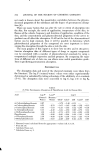
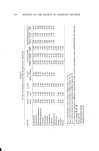
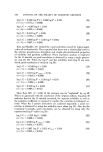
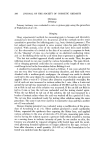
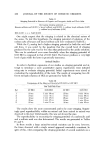
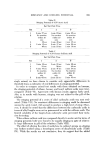
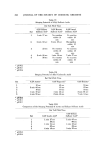
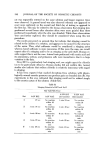
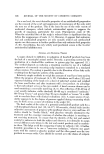
390 JOURNAL OF THE SOCIETY OF COSMETIC CHEMISTS Table VI Stinging Potential of Alkyl Sulfonic Acids Rat Tail Flick Time 0.3N Ethane 0.3N Hexane 0.3N Lauryl Rat Sulfonic Acid • Sulfonic Acid"Sulfonic Acid ø i I min 17 sec No reaction No reaction within 10 within 10 min min 2 2 rain 30 sec 5 •nin 40 sec No reaction within 10 min 3 23 sec No reaction No reaction within 10 within 10 min min 4 2 min 08 sec i min 30 sec 7 min 57 sec 5 36 sec No reaction No reaction within 10 within 10 min •nin • pH 0.8. b pH 0.7. o pH O.9. Table VII Stinging Potential of Alkyl Carboxylic Acids Rat Tail Flick Time Rat 0.3N Acetic a 0.3N Propronic * 0.3N Butyric ø I 10 sec 45 sec 16 sec 2 2 min 06 sec 15 sec 15 sec 3 10 sec 10 sec 10 sec 4 1 min 10 see 1 min 43 see 5 rain 51 sec 5 4 min 58 sec 6 min 42 sec 7 rain 14 sec ø pH 9..6. * pH 2.7. • pH 2.7. Table VIII Comparison of the Stinging Potential of Acetic and Ethane Su]fonic Acids Rat Tail Flick Time 0.3N Ethane Rat 0.3N Acetic Acid • Sulfonic Acid * 1 1 rain 27 sec 1 min 05 sec 2 55 see 60 sec 3 1 rain 04 see 1 rain 42 see 4 05 sec 39 sec 5 4 min 40 sec 3 min 50 sec "pH 2.6. b pH 0.8.

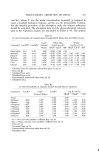
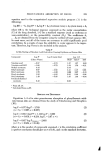
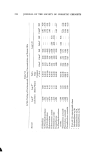
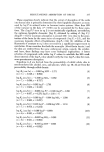
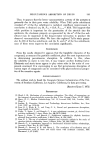
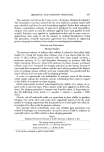
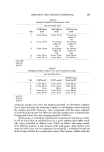
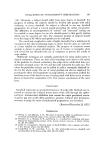
IRRITANCY AND STINGING POTENTIAL 391 Table IX Stinging Potential of Dicarboxylic Acids Rat Tail Flick Trine 0.3M Oxalic 0.3M Malonic 0.3M Succinic Rat Acid • Acid b Acid ø 1 5 tnin 56 sec 8 min 08 sec No reaction within 10 min 2 5 min 39 sec No reaction No reaction within 10 within 10 min min 3 6 tnin 19 sec No reaction No reaction within 10 within 10 min min 4 I tnin 02 sec 3 tnin 35 sec I tnin 59 sec 5 I tnin 07 sec 4 min 46 sec 5 min 27 sec • pH 1.25. b pH 2.0. c pH 2.4. Table X Stinging Potential of Mono-, Di-, and Tricarboxylic Acids Rat Tail Flick Titne 0.3M Propane Rat 0.3M Acetic • 0.3M Succinic • Tricarboxylic • 1 1 •nin 03 sec 1 •nin 31 sec 3 •nin 56 sec 2 2 •nin 26 sec 4 •nin 14 sec 8 •nin 45 sec 3 11 sec 22 sec 18 sec 4 3 min 01 sec 1 min 55 sec 3 min 09 sec 5 2 •nin 00 sec I min 15 sec 2 min 47 sec • pH 2.6. • pH 2.4. c pH 2.5. methylene groups may lower the stinging potential. An alternative explana- tion is that increasing the molecular weight in a homologous series decreases the stinging potential. However, when compounds with the same carboxyl- to-methylene group ratio but different molecular weights were evaluated, they all appeared to have the same stinging potential (Table X). At this point, a word about experiment-to-experiment variation is in order. It will be noted that rat tail flick times for a given solution often differ mark- edly when evaluated on different rats. While we believe this arises mainly from different degrees of tail abrasion with sand paper, other factors were observed which may also be important. Occasionally, a rat flicked its tail out of the testing solution for no particular reason. This became evident when the
Purchased for the exclusive use of nofirst nolast (unknown)
From: SCC Media Library & Resource Center (library.scconline.org)