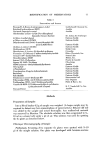
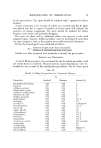
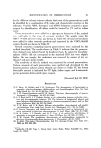
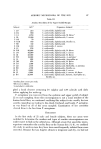
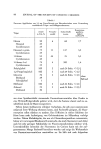
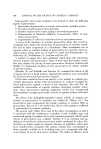
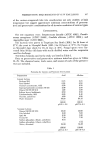
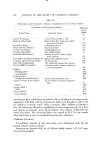
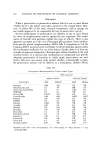
IDENTIFICATION OF PRESERVATIVES Table I Preservatives and Sources 77 Bronopol©--2-Bromo-2-nitropropane- 1,3-diol Butylated hydroxytoluene (BHT) Carvacrol-Isopropyl-o-cresol Chlorhexidine acetate-l,6-Di (N-/•-chlorophenyl diguanido) hexane diacetate 4-Chloro-3-methyl phenol p-Chloro-m-xylenol (PCMX) Dehydroacetic acid (DAA)-3-acetyl-6-methyl-2H- 9yran-2,4(3H)-dione Dichloro-m-xylenol (DCMX) Dichlorophene (DCP) Dimethoxane-6-Acetoxy-2,4-dimethyl-rn-•lioxane Fluorsalan-3,5-Dibromo-3'-trifiuoromethylsalicylanilide Germall 115©-Imidazolidinylurea Hexachlorophene (HCP) Irgasan CF3©-Cloflucarban Irgasan DP 300•-Trichlosan MDM hydant oin- Methyloldimethylhyclant oin Octyl gallate o-Phenylphenol Propylparaben-Propyl-p-hydroxybenzoate Resorcinol Salicylanilicle Tetrabromo-o-cresol-Deoclorant K© Tribromsalan (TBS)-3,4',5-Tribromosalicylanilide Trichlocarban (TCC)-3,4,4'-Trichlorocarbanilide Vantide 89 RE©-N-Trichloromethylthio-4-cyclohexene- 1,2-clicarboximide (Captan) Zinc pyrithione Goldschmidt Chemical Co. Analabs Analabs Dr. Sylvan H. Newberger Eastman Kodak Eastman Kodak Eastman Kodak Eastman Kodak Sindar Corp. Givaudan Pfister Chemicals, Inc. Sutton Labs l•itene, Inc. Procter & Gamble Ciba-Geigy Analabs Eastman Kodak Eastman Kodak Eastman Kodak Eastman Kodak Eastman Kodak Biocosmetics Ltd. Fine Organics Pfaltz & Bauer, Inc. R. T. Vanderbilt Co., Inc. Analabs Methods Preparation o• Samples Into a 50-ml beaker 0.2 g of sample was weighed. (A larger sample may be required to detect very low concentrations of preservatives.) Ethanol (25 ml) was added to the sample and mixed thoroughly. Any undissolved material was removed by filtration. The alcoholic solution was then evaporated to 5- 10 ml on a steam bath under a iet of air. This solution was used for spotting the tic plates as described below. Thin-layer Chromatography o• Sample Preliminary Screening-Two separate tlc plates were spotted with 5-10 •1 of the sample solution. One plate. was developed with benzene-acetone

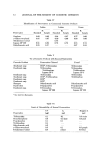
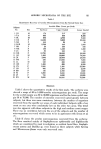
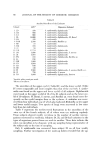
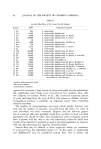
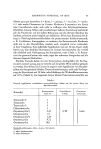
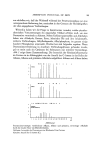
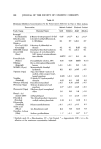
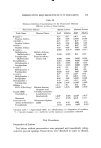
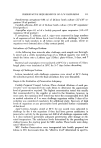
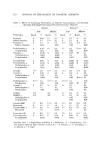
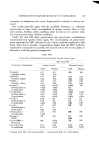
78 JOURNAL OF THE SOCIETY OF COSMETIC CHEMISTS (8:2) and the other with chloroform-methanol (9:1). Each plate was allowed to develop until the solvent front migrated about 10 cm, then the plates were air-dried. The preservative was located as described below in Visualization of Preservatives. Final Identification-The sample solution was spotted along with the stan- dards of preservatives with similar B/s on a new plate and developed as described above for preliminary screening. Visualization of Preservatives The following steps were taken to locate and identify the preservative: The tlc plate was examined with a short wavelength UV light. A reddish- brown spot will indicate the presence of a UV-absorbing material which may Table II Rr Values and Results • with Indicator Reagents _ Rt Detection by Preservative C6H•-Acetone CHCI•-MeOH UV I_o Indicator Reagents b (8:2) (9:1) Bronopol 0.47 0.57 E, violet F, yellow Butylated hydroxytoluene 0.79 0.83 X B, yellow Carvacrol 0.65 0.75 X A, pink B, yellow Chlorhexidine acetate 0.40 0.62 X 4-Chloro-3-methyl phenol 0.59 0.65 X l•-Chloro-m-xylenol 0.60 0.67 X Dehydroacetic acid 0.15 0.26 X Dichloro-m-xylenol 0.65 0.75 X Dichlorophene 0.50 0.62 X X Fluorsalan 0.56 0.53 X A, pink B, yellow Germall 115 0.00 0.00 X C, pink E, violet F, yellow Itexachlorophene 0.14 0.41 X X A, pink B, yellow Irgasan CF• 0.53 0.67 X Irgasan DP 300 0.74 0.81 X MDM hydantoin 0.23 0.59 Octyl gallate 0.12 0.22 X X o-Phenyll0henol 0.68 0.79 X X Propylparaben 0.56 0.65 X X Resorcinol 0.39 0.34 X X Salicylanilide 0.65 0.72 X X Tetrabromo-o-cresol 0.72 0.80 X Tribromsalan 0.60 0.69 X Trichlocarban 0.55 0.70 X Vantide 89 RE 0.70 0.83 Zinc pyrithione 0.49 '0.82 X X E, violet F, yellow A, pink B, yellow A, green B, yellow C, pink "Only positive tests are indicated. 0 A, B, C, etc., refer to indicator reagents used.
Purchased for the exclusive use of nofirst nolast (unknown)
From: SCC Media Library & Resource Center (library.scconline.org)