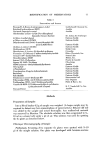
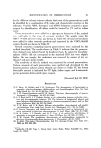
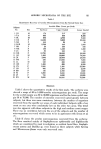
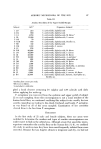
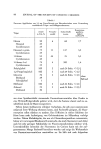
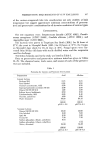
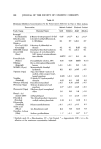
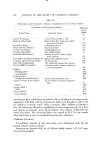
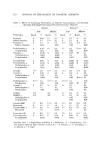
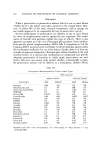
PRESERVATIVE REQUIREMENTS OF O/W EMULSIONS Table III Minimum Inhibitory Concentrations (%) for Preservative Mixtures Effective in One or More Lotions 109 Preservative Mixture Trade Name Bronopo1-4- Omadlne, Sodium LMDMII -4- Omadine, Sodium MDMH q- Omadine, Sodium Bronopol q- Methylparaben (Mallinckrodt) + Propylparaben (Mallinckrodt) Formaldehyde q- Methylparaben q- Propylparaben Germall q- Methylparaben q- Propylparaben G•rmall q- Methylparaben q- Butylparaben Methylparaben q- Propylparaben Hibitane q- EDTA (Ciba-Geigy) Chemical Name Methyl p-hydroxy- benzoic acid Propyl p-hydroxy- benzoic acid Anionic Lotion a Nonionic Lotion a Acid Alkaline Acid Alkaline 0.1 •' 0.P 0.1 0.1 0.05 0.05 0.05 0.05 0.1' 0.1 * 0.1' 0.1 • 0.05 0.05 0.05 0.05 0.2* 0.2* 0.2* 0.2* 0.05 0.05 0.05 0.05 0.018 0.013 • 0.005 0.1 • 0.038 0.025 0.1 0.2 0.009 0.00e 0.025 0.05 0.013 0.018 0.038 0.038 0.05 0.075 0.15 0.15 0.013 0.018 0.038 0.038 0.38 0.5 0.5 0.5 0.15 0.2 0.2 0.2 0.038 0.05 0.05 0.05 0.5* 0.5* 0.5 0.5 0.1 0.1 0.1 0.1 0.02 0.02 0.02 0.02 0.15 0.2 0.2 0.2 0.038 0.05 0.05 0.05 0.1 0.1 0.1 0.1 0.05 0.05 0.05 0.05 Ethylene diamine- tetraacetic acid Vancide 89RE n-Trichloromethylthio- (Vanderbilt) q- 4-cyclohexene-l,2- dicarboximide 0.2 s 0.075 0.2 v 0. 2v Phenoxetol 1.0 0.375 1.0 1.0 Preservative 68 Halogenated aliphatic (Dutton & Reinisch) q- amide 0.13 0.19 0.25 0.19 Formaldehyde 0.013 0.019 0.025 0.019 Symbols used: * = Approximate MIC D = Discoloration S = Separation of emulsion V = Viscosity changes n: ineffective at the maximum concentration indicated. Test Procedures Preparation of Lotions Test lotions without preservatives were prepared and immediately refrig- erated to prevent spoilage. Preservatives were dissolved in water or ethanol,

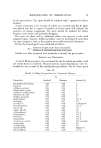
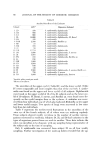
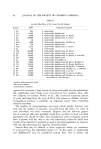
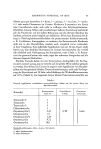
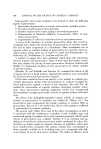
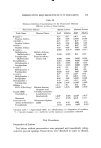
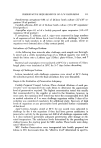
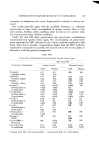
11o JOURNAL OF THE SOCIETY OF COSMETIC CHEMISTS Table IV Preservatives and Preservative Mixtures Unsatisfactory in All Lotions Tested Preservative or Preservative Mixture Maximum Level Trade Name Chemical Name Tested (%) Armeen Z (Armour) Bradosol (Ciba-Geigy) Dowicide 1 (Dow) Dragocid Forte (Dragoco) Germall 115 (Sutton) Omadine, Zinc (Olin) Parablend (Mallinckrodt) Preservative 68 (Dutton & Reinisch) Propylene glycol (Union Carbide) Tego 103S (Goldschmidt) Vancide 89BE (Vanderbilt) n-Coco-B-aminobutyric acid 0.1 Dodecyl-dimethyl (2-phenoxy ethyl) ammonium bromide 0.1 Orthophenyl phenol 0.2 Isopropyl sorbate 1.0 Imidazolidinyl urea 0.5 Zinc pyridinethione 0.1 Mixture of methyl, ethyl, propyl, butyl parabens 0.2 Halogenated aliphatic amide 0.5 1,2-Propanediol 10.0 15% Dodecyldi (aminoethyl) glycine 0.5 n-Trichloromethyl thio-4-cyclohexene- 1,2,-dicarboximide 0.2 MDMH + O.5 Methylparaben q- 0.25 PropylI) araben 0.05 Methylparaben q- 0.1 Butylparaben (Mallinckrodt) Butyl p-hydroxybenzoic acid 0.02 Irgasan-Triclosan (Ciba-Geigy) q- 2,4,4'-Trich]oro-2'-hydroxy-diphenyl ether 0.1 EDTA 0.05 Vancide 89RE q- 0.2 EDTA 0.05 Vancide 89BE q- 0.2 Formaldehyde 0.05 according to their solubilities and added to 95 ml of lotion in a 4-ounce screw- capped jar. The final volume of preserved lotion was brought to 100 ml by the addition of sterile water, where necessary. After addition of preserva- tive, the lotion was allowed to equilibrate at room temperature for 3-7 days and shaken occasionally. Four 10-ml aliquots were placed in 9,0 x 150 mm sterile test tubes. The remaining lotion was stored at 5oeøC for one month, after which time it was re-examined for preservative adequacy. Challenge of Lotions Ten-milliliter aliquots of each test lotion were challenged with the fol- lowing volumes of pure cultures: Streptococcus faecalis-O.09, ml of 24-hour broth culture (9,.7 x 107 orga- nisms/10 ml product)
Purchased for the exclusive use of nofirst nolast (unknown)
From: SCC Media Library & Resource Center (library.scconline.org)