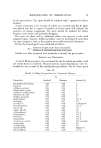
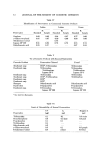
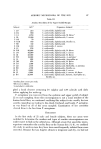
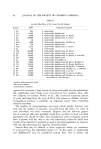
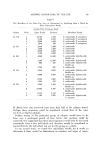
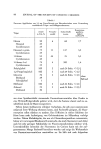
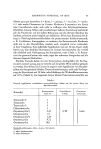
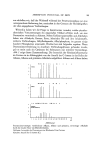
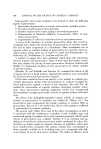
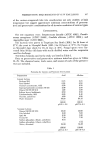
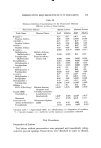
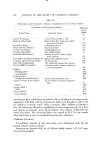
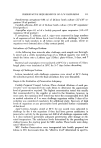
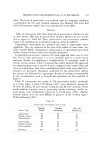
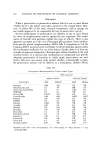
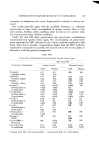
PRESERVATIVE REQUIREMENTS OF O/W EMULSIONS 107 of the various compounds take into consideration not only stability at high temperature but suggest approximate minimum concentrations of preserva- tives and preservative combinations for oil-in-water emulsions of various types. EXPERIMENTAL The test organisms were: $treptococcus )•aecalis (ATCC 4082), Pseudo- monas aeruginosa (ATCC 15442), Candida albicans (ATCC 10231), and Aspergillus niger ( ATCC 9642). The bacteria were grown in Tryptica•se Soy Broth (BBL) for 24 hours at 37øC the yeast in Mycophil Broth (BBL) for 24 hours at 37øC the fungus on Mycophil Agar slants for 10-14 days at 30øC. Fungal spores were har- vested from 10-day old slants with sterile distilled water and this suspension used for challenge. Test lotion formulas used in the study are listed in Table I. Data on preservatives and preservative mixtures tested are given in Tables II-IV. The chemical name, trade name, and source of each of the preserva- tives are included. Table I Formulas for Anionic and Nonionic Test Lotions Preparations Acid Alkaline Anionic Lotions Carbopol 941 0.15 0.15 Cetyl alcohol 0.50 0.50 Glyceryl monostearate, NSE 2.50 2.50 Isopropyl-palmitate-myristate (60-35) 2.00 2.00 Mineral Oil 55/65 SUS 1.00 1.00 Sodium lauroyl isethionate 0.50 0.50 Triethanolamine, 98% 0.05 0.40 Glycerin, anhydrous 4.80 4.80 Water deionized 88.50 88.15 •00.00 100.00 pH 5.1-5.2 pH 7.9-8.1 Nonionic Lotions Mineral Oil 55/65 SUS 20.00 20.00 Cetyl alcohol 5.00 5.00 Span 60 2.50 2.50 Tween 60 7.50 7.50 Sodium phosphate, dibasic, anhydrous 0.01 ... Sodium phosphate, tribasic, anhydrous ... 0.12 Water, deionized 64.99 64.88 i00.00 100.00 pH 5.4-5.7 pH 7.9-8.3

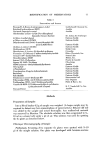
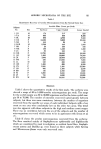
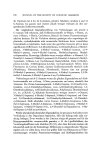
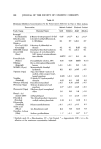
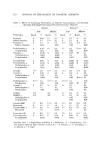
108 JOURNAL OF THE SOCIETY OF COSMETIC CHEMISTS Table II Minimum Inhibitory Concentration (%) for Preservatives Effective in One or More Lotions Preservative Trade Name Chemical Name Anionic Lotion a Nonionic Lotion a Acid Alkaline Acid Alkaline Bronopol (Goldschmidt) Dehydroacetic acid (Gane's) Dioxin -• Giv-Gard DXN (Givaudan) DMDMH (Glyco) Dowicil 200 (Dow) Formaldehyde (Fisher) Hibitane (Imperial) MDMH (Glyco) Nipastat (Nipa) Noxyfiex (Geistlich} Ottasept (Ottawa) Phenonip (Nipa) Phenoxetol (Nipa) Phenyl c' hyl alcohol (IFF) Polycide A (Zwicker) Polynoxylin (Geistlieh) Sorbic acid (Pfizer) Omadine, Sodium (Old) 2-Bromo-2-nitropropane-1-3-diol 0.05 0.1D 0.1 0.1 •) 3-Acetyl-6-methyl-2H-pyran-2, 4 (3H)-dione 0.1 NT '0.2 NT 6-Acetoxy-2,4-dimethyl-m- dioxane Dimethylol dimethyl hydantoin Cis isomer of 1-(3-chloroallyl)- 3,5,7-triaza-l-azonia-adaman- tane chloride Formaldehyde solution, 40% Bis (p-chlorophenyldiguanido) hexane Monomethylol dimethyl hydantoin Nipa ester 82121-mixture of methyl, ethyl, propyl, butyl, benzyl parabens N-Methyl-N'-hydroxymethyl thiourea Parachlorometaxylenol Mixture of phenoxetol and parabens Ethylene glycol monophenyl ether 2-Phenylethanol Tris (2-hydroxyethyl) triazonium methyl carboxy phenolate Polynoxymethyleneurea 2,4-Hexadienoic acid Sodium pyridinethione 0.1 0.1 0.15 0.2 0.1 0.1 0.1 0.1 0.075 D 0.1 I} 0.1 0.1 0.05 0.05 0.075 0.675 0.1 0.1 0.1 0.1 0.2 0.2 0.5 0.5 0.225 0.3 0.3 0.3 0.25 0.2 0.5 0.2 0.5 0.38 0.5 0.5 0.5* 0.5 0.5 0.5 1.0 1.0 1.0 1.0 1.0 1.0 1.0 1.0 0.15 0.1 0.15 0.1 0.3 0.3 0.3 0.3 0.1 NT 0.15 NT C.I' 0. l 0.1' 0.1 • Symbols used: D = Discoloration NT: Not Tested * = Approximate MIC n: In- effective at the maximum concentration indicated.
Purchased for the exclusive use of nofirst nolast (unknown)
From: SCC Media Library & Resource Center (library.scconline.org)