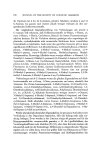
106 JOURNAL OF THE SOCIETY OF COSMETIC CHEMISTS Representative oil-in-water emulsions were devised to study the following aspects of preservation: 1. Inaetivation of preservatives in anionie and nonionic enmlsifier systems. 2. The effect of pH on preservation potential. 3. Stability of preservatives upon ageing at elevated temperatures. 4. Determination of Minimum Inhibitory Concentration (MIC) of satis- factory preservatives. 5. Augmentation of activity by inclusion of two or more preservatives. A survey of the literature on cosmetic preservation shows that several in- vestigators have studied the inaetivation of preservatives by nonionic emulsi- fiers and/or other components of a formulation. Most investigators use an aqueous system to evaluate binding of preservatives by nonionics. Some ex- cellent papers of this genre are by Patel (2), Patel and Kostenbauder (3), deNavarre (4), Wedderbum (5), and Barr and Tice (6). A number of papers have been published which deal with interactions between anionies and preservatives. Many of these state that anionie emulsi- fiers may enhance the activity of some preservatives. However, Schuster and Modde (7) demonstrate binding of some preservatives by anionie moieties in aqueous systems. Entrekin (8) and Wiekliffe and Entrekin (9) evaluated the effects of pH on preservatives in a broth medium. Optimal pH conditions were ascertained for 17 preservatives and 4 preservative mixtures. Oil-in-water emulsions have been used by a few authors to evaluate pres- ervation phenomena. Boehm (10) used emulsions to evaluate synergism be- tween preservatives against a variety of test organisms. Barr and Tiee (6) studied the preservation of aqueous solutions containing nonionic surfae- rants. Those preservatives showing satisfactory results were incorporated into emulsions to compare preservative activity in aqueous systems with emul- sions. The effect of the hydrophilie-lipophilie balance (HLB) of nonionic sur- factants on preservatives in emulsions was studied by Tilbury (11). Ten preservatives were incorporated into simple emulsions to evaluate HLB on preservation. Bean et al. (12) studied the effects of the partition coefficient of a preservative in cosmetic emulsions. The present study differs from most of the above investigations in that it is concerned with the simultaneous evaluation of pH, emulsifier type, and accelerated ageing of complete oil-in-water emulsions prepared with the great variety of preservatives now available. Further, it is an extension and up- dating of several facets of the preservative studies conducted by others. Pre- servatives no longer usable in cosmetics because of regulatory action have been excluded from evaluation. The authors, instead, have concentrated on those currently available to us including many new compounds with little or no history of use in oil-in-water emulsions. The tables of effective levels

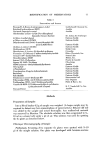
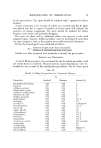
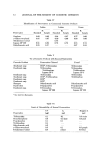
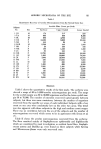
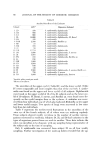
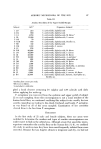
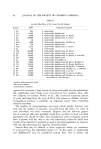
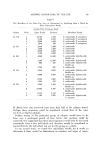
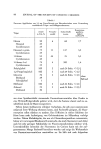
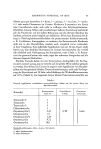
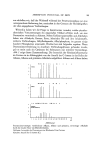
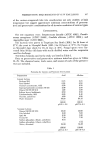
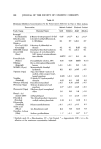
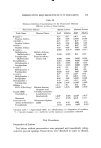
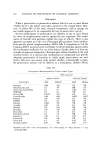
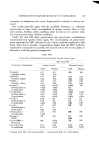
PRESERVATIVE REQUIREMENTS OF O/W EMULSIONS 107 of the various compounds take into consideration not only stability at high temperature but suggest approximate minimum concentrations of preserva- tives and preservative combinations for oil-in-water emulsions of various types. EXPERIMENTAL The test organisms were: $treptococcus )•aecalis (ATCC 4082), Pseudo- monas aeruginosa (ATCC 15442), Candida albicans (ATCC 10231), and Aspergillus niger ( ATCC 9642). The bacteria were grown in Tryptica•se Soy Broth (BBL) for 24 hours at 37øC the yeast in Mycophil Broth (BBL) for 24 hours at 37øC the fungus on Mycophil Agar slants for 10-14 days at 30øC. Fungal spores were har- vested from 10-day old slants with sterile distilled water and this suspension used for challenge. Test lotion formulas used in the study are listed in Table I. Data on preservatives and preservative mixtures tested are given in Tables II-IV. The chemical name, trade name, and source of each of the preserva- tives are included. Table I Formulas for Anionic and Nonionic Test Lotions Preparations Acid Alkaline Anionic Lotions Carbopol 941 0.15 0.15 Cetyl alcohol 0.50 0.50 Glyceryl monostearate, NSE 2.50 2.50 Isopropyl-palmitate-myristate (60-35) 2.00 2.00 Mineral Oil 55/65 SUS 1.00 1.00 Sodium lauroyl isethionate 0.50 0.50 Triethanolamine, 98% 0.05 0.40 Glycerin, anhydrous 4.80 4.80 Water deionized 88.50 88.15 •00.00 100.00 pH 5.1-5.2 pH 7.9-8.1 Nonionic Lotions Mineral Oil 55/65 SUS 20.00 20.00 Cetyl alcohol 5.00 5.00 Span 60 2.50 2.50 Tween 60 7.50 7.50 Sodium phosphate, dibasic, anhydrous 0.01 ... Sodium phosphate, tribasic, anhydrous ... 0.12 Water, deionized 64.99 64.88 i00.00 100.00 pH 5.4-5.7 pH 7.9-8.3
Purchased for the exclusive use of nofirst nolast (unknown)
From: SCC Media Library & Resource Center (library.scconline.org)