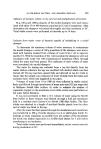
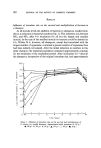
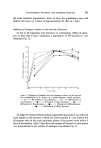
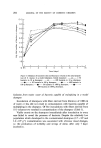
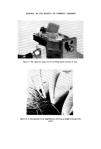
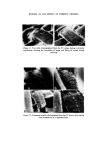
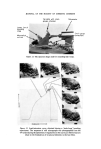
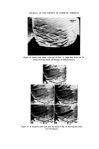
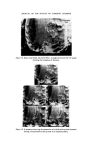
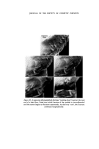
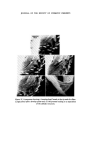
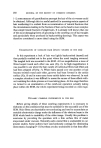
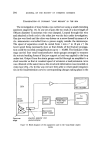
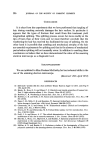
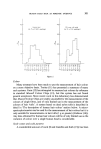
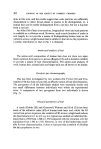
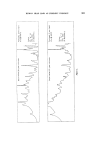
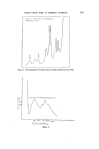
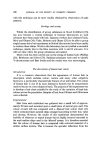
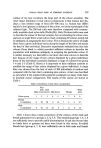
HUMAN HEAD HAIR AS FORESNIC EVIDENCE 305 Column: 5', 15% DEGS on Chromosorb G Temperoture: 180øC Figure 3. Chromatogram of methyl esters of fatty acids from hair (50). .• 70 g 60 Fluorescence--."---.,-Ph osp h o resoence ---.,- i I I I 360 400 440 460"•.....Blonk Emission wavelength X Figure 4.

306 JOURNAL OF THE SOCIETY OF COSMETIC CHEMISTS with this technique can be more readily obtained by observation of scale patterns. Serology and sexing Whilst the identification of group substances in blood (Culliford (23)) has now become a routine technique in forensic laboratories no such advances have been made with hair. Japanese workers have claimed (Yada, Mori and Okane (24) Yada, Ishimoto and Okane (25)) to be able to group single human hairs but experiments in British laboratories have been unable to confirm these claims. Work in this laboratory has not yielded a successful technique, mainly due to the false reactions with A and O anti-sera. It is still not clear where the group substances are located. Much work has been carried out on the sexing of human hairs (Phillips (26) Brinkman and Jobst (27)). Staining techniques were used to identify Y-chromosomes and Barr bodies and the results were very encouraging. The description of human hair colour Introduction It is a common observation that the appearance of human hair (a description which includes colour, texture and many other subjective factors) is a particularly characteristic feature of an individual. The colour of human hair is one of its most distinctive features but its measurement needs to be put on a less subjective basis. The purpose of this experiment was to develop a hair chart suitable for the study of the variation of head hair colours across the population. Samples of hair from 100 men and 100 women were collected. Experimental Hair from each individual was gathered into a small tuft of approxi- mately 50 hairs and mounted upon a small piece of neutral grey card. The colour of each tuft was compared with a Munsell hair colour chart (13) which contained matt painted chips arranged according to their hue, value and chroma. However, the results of this experiment demonstrated the inability of observers to match human hair (a highly textured material) to the matt surface chips used in the Munsell system. It is therefore essential that the colour of human hair is compared with coloured material of a similar surface texture. This is because the specular reflections from the
Purchased for the exclusive use of nofirst nolast (unknown)
From: SCC Media Library & Resource Center (library.scconline.org)