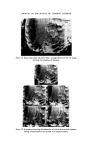
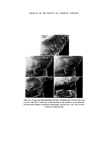
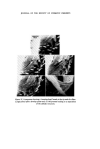
310 JOURNAL OF THE SOCIETY OF COSMETIC CHEMISTS amount of information on the type of dye can be obtained from micro- scopic examination of the fibre. Dyed hairs frequently show a more uniform distribution of colour than un-dyed hairs, i.e. there are very few pigment granules visible. In natural hair there may be a gradual decrease in pigment from base to tip, but on para-dyed hair or bleached hair the decrease is normally abrupt. Hence the identification of dyed hair does not normally present any real problem in forensic examinations. Of 200 hairs examined only 1 individual displayed dyed hair (group 6, female). If the hair displays a root then an estimate of the time since dyeing can be made, as hair is known to grow at a rate of approximately 1 cm/month. Attempts to classify hair dyes from single fibres by TLC have been studied but were shown to be impractical because of the small quantities of dye used and the difficulties of extracting the dyes without modifying them chemically. Hair rinses contain dyes in solution which deposit a relatively uneven film of the dye on the surface of the hair fibre. (Some of these rinses are based on methylene blue and methyl violet.) Observation of an individual's hair has shown that many of these rinses persist for up to 6 days but at this time the dye is very uneven and difficult to detect. Even after 1 day a significant proportion of the hair dye has been removed by brushing and combing and is completely removed by washing. Identification of medicated shampoos. One of the major limitations of the examination of cosmetic material in or on hair is the ease with which these materials can be removed by combing, brushing and washing. Phenols are known to be strongly absorbed (Breuer (31)) at polar sites in the hair keratin and are not readily removed. It was for this reason that attention was focused on formulations which contain phenols. An examination of the formulations of many medicated shampoos indicates that many of them are based upon a wide range of phenolic compounds or quaternary ammonium salts. It was not found possible, using known analytical reactions, to detect quaternary ammonium salts on hair fibres. However, examination of the common methods for identifying phenols produced a method based upon the formation of brightly coloured indophenols. The use of nitrous acid in concentrated sulphuric acid produced a reagent which partially destroyed the cuticle of the hair and allowed the reagent to penetrate the hair fibre. When a hair which had been washed using a medicated shampoo based on phenols was treated with nitrous acid an intense brown colouration was pro- duced in the body of the fibre. Hairs darker than group 6 were prebleached for 30 min using a commer- cial hair bleach. The advantage of commercial bleach over ammoniacal

HUMAN HEAD HAIR AS FORENSIC EVIDENCE 311 peroxide is that the former contains a thixotropic agent which prevents the bleach running off the hair. The colour reaction with nitrous acid can be readily observed after the hair has been bleached. One individual, whose hair gave a positive reaction, washed his hair on three successive occasions with a non-medicated shampoo based on lauryl sulphate. A positive nitrous acid test was obtained after each washing. If an individual continues to use a medicated shampoo then the phenol concen- tration in the hair shaft will rise, and one washing in a non-medicated shampoo does not remove all the absorbed phenols. In the survey 37•o of the total population gave a positive reaction. Technique. A single human head hair (0.5 cm) was attached to a cavity slide with perspex cement or cellulose acetate. An ice-cold solution of nitrous acid was prepared from 0.14 g of sodium nitrite in conc. HgSO4 (2 ml). Two drops of the above solution were added to the hair fibre and the colour reaction observed for up to 10 min. The crime and control samples can be examined in the same cavity. Dark hairs were prebleached for 30 min prior to the above procedure using a proprietary bleach. CONCLUSIONS The following questions frequently arise when hair is used as evidence and they remain appropriate to this discussion. (1) Is the hair human or animal? (2) From what part of the body did it originate9. (3) Is it from a male or female? (4) What is the significance of special features the hair might display, e.g. lacquer residues, cosmetics, blood group substances, dyes, colours, etc. ? (5) Are the crime and control hairs similar using the available criteria? Microscopy of a hair fibre will distinguish human hair from animal hair on the basis of its scale pattern and appearance. Dyed hairs can normally be distinguished from undyed hairs by microscopy but chromatography of hair dye obtained from a short fibre is not a practical technique. The occurrence of lacquer and other cosmetic materials can be established but their significance must be limited as they are so readily removed by washing etc, and do not represent a method of hair individualization. Scale counts, medullary fraction measurement and the occurrence or absence of a medulla are of little or no use in the characterization of human head hairs.
Purchased for the exclusive use of nofirst nolast (unknown)
From: SCC Media Library & Resource Center (library.scconline.org)